This is my symphony

What I read & what I lived …

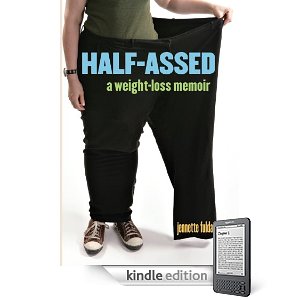
Half-assed
Jennette Fulda
A few years ago I lost some weight and also began faithfully reading several blogs. One of the blogs I discovered was Half of Me, written by one “Pasta Queen”.  The blog chronicled the life of a twenty-something woman on a quest to lose half her body weight; I think I jumped in at around 250 pounds.  The writer was witty, sometimes even downright sardonic. Her voice was crystalline–I felt like I knew this girl after only a few weeks of reading her posts. And I liked her a lot. Fulda is one of the reasons I started exercising and riding a bicycle–the old “if she can do it, I can” thing.

Half-assed is Pasta Queen’s blog-made-book, rather like the book Julie, Julia of the Julie/Julia Project–only this writer has none of the snarkiness of Julie. I put it on my wish list as soon as Fulda wrote about it on her blog, but there it sat. So you can only imagine how quickly I snapped up a Kindle copy when her Facebook page (I am a devoted fan!) announced it available for only 99 cents.  Here the reader has an even more thoughtful look into Fulda’s weight loss–same inimitable voice, but even more revealing as she begins to take off the fat goggles through which she looked at herself and the world for over twenty years.

Fulda has put her weight-loss blog aside and now writes Jen-Ful, a blog with a little bit of this ‘n that. And while I do enjoy her perspective and getting a peek into her life as a free-lance web designer, I do think she lost something special when she set aside Half of Me. One of the reasons was her new battle, dealing with a chronic headache. All the time. Twenty-four, seven. For years. Although I also deal with chronic pain, I don’t have Fulda’s Vicodin and Chocolate  on my wishlist and I don’t know why. But I do know I’ll continue to read her blog because after reading  hundreds of her posts (often daily), I consider her a digital friend.

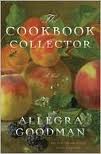
Cookbook Collector
Allegra Goodman

So I like to cook. I love to eat. I read cookbooks for fun. And the icing on the cake? NPR commentator Maureen Corrigan called author Allegra Goodman an “updated Jane Austen” and the novel a contemporary take on Sense and Sensibility. And while the basics are there (two sisters blind to love and misguided in their life’s work) that’s about where the similarities end.

I have little good to say about the novel. The plot was often unbelievable, the characters caricatures, the conflict a mish-mash of every modern social cliche imaginable. Silicon Valley start-up? Check. Brat pack millionaire entrepreneurs? Check. Green movement tree huggers (literally)? Check. Religious mysticism? Check. A lesbian child custody battle? Check. SEPTEMBER 11, for goshsakes?! Now that was just maudlin pandering.

The story centers on two sisters, Emily–the software entrepreneur– and Jess–the grad-student-cum-book store clerk. Emily has it all, or does she? Jess is adrift and seeking purpose and stability. (See what I mean about cliches?) Both women evolve and flip their lives–see paragraph 2 for inciting devices. And I wanted this cookbook collector … who didn’t show up until nearly one-third of the way through the novel. To be sure, the cookbook collector could  have referred to Jess’ employer, rare bookstore owner George. Or it could have been the mysterious woman who wanted him to appraise her uncle’s collection. Or it could even have been the uncle himself, an enigmatic college professor who littered his collection of rare cookbooks with sensuous line drawings of his unknown love. But suffice it to say, although the cookbooks may have played a part in Jess’ rebirth, this book was not about a cookbook collection.

So–a pretty disdainful take on a mediocre book. Thank goodness for the Kindle app and the fact that I won’t have this book cluttering my shelves. But … I read the whole thing. Page one to whatever. And, in the end, I guess that says something.

Wench
by Dolen Perkins-Valdez

Author Dolen Perkins-Valdez peels away another layer of the slave narrative we all know existed–that of the black women, treated “well”, who were mistresses of their white owners. Even school children know of  Thomas Jefferson’s Sally Hemings, and Incidents in the Life of a Slave Girl by Harriet Jacobs rose in popularity twenty years ago. In Wench, we meet four women–Lizzie, Reenie, Sweet, and Mawu–who accompany their masters each summer to vacation in Ohio at Tawawa House, a vacation spot and hunting resort. There, they live in cottages as “couples”, leaving behind the glares of white wives and the murmurs of field slaves.

A white reader might be torn, conflicted, by the life presented, much as I was on my first reading of Jacobs Slave Girl. Relief–some masters cared for their slave lovers and biracial children. See? The women–in free Ohio–could not bring themselves to run, summer after summe after summer. Some “loved” their masters. And yet the white men kept their children enslaved, refusing to emancipate them; they tied those mistresses to the porch rails when fearful they would flee. No love here.  I found the women’s reluctance to admit their “status” afforded them no protection difficult to accept–I wanted them to rail against the injustice and rise up against their enslavers. But I am not scheming to have my children freed, or even calculating how to keep them close; I am not trying to avoid the lash, or keep my belly full. And so the women bide their time, bending under the yoke of slavery–cracking, maybe, but never breaking, waiting, waiting, for just the right time …

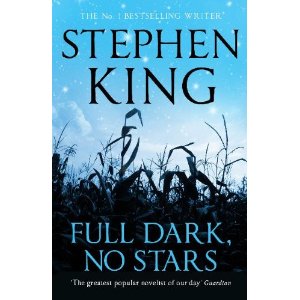
Full Dark, No Stars
by Stephen King

This read was a step out of my comfort zone in two ways: I don’t read Stephen King (or any kind of horror), and it was my first book on my Kindle app. Let’s get the Kindle app out of the way first. I am a former book store clerk. I once wanted to be a librarian. My husband and I might have more books than hairs on our heads (his, certainly!). I love the smell of musty, inky paper and library glue; the only decorating tips I can offer is to pile crooked stacks all over the floor and tables. In other words, I am a book woman.

So it was with great reluctance and a bit of fear that I downloaded the Kindle app on my new iPad several weeks ago. And there is sat, neat and tidy in the folder I’d created labled “books”! A fellow book woman told me she reads only those books she doesn’t want to keep–and I thought to myself, “Well, what books would that be?!” And then book club agreed to try King’s new short story collection, Full Dark, No Stars. Over lunch one day, one of our members recounted the story “A Good Marriage”, based on the BTK serial murderer Dennis Rader. We were spellbound, and turned to each other almost at once–“Let’s read this for our next book!”

First of all, Full Dark is more murder mystery than what I think of as horror–no real supernatural here. Maybe some psychological horror, but no girl with telekinetic powers and no rabid dogs. Oh, wait–there is one sell-your-soul-to-the-devil scenario … but it’s almost fable-like in its brevity. The first story, “1922” tell the story of a hen-pecked husband who (to use a great deal of understatement!) turns the tables and murders his wife. With his teenage son. And dumps her body in a well. Hmmmm. “Big Driver” tells the tale of a rape victim cum-murderer who takes the law into her own hands. And the aformentioned “Good Marriage” peeks into the mind of a wife who finds that her “perfect marriage” is a sham, her husband, a psychopath.

The stories are compelling, even to one not accustomed to such plot lines–I would say to myself, “Oh this is just gross!”, put the book (oops, my iPad!) down in disgust, and before ten minutes had passed, picked it up again. All turn on the idea of revenge–and, really, what would one do to take revenge on someone who had made your life miserable? Or worse? Just as satisfying was King’s afterword. Excusing himself for hovering around matters dark and dim, he reassures his “Constant Reader” that he believes “most people are essentially good”, like himself. “It’s you,” states King, “I’m not entirely sure of.”  Perfect ending. And besides–it was just plain fun to be scared.

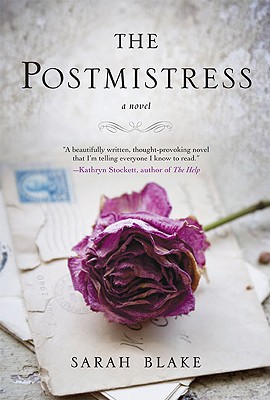
The Postmistress
by Sarah Blake

Nineteen-forty, small Massachusetts village, the London blitz, a single Postmistress … it all had the sound of  the charming Guernsey Literary and Potato Peel Pie Society. And like many who didn’t experience the war, I’ve encountered World War II through my dreamy Tales of South Pacific and Norman Rockwell goggles. Granted, the past several years have given us movies like Saving Private Ryan–but for those of us with tender sensibilities, Michener was more comfortable. But no fairy tale here–author Sarah Blake presented the Second World War as the ambiguous moral battle it surely was for some Americans.

Told through the eyes of three women, the reader comes to see that all America probably wasn’t as unabashedly patriotic as old newsreels would have us believe. Iris James is forty, single, a bit standoffish, and runs the Franklin post office with friendly efficiency; Emma Trask wants to keep her little light of family happiness hidden under a bushel; and Frankie Bard, girl reporter, works right alongside the great Edward R. Murrow. Each watches the war unfold with ambivalence. It is the men in their lives who die as a result of war–a situation that would make anyone face life with uncertainty. While I thought that Blake probably made these characters a bit too forward thinking, they were, overall, believable. (As is always my complaint, I grew quite weary of Emma’s whining and Frankie’s inability to make up her mind–but that’s probably just me.) I did think the undelivered letter motif was a bit overwrought and didn’t quite deserve attention it got on the book’s blurb. I was also more than a bit disappointed that Blake titled the book The Postmistress when Iris herself corrected those who did, and told them her title was simply “postmaster”.

Perhaps the most serendipitous  discovery came not from the book itself, but from the bookmark I used. With about fifty pages of reading left, I idly turned over the vintage linen postcard cum bookmark I had stuck between the pages and even more casually began to read the message written on the back. (I’ve spent several months collecting Michigan postcards from the 30’s and 40’s to use as a border above the wainscoting in my kitchen.) Imagine my surprise when I read the following, dated 1946. written in back-slanted precise script: “My husband and brother both arrived from overseas in time for Christmas [sic] as you can imagine the happy holidays. My brother went back to college.” Surely a reference to returning vets–two soldiers returned home, safe at last.

One Thousand White Women
by Jim Fergus

I fear I may be the last woman standing who hasn’t read the popular novel by Jim Fergus, One Thousand White Women. I’ve read the reviews, heard the scuttlebutt among friends, but it seemed too much of a good thing, considering I’d read Thirteen Moons and Color of Lightening over the past year or so. But read it I finally did.

The novel’s subtitle is in the tradition of good historical fiction: The Journal of May Dodd. Starting in 1875 we follow May Dodd in her sanctioned “escape” from an insane asylum where her family had  imprisoned her for promiscuous behavior. May’s crime? The wealthy Chicago socialite fell in love with a man below her social station, found herself pregnant, and, subsequently lived with him. Fergus gives us enough description of life in the asylum for the reader to understand that if May wasn’t insane when she arrived at the mental institution, she soon would be.

After searching a bit, it seems the story is entirely fiction, although some Internet sources purport that an Indian leader did indeed suggest an exchange of white brides for horses. I doubt the xenophobic sensitivities of 19th century white Americans, however, would ever permit this to come about.

As I expected (with some disappointment, I must admit), the women, all social outcasts of some sort, find personal freedom and often fulfillment  with their Indian families in a fairytale type of way. May Dodd is often puzzled by the customs of her new husband Little Wolf, and she sometimes asserts the values of an independent white woman in ways that probably wouldn’t have been so blithely accepted (for instance, swimming with the men in the morning and riding next to her husband on the trail). Fergus makes the tribe’s polygamy seem reasonable, and May comes to hold dear the companionship of Little Wolf’s other wives. It was all a bit too pat for me.

That was my biggest frustration with this novel. I think romanticizing the life of Native Americans is just as reprehensible as demonizing them. Paulette Jiles presented a very different picture of white Indian wives in her Color of Lightening.

The problem lies in determining the truth.

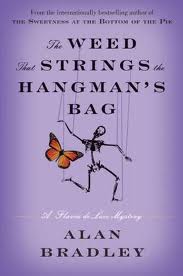
The Weed That Strings the Hangman’s Bag
by Alan Bradley

It took me a more pages than I was comfortable with to admit I liked Alan Bradley’s first Flavia DeLuce novel, Sweetness at the Bottom of the Pie. I am not a murder-mystery fan, so that may have been part of it. Or maybe what kept me snagged were the incredibly precise chemistry references far beyond my knowledge–but I am a closet Anglophile, a former eleven-year-old girl, and someone who often lives in a melodramatic story-world myself … so what was not to like?  I read Weed That Strings the Hangman’s Bag with no such reservations and enjoyed every word of it, chemistry or not.

When we catch up with Buckshaw’s residents, Flavia is still mired in constant warfare with her older sisters Daffy and Feely, and Father still hides behind his stamps. Dogger and Mrs. Mullet still hold the seams of the family together, shell-shock and horrid food notwithstanding. And Flavia’s beloved bicycle Gladys still transports her all over Bishop’s Lacey and its environs–and it is Gladys herself who brings Flavia to St. Tancred’s churchyard where she meets Rupert Porson, famed puppeteer of the BBC’s Magic Kingdom television program. In order to pay for repairs to his broken-down caravan, Rupert and his lovely assistant Nialla agree to put on a puppet show in the parish hall.

Enter a mad hermitess, a grief-crazed mother, an unmarried pregnant Mother Goose, a former German POW, and a marijuana (that of the “weed” in the title) growing farmer and you’ve got a Flavia DeLuce novel of the best sort.

The impromptu puppet show ends with a murder, and Flavia sets out (of course) to unravel the mystery. Along the way she uncovers a love affair, reconstructs the truth behind an accidental death, and rescues a suicide with an antidote of (what else?) dove guano! Then, step-by-step Flavia  unfolds her discoveries to her idol Inspector Hewitt. How can one not love this little girl?.

Maybe it was just that I was familiar with the pace of Bradley’s stories and the rhythm of his writing, but this mystery was a more enjoyable read. Or perhaps it was just because I was happy to enter again this quaint and familiar world. After Sweetness I wasn’t certain I’d read Bradley’s second novel; After Weed, I’m anxious for his third.

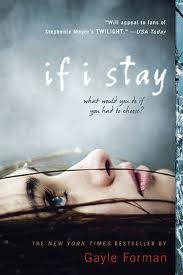
If I Stay
by Gayle Forman

Recommended on NPR’s “You Must Read This” feature, If I Stay is a young-adult novel that doesn’t read like one: the writing is evocative, the story isn’t maudlin, the romance almost (!) believable. The novel does have the quick-read characteristic of YA, though–no dense writing here. The premise, however, is heavy: a well-adjusted (maybe a bit too much?) family sets out on a snow day adventure and in the slip of a tire is involved in a fatal crash. Daughter Mia, the 17-year-old protagonist, walks along the side of the road and sees her mother and father, dead. Then she comes upon herself being frantically worked on by paramedics and loaded into a screaming ambulance. Is she dead, she wonders, as she climbs in to the ambulance and heads to the hospital?

Mia can’t feel her body, nor can she walk through walls and people like the ghosts she’s seen in movies; this sidelined Mia doesn’t feel pain. Caught in uncertainty, Mia watches, listens, and struggles to make sense of her new self. We watch her dear Gram and Gramp visit; we see friends and extended family arrive to hold vigil. And all the while, Forman takes us back and forth through Mia’s short seventeen years as she remembers … the birth of her brother, her punk dad’s transformation to retro hipster, her first kiss, summer at music camp, a Labor Day picnic. Never maudlin, Forman’s writing is clean and offers a beautiful elegy for a girl not yet dead.

Some of the health care professionals come off  a bit harsh and unfeeling; this would be a great read for student nurses and doctors. Forman is not pedantic–I worried throughout the book that it would turn into a treatise for pulling the plug as Mia’s family tried to make sense of her chances for recovery. I fretted that there would be a grand heavenly reunion with her family–which I hate in any young adult movie, song, or book, given the suicide rate among my often-depressed high school students. No, the choice to stay (or leave) was Mia’s. During a visit, Mia’s favorite nurse Ramirez encourages her grandparents to talk to her: “She’s running the show. Maybe she’s just biding her time. So you talk to her. You tell her to take all the time she needs, but to come on back. You’re waiting for her.”

And so we wait for Mia to decide.

[A word about the title of this post–in the tradition of many newer YA series, my paperback copy included a few pages of Forman’s sequel Where She Went. Run, don’t walk away from this book! It was everything awful about teen fiction–everything If I Stay was not.]

Little Bee
by Chris Cleave

Almost a year ago now, a friend of mine ask me excitedly whether or not I had read Little Bee.  “What’s it about?” I can’t tell you much about it … ‘something’ horrible happens on a beach in Nigeria to a little girl … that’s all I can say.” As her voice kept sliding down a register, my first impression was “Meh! I sure don’t need another one of those horrific scenes to wade through to get to an even more depressing story.” Over the past several months, one or two others have mentioned Little Bee in the same hush-hush manner. I put it on my wish list. I took it off my wish list. And then–book club chose it for our April read. And so I was now stuck.

Even the blurb on the book’s cover played the secrecy game: “We don’t want to tell you WHAT HAPPENS in this book. It is a truly SPECIAL STORY and we don’t want to spoil it.” Let me say first off, that the “something horrible” is not as horrible as it could have been. Oh, it’s awful, no doubt about it–but it didn’t warrant, I don’t think, all the secrecy. In fact, one of the “somethings” relates to a white couple, which surprised me. Other than that, I think I will also continue the embargo on the something horrible, although I probably should insert my standard [spoiler alert] here.

Little Bee is, indeed, a young woman buzzing with purpose and drive and single-mindedness, carrying a load on her slight shoulders that no one should have to bear.The sadness that trailed behind her in a yellow cloud was heavy, thick, and sweet. I believed Little Bee and I loved her, and all her imaginary conversations with the village girls, and her clipped, precise English, laden with idiom and insight. The woman she met on the beach in Nigeria, however, was another story. Sarah was an entrepreneur (nothing wrong with that) who cheated on her husband (uh-oh), and went to a Nigerian beach resort to repair her marriage (that’s better …)–then continued (and seemingly without guilt) to continue the affair upon their return. I found her amorality off-putting. While Little Bee is the one haunted by the death of Sarah’s husband Andrew, I think it is Sarah herself who had an active hand in his death. In my mind her only redeeming quality was the action she took on the beach that fateful day. And unfortunately, it wasn’t enough to earn her salvation in my book. Even her attempt to do right by Little Bee at the book’s end didn’t ring true.

Little Bee almost demanded I read it in the few hours I did; it was a quick and, overall, satisfying read. I did find fault in the sometimes shallow characters and their superficial lives–I wonder if it was intentional that these were the white characters?  But Little Bee herself was was fully alive, pulsing with energy and vitality.

Next up: The Finkler Question by Howard Jacobson. I had read two glowing reviews of Finkler and waited anxiously for it to arrive. Seventy-five pages in I’m starting to feel a little grumpy as I always do when a book disappoints–the story doesn’t add up, the characters aren’t at all appealing, and I’m a’gettin’ cranky …

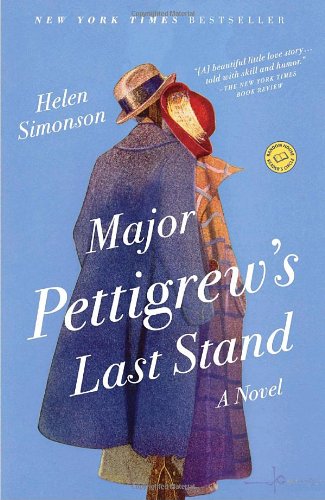
Major Pettigrew’s Last Stand
by Helen Simonson

I settled into this book like a cat on a lap–it was a comfortable story, warm and familiar, and not overly challenging. Kind of a second or third cousin to Elegance of the Hedgehog with a nod to Remains of the Day, I felt right at home. (It need not be a spoiler alert, though, to say that the ending of Pettigrew was more satisfying than either of those novels … or was it?) Having heard the author interviewed on NPR, and then hearing Diane Rehm’s Reader’s Review this past summer, it was on my wish list just waiting for paperback release.

We meet both the Major and Mrs. Ali, the novel’s two main characters, when Mrs. Ali comes to collect newspaper money– and Major Pettigrew is reeling from a phone call telling him his brother Bertie died the night before. While their relationship has been up to this point one of a friendly shopkeeper and loyal customer, sharing such an intimate moment brings a momentous change. A widower for years, Major Pettigrew’s life has slowly stiffened and grown circumspect–and Mrs. Ali, a beautiful widow, exotic in her Pakistani heritage and lovely in her sensitive demeanor, begins to soften the carefully drawn lines of his existence.

As might be expected (or perhaps only to fulfill a British stereotype), the village of Edgecombe St. Mary is unsettled by this “unseemly” friendship. Running parallel to the Major’s story is the story of his son Roger and his American fiance Sandy, and Mrs. Ali’s nephew Abdul Wahid and his wild-child lover Amina. In all we see the painful reality (and sometimes comedy) of lives bound up in deceit and tradition, rather than simply giving over to love. A minor story involving a Lord Dagenham, a pushy American land developer, and a pair of treasured Churchill shotguns seems unnecessary at times–or perhaps it is only included as a foil for the novel’s musty tradition motif.

Definitely a good read for back-to-back snow days.