This is my symphony

What I read & what I lived …

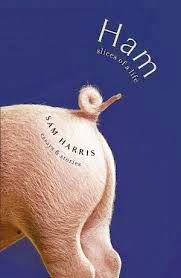
Ham (NetGalley)
Sam Harris

I never meant to read this book. Quite frankly,when I was choosing books for my e-Reader I saw the cover, my eyes glanced over “David Sedaris” in the first line of the blurb–and thought I was getting an ARC of Sedaris’s newest. So when I opened the book on my Kindle and saw author “Sam Harris”, I was like,
“Who the heck is Sam Harris?!” But now I know and Mr. Harris had me from at least Chapter 3 when he dished out what I first thought was some delicious celebrity gossip–and later realized was an endearing snapshot of his long friendship with Liza with a Z. And by the end of this memoir, he had me in tears.

Sam Harris won Star Search in 1984 with his beautiful rendition of “Over the Rainbow.” (I only know because I had to look it up (link) on the Google.) In his memoir Ham, Harris recounts the fits and starts of his career, his upbringing in Oklahoma, his life as a gay man, and (most tenderly) his love for husband Danny Jacobson and their son Cooper. Harris was especially transparent about his distant relationship with his father and his recovery from alcohol addiction–and I always thought his honesty was without guile.

To be fair to myself, Harris is known predominantly for his Broadway roles and I’ve never set a foot on Broadway, and his appearances on television variety and talk shows in the nineties with which I also have little familiarity. (In a funny aside, when I first searched for Sam Harris after that “who-the-heck” moment, I went to this link; wrong guy–definitely, the wrong guy!) Here’s one of my favorite (yes, I have a favorite already after only just “meeting” him!) of his songs (link) from the rock opera Joseph and the Amazing Technicolor Dreamcoat.

This memoir was told with such sardonic wit and sweet tenderness I’ll remember it Sam Harris for quite some time.
What to do when a young person “graduates” from YA novels and wants to read books with themes and plots that are more complex? So much contemporary fiction today has situations and language that many parents wouldn’t find appropriate–for young teens, especially. (Imagine my shock one day at school when I saw Fifty Shades of Gray stacked casually on a freshman girl’s desk!) So I thought going through my own stacks from the past couple years might give both teens and parents some ideas for great reading. Most of the books I chose featured younger protagonists; I also noticed that many convey the idea that our world, difficult though life may sometimes be, is one where hope triumphs over despair, and healing over pain.


From my blog: 
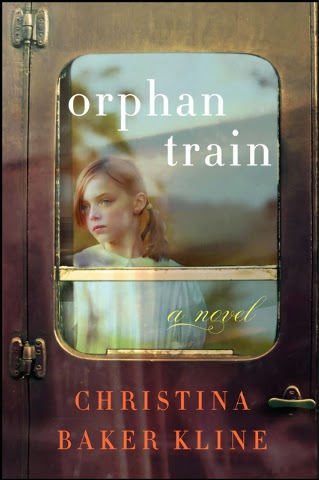
Orphan Train ! Christina Baker Kline
The Rooms are Filled Jessica Null Vealitzek
Any of the Flavia de Luce books by Alan Bradley (I’ve got posts for four of his books) !
Forgive Me Leonard Peacock *! Matthew Quick
Noah’s Rainy Day Sandra Brannan
The Selected Works of T.S. Spivet Reif Larsen
The Dressmaker Kate Alcott
The Silver Star ! Jeanette Walls
Dear Lucy Julie Sarkissian
Tomorrow There Will Be Apricots Jessica Sofer
15 Days Without a Head * ! Dave Cousins
The Forgotten Garden ! Kate Morton
Blind Sight Meg Howry
Age of Miracles* ! Karen Thompson Walker
Miss Peregrine’s Home for Misfit Children Ransom Riggs
The Fault in Our Stars* ! John Green
If I Stay* ! Gayle Forman
Sarah’s Key Tatiana De Rosnay
The Selected Works of T.S. Spivet ! Rief Larsen
The Help Kathryn Stockett

*indicates this is a YA novel–I must say, I love ’em!
! my absolute favs

Orphan Train
Christina Baker Kline

Vivan Daly and Molly Ayer were both tossed and tumbled as young women. Orphans (at least for all practical purposes in Molly’ case) they endured long, lonely years before they came to rest. Abused in a series of foster homes where conditions ranged from abuse to neglect, they bore the scars: Vivian, aloof and haughty; Molly, rebellious and angry. Although separated in age by over seventy years, they find in each other the sister-daughter-mother they never had. And in discovering each other, they find themselves.

Niamh’s arrived in New York as many Irish did–sick and poor. When a fire raced through their tenement, Niamh found herself in the care (and I use that word loosely) of the Children’s Aid Society, bound for the West on an orphan train. Re-named Dorothy because her name was so difficult for Americans to decipher, she became indentured labor for two families–thrown out of one in a blizzard, boarding with a sympathetic teacher for a time, and finally finding security with the Nielsens, who owned a small grocery-dry goods store. From there, life did get better, but Niamh-cum-Dorothy-cum-Vivian always carries with her the pain of her lost family.

Molly was as combative as Vivian was constrained. Shuffled from foster family to foster family, she carves out her identity with piercings, tattoos, and outrageously dyed hair. In her latest situation, she finds herself excelling in school; her boyfriend anchored her and life was tolerable for a time. That is until she tries to smuggle  a copy of Jane Eyre out of the public library. And that is how Molly came to serve fifty community service hours helping Vivian sort through, clean, and organize her memories attic.

Orphan Train was a quick and satisfying read. If the plot was a bit predictable at times, author Christina Baker Kline did manage something of a twist at the end and I don’t think many readers would be disappointed. I found myself wanting to know more about this historic relocation of over 250,000 children–again, always a sign of a good book, in my view. Check out this short clip if you, too, want to know more (link).

WebRep
currentVote
noRating
noWeight

The Rooms Are Filled (NetGalley)
Jessica Null Vealitzek
release date: April 2014

Michael Nygaard must leave the only home he’s ever known, an iconic Minnesota farm with a milk cow and chicken house, a white farmhouse surrounded by pines and oaks, a long gravel driveway. Michael and his dad shared early morning walks in the woods, watching and tracking local wolf packs, sometimes even disarming traps other farmers had set for the creatures. But after his father’s sudden death, all that is over and Michael and his mother Anne must move to Illinois where she can find work in her brother’s bar.

Rose and Julia have been inseparable since kindergarten. Wherever there was one, there was the other–“Kindred spirits are always kindred spirits. It can’t be helped,” said Rose. Even after college the girls were

roommates, and then they were more. Julia accepts a job as a teacher; Rose, a journalist, and together life’s possibilities seem limitless. But after an uncomfortable lunch date with Rose and  one of her student’s family, Julia yearns for freedom and anonymity, no longer certain whether she can live with a love not-yet-accepted. And so she leaves.

Their lives merge in small town Ackerman, Illinois. Michael’s mother struggles with her job as a waitress, while Michael adjusts to after school snacks at the bar instead of the kitchen table, sidewalks instead of wide-open fields, and their small, cramped house instead of the light-filled, breezy farmhouse. Julia breathes a little more freely in her apartment over the lunch counter; she starts a job teaching and Michael is her student. But like knows like and  Julia recognizes in Michael another fragile soul who just doesn’t fit. Even as she tries to protect him from school bullies, she faces a bully of her own.

The Rooms Are Filled is a tender story and there is much about this novel I liked. Writer Jessica Vealitzek captures the beauty of small moments well and some of her description was crystalline. Parts of the plot (especially the story of Rose and Julia) felt uneven. Since the novel was set in the early 1980s, their story was inevitably more closed because of attitudes at the time. But I couldn’t help but think the story would have been richer if she had explored that relationship more fully.

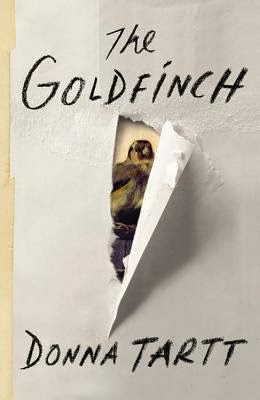
The Goldfinch

Donna Tartt
I add my own love to the history of people who have loved beautiful things, and looked out for them, and pulled them from the fire, and sought them when they were lost, and tried to preserve them and save them while passing them along literally from hand to hand, singing out brilliantly from the wreck of time to the next generation of lovers, and the next. 
 
Theo Decker loved his once-a-model mother above all else. He loved her heels kicked off in the living room, her sandalwood perfume, her glossy, black ponytail, her hand in his, the case of the wobblies she got on cab rides. In fact, even his father’s leaving them only registered as a blip on the screen of Theo’s life–because still there was Her.
And then one day she wasn’t. Theo survives the horrific act of violence that kills her, but not before he holds a dying man in his arms and receives a ring that will change his life. Theo also leaves the scene with The Goldfinch–that now iconic image that has captivated the hearts of so many Americans (link).
Theo’s life, then, becomes one he never expected. Something like the cloud that envelopes the Peanuts character Pigpen, a cloud of love lost and found, of violence and death, follows Theo everywhere. Social services barges into his life; family friends rescue him. Long-lost Dad reappears–and disappears just as easily. A street-wise Russian teen becomes his best friend. Theo comes to love exquisite antiques. He loses himself in a foggy haze of drugs and alcohol. And all the while there is The Goldfinch, the treasure he can’t relinquish, that ties him forever to his mother.
I don’t do well with teenage angst (probably because as a high school teacher, I live with it day in and day out) and there’s plenty of it in this novel. I also don’t do well with drugs and violence. My distaste for the TV series Breaking Bad is considerable–and there’s a lot of Breaking Bad in The Goldfinch. But still I plowed through the novel, all 771 pages of it. There’s an incredible loop-the-loop at the end that kept me going, hoping for Theo’s redemption. Author Donna Tartt ends the novel with what I sometimes call “blah blah blah”–a character’s ontological reflection on life and the nature of being–that in this case was so beautiful and compelling I didn’t roll my eyes. And while I’d find myself at once disappointed in Theo’s abject nihilism, I am forever drawn to his Goldfinch-like resilience and bravery, “refusing to pull back from the world.”

The Making of the Lamb
Robert Harley Bear
release date: April 2014

The plot line of Robert Harley Bear’s novel The Making of the Lamb was juicy and full of promise: that  Jesus of Nazareth traveled to the British Isles during the eighteen years that are “lost”–or at least not mentioned in Scripture. I’m familiar with the lost years tale of Christ in India, but this I’d never heard this legend. William Blake even asks “And did those feet in ancient time/Walk upon Englands mountains green” in a poem, now the lyrics of the hymn “Jerusalem”. How rich a story this could be, I thought, expecting something along the lines of The Red Tent or The Robe. Something that would give me a glimpse of the man Jesus in a way I hadn’t seen him before. Something revealing.

Bear begins the novel with the twelve-year-old Jesus, dressed in rough clothing, teaching in the temple. Even as a boy, in Bear’s take, the high priests were suspicious of his arguments and understanding of Scripture and feared revolution. Knowing he was being watched, Mary implores her uncle, Joseph of Arimathea, to spirit Jesus out of the country on one of his trips. Uncle Joseph was a wealthy tin trader and his son Daniel, Jesus’ cousin, sometimes accompanied him. And so with Romans chasing them, uncle, son, and nephew manage a too-close-for-comfort escape.

And finally land in England. But not before Bear introduces a present-day boy who becomes curious about a tunic he comes across in an old church  while traveling with his family. And along the way we visit 73 AD when the cross was first carved. Then Jesus, again, who is learning swordsmanship from a young Celt and studying with the druids and rescuing a slave who is really a captured Roman and sometimes conversing with God his Father … you get the picture. Maybe Jesus’ story would have been quite enough. But unfortunately, Bear had most of the characters speak in contemporary vernacular and the dialogue fell flat. This is Jesus, speaking to Mary, “Oh, Mother! What a wonderful way you have of putting things. You have brought that memory close to my heart, and I can relive it now forever.” Ouch.

There are a few glimpses of this Jesus that I found thought-provoking. As a boy, he knew God was his Father, but little else of his mission, other than it would someday be revealed. He had some incredible gifts–being able to speak a language fluently after only hearing a snippet of conversation–but didn’t perform miracles. He did, sometimes, see images or dream dreams that were intuitive and often got out of some tense situations by sharing what he saw. I was intrigued by Jesus’ curiosity about the druids, although, again, the dialogue got in my way.

Such great possibilities … but short on delivering anything divine.

What Nora Knew (NetGalley)
Linda Yellin
release date: January 20

Molly Hallberg is sassy. Looking  for that promotion. Longing for Mr. Right. Living in New York City. Lounging in the Hamptons. Just like we all want to do, right, ladies? Because that’s probably the draw of what’s sometimes dismissed as “chick lit”, isn’t it? A fun romp through a life to which we don’t (or won’t) have access. And Linda Yellin’s What Nora Knew is just that.

The “Nora” of the title is the famed Nora Ephron. Molly, a feature writer for an online magazine modeled after Gawker, is given an assignment: research love in the Big Apple and write her article in the style of Nora Ephron. The inimitable Nora Ephron, mind you. And even though Molly is witty and sardonic and oh-so-jaded, she’s also ‘lone and ‘lorn (to quote Dickens) and just can’t quite pull it off. Enter Cameron Duncan, a popular mystery writer–charming, available, and attractive–and my guess is you know the rest of the story (wink, wink!).

If you need what I call a “candy bar” of a read, What Nora Knew is a sweet choice.

The Misremembered Man
Christina McKenna

There is nothing not to like about Christina McKenna’s The Misremembered Man. It is a love story in every sense of the word … just maybe not the one you were expecting.

Jamie McCloone is a lost soul. An orphan for ten years in one of Ireland’s horrendous Magdalene laundries, he suffered abuse in every form. (McKenna handles the sexual abuse in a guarded way.) But when Jamie is ten, “Uncle” Mick and “Aunt” Alice arrive and carry him away to the world he had always seen in his dreams: the cottage, the farmyard, even the black dog Shep. For the first time in his life, Jamie knew warmth and love, clean sheets and a full belly. But as he creeps into his forties, Jamie is alone again, Mick and Alice both dead. There’s a black hole in his heart and he struggles (with the help of Valium and copious amounts of stout) to find a way to carry on.

Lydia Devine’s life was never as bleak, but all the same, she bore the scars of her harsh Protestant upbringing, where even music was frowned upon, where she felt too many times like an outsider. In her forties she still lived at home, caring for her demanding, never-satisfied-with-anything elderly mother. Lydia wanted to live a little–but simply didn’t know how.

Alone, at loose ends, and desperately yearning for something more, both are convinced by dear friends to run an ad in the Lonely Hearts section of the Mid-Ulster Vindicator. And after a few letters back and forth, they meet. Awkward at first, they settle into comfortable and companionable conversation which is interrupted abruptly by a hilarious scene with Jamie and his wayward new toupee in the Men’s.  Jamie’s friends Rose and Paddy watch the two from a distance (Jamie doesn’t drive and relies on their kindness to motor him distances farther than he can ride his bike) and Rose remarks, “God, they make a lovely couple, don’t they? … Y’know it’s as if they were made for one another, because the pair a them have the same noses on them. D’you see that Paddy?” I missed that one. Totally.

McKenna captured the gruff, rough edges of an Irish farmer just as flawlessly as she did the pinched, straight-laced spinster. The dialog was pitch-perfect, and even the minor characters were engaging. And the writer in me simply loved the author’s lists, which spoke volumes. Here’s the first one that describes Rose McFadden’s home:

Every chair and window and surface … expressed Rose’s devotion to creative crafts and a liking for thrift-store tat … Antimacassars and runners: laced, crocheted, appliquéd, embroidered, tatted, and frilled …  A papier-mâché rooster made over six Friday nights … whilst Paddy competed in the Duntybutt Championship Darts Tournament in Murphy’s pub. Items with shells and ideas from Portaluce beach: a wine-bottle lamp with a fringed shade; a postcard plate of a whale; a card table trimmed with cockles and scallops; a collage of a fish with milk-bottle-top gills, a Fanta cap eye and a seagull’s primary wing feather, stiffened with glue for a tail. 

After that beauty, I was always on alert, waiting for those lists and I was never disappointed. In fact, there is nothing disappointing at all in The Misremembered Man. 

Bellman and Black (Atria Books Galley Alley)
Diane Setterfield

I enjoyed Diane Setterfield’s Thirteenth Tale–but I wasn’t over the moon. It was almost too gothic for my taste: the rain, the insane sister, the crumbling country manor, the mysterious author. And more characters than I cared to keep track of. But I’m guessing, like many book lovers, the novel’s shortcomings were off-set by my love of a dark tale set in the English countryside, revolving around an authoress and her life’s work. Her latest novel, Bellman and Black … meh. I simply couldn’t figure out what sort of novel it was: a legend? fable? cautionary tale? I could feel in the writing that Setterfield knew exactly what she wanted to convey–but I also couldn’t help thinking she just never quite did so.


As a young boy, William Bellman (perhaps in the tradition of the Ancient Mariner?) carelessly kills a rook with his slingshot. And Setterfield would have us believe the rooks vow revenge. William’s life proceeds according to custom. He marries, has children, builds his textile mill, succeeds. Until death takes all he holds dear–perhaps the rooks’ retaliation? William then pledges every spare minute of his life to building an empire dedicated to all things funereal. He neglects his health; he ignores his only living daughter; he shuns the company of longtime friends. But still he grows more wealthy and successful. Even so, he is haunted by the glimpse of a man in black who attends every funeral and deathbed. A Mr. Black, it seems. To alleviate the menace the he feels, William begins paying Mr. Black profits which are secreted away in a separate account. And so it goes. Really. Nothing happens that is off-script.

Setterfield scatters the book with short explanations of the different collective noun for rooks–there is a clamour of rooks and a parliament of rooks and a storytelling of rooks–all, apparently, correct. But like so much else in the novel, I just don’t get it.


I’d just finished writing my last post, stacked  my coffee mug on my book, bustling to straighten the living room and get on with my day. So imagine my delight on finding I’d written the post all thewhile sipping from my Anne Tyler mug, gifted to me nearly 23 years ago to the day by friend and book store manager, Sally B., who knew my love of all-things-Tyler. Who knew coffee mugs could live so long?!