This is my symphony

What I read & what I lived …

Whiskey & Charley (NetGalley)
Annabel Smith
Sourcebooks Landmark

Twins Whiskey and Charley were identical in looks, but couldn’t have been more different in temperament. Whiskey, the first born, was athletic, brash, and daring as a child. As an adult, those same qualities served him well as an ad executive and his successes were many. Charley was quieter, timid, even, and he floundered as an adult, both in love Whiskeyand career. There wasn’t much Whiskey didn’t do better than Charley, it seemed.

Charley was named after Prince Charles, hardly, a nine-year-old thinks, an attractive namesake. Whiskey is really William, but when they were boys and enambored with a set of walkie-talkies. Charley easily learned the two-way radio alphabet: alpha, bravo, Charley … for once Charley had one over on his brother. No William in the alphabet, but there was a “whiskey” and so William took it on.

Writer Annabel  Smith alternates between the story of the boys’ childhood and the present day vigil Charley holds at Whiskey’s hospital bedside. As close as they were as children, they drifted that much farther apart as adults. Each blames the other for the rift and at the time of Whiskey’s accident, they haven’t spoken for months.

We get Charley’s point of view and the reader, like Charley, begins to find Whiskey’s extravagant lifestyle (fast cars and fast women) distasteful. Whiskey is overbearing. Egotistical. Thoughtless. But as Charley faces (admittedly very reluctantly) the fact that the Whiskey he knew is probably gone, he longs for that very person he once despised.

And that’s really the reason to read Whiskey and Charley. Yes, the Australian setting is unique. Of course the complex characters captivate us. But Charley’s startling realization that his interpretation of events may not be the only one, that perhaps he himself had a hand in their estrangement, is profound.

And dare I say I’m guessing we would all be happier if we would only do the same.

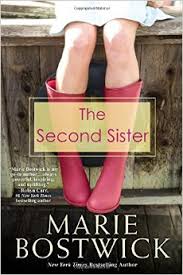
The Second Sister (NetGalley)
Marie Bostwick
Kensington Press

Lucy Toomey is a campaign staffer, jetting city to city as her boss makes a run for the White House. She works long hours, puts her love life on the back burner, and neglects just about everything that makes life wonderful—like food, friends, family, and fashion. (Her standard uniform is an almost wrinkled navy suit.)

Her sister Alice, on the other hand, lives alone in their family home on a Wisconsin lake. A year and a half older than Lucy, Alice suffered a brain injury in a swimming accident when the girls were teens. Alice is simple, very literal, often stubborn, and sometimes frustrated by her limitations. She’s an incredible quilter and loves animals and her 2ndsistersfriends with the same ferocity.

As you might expect, Lucy keeps Alice at arm’s length. She doesn’t go so far as to neglect her, of course. Rather, she fulfills every duty to her special sister to the letter of the law. Alice wants for little–Lucy makes sure they vacation at expensive resorts. Not a cent is spared when it comes to gifts. But what Alice really wants is Lucy to come home. For Christmas.  For her birthday. Home to Nilson’s Bay, Wisconsin, to the house on the lake.

And then, as life would have it, Alice is gone and Lucy must pick up the pieces. She plans only a brief stay for the funeral, but finds that Alice has some attached some strings to her will. Strings that Lucy intends to follow to the letter of the law … but of course ends up following with her heart.

Marie Bostwick’s new novel The Second Sister is my kind of chick lit. There’s no jet-setter boyfriend or model-perfect deb. It’s just a small-town girl who thought she escaped and made it big realizing that what really mattered  was what she left behind.

So if you like quilts and girlfriends and wine and dogs and cats and high-school sweethearts and houses by the lake and Midwest manners, this is your kind of chick lit, too.

march

Ann Voskamp A Holy Experience

green grass candle ♥ bulbs-a-poppin’ ♥ afghan, warm and cozy ♥ Mom’s pearl ♥ tinkling charms ♥ glammy makeup ♥ learning to forgive ♥ lakeshore stones and pebbles ♥ trust to bank on ♥ a broken heart ♥ baby love ♥ homemade milkshake ♥ crispy bacon ♥ time, carved out for me ♥ sun on the snow ♥ morning reading ♥ the courage to change ♥ perfectly pretty planner ♥ love song ♥ sunny breeze ♥ melting rivulets ♥ shrinking snow piles ♥ steaming coffee ♥ blessed, blessed cough drops ♥ prayer ♥ birdsong ♥ my heart, given away ♥ crisp, clean sheets ♥ shiny, pretty, sparkly ♥ stand up ♥ donuts!♥ fatoush ♥ my bagel buddy ♥ “I can’t wait to hear about it.” ♥ blog away ♥ oil pastel farm road ♥ bath bombs ♥ time is a wastin’ ♥ crown of thorns ♥ braided bun ♥ ring of fire ♥ rock-a-bye baby ♥ neither leave nor forsake ♥ only believe

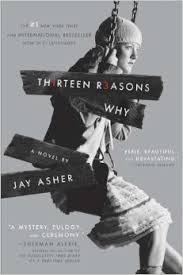
Th1rteen R3asons Why
Jay Asher
RazorBill Penguin

More than a few of my students recommended I read Jay Asher’s Th1rteen R3asons Why and this one was a doozy–very difficult to read, but incredibly meaningful. Clay Jensen picks up the package from his porch without much thought–hmmm, cassette tapes?–but his life is forever changed. His co-worker, classmate, and crush, Hannah Baker committed suicide just a few weeks before and now her voice speaks eerily through a tape recorder: I hope you’re ready, because I’m about to tell you the story of my life. More specifically, why my life ended. And if you’re 13 reasons whylistening to these tapes, you’re one of the reasons why.

So for thirteen sides of seven tapes, Jay listens to the story of Hannah’s unraveling. It’s painful.It’s raw. And it’s probably more accurate than a lot of adults would like to admit. I asked one of my students, Lexi, if she thought it was true to high school and she said it was probably a little more extreme than reality, but the essence was there. And, unfortunately, this is the stuff teens live with. Rumors where a single kiss is twisted into a makeout session, a copped feel into going all the way, one beer into a six pack. Drama where girls play the friend when it’s useful and turn a cold shoulder when it’s not, where a brief flirtation is thrown back in your face with a laugh.

Now not a single of Hannah’s experiences would surprise anyone over the age twelve–but maybe that’s what makes Th1rteen R3asons so chilling. It’s all pretty normal teen stuff that just got too much for one sensitive and hurting soul to take. Hannah tries to seek out help, but probably too little too late–another mistake so many kids make.

There was a time at the beginning of my teaching career where not a year went by without at least one of my students attempting or threatening suicide. Kids want connection so badly–their pain runs deep–and I think we adults find it difficult to understand once we’re on the other side. But if you want to need to remember how it feels to be a teenager, alone and betrayed and besieged by rumors, Hannah’s story will jog your memory to a place you might wish you had instead walked away from.

Then go and hug that sixteen-year-old nephew who is all “Dude” and skinny jeans. Look your eighth grader in the eye. Smile and say “I appreciate your help” (and mean it) to the teenage bagger at the grocery store. We need each other.

A couple of recent weekends saw me flat out on the sofa, trying to rid myself of some horrible late-winter, early-spring virus. Ugh. Since I couldn’t do much except cough and grab for yet another tissue, my reading attention span was pretty short-lived. (Add the effects of cold medicine and you’ve got the picture!) Check these good reads if you’re out and about on the internet.

The Last Trial: Writer Elizabeth Kolbert  seeks to understand the prosecution of Nazi war criminals, from Nurenburg to the more recent trials of Oskar Groning and John Demjanjuk in the February 16 edition of The New Yorker. (The article was especially powerful considering recent anti-Sematic attacks in Denmark and France.) Most poignant was Kolbert’s discovery of Gunter Demnig’s Stolpersteine (stumbling block) project in which the artist embeds small brass plaques flush on sidewalks, memorializing the last known place a Holocaust victim lived before being taken away. Now thought to be the “largest decentralized memorial in the world” Elizabeth Kolbert commissions one for her great-grandmother and attends the installation. Over 48,000 Stolpersteine have been laid throughout Europe.

Your Son Is Deceased: Stephen and Renetta Torres received a phone call that would turn their world upside down. A neighbor’s call interupts a meeting to let Stephen know that cops have their house surrounded and a bomb-sniffing robot is working its way up the driveway. Knowing the only family member home was their mentally ill son Christopher, they rushed home only to be kept out of the “kill zone”, as one officer called it. As the story unravels, we meet the confused and agitated young man who couldn’t follow police commands and lost his life; the grieving parents whose faith in the system they served was broken; the witness whose testimony was ignored.

A Prosecutor Repents: Another great post by writer Rod Dreher whose blog is a treasure trove for those seeking to put news stories in some sort of cultural and spiritual context. Here a Louisiana prosecutor writes a letter of apology to an innocent man he prosecuted years before. Glen Ford was represented by inexperienced lawyers, a witness gave false testimony, and he was sentenced to death by an all-white jury. Former prosecutor Marty Stroud speaks eloquently about his decision that the death penalty is wrong. (Warning: the video embedded in the post is on autoplay and so will begin when you open the post.) NPR interviewed Mr. Stroud on All Things Considered today.

Take Me With You
Catherine Ryan Hyde
Lake Union Publishing

August Schroeder is heavy-hearted: his motor home, broken down and towed to a garage; his annual summer trip to Yellowstone on hold. For two days he passes time watching his Jack Russell terrier  Woody run circles around two young boys hanging around the back of the garage. The mechanic, Wes, is sure he can get August on the road again, but not without making a pretty big dent in August’s gas money. August just might need to turn back–science teachers don’t have unlimited funds to both travel and make expensive repairs.

Until, that is, Wes throws out a stupid idea. A crazy one. What if August takes the boys, Seth and Henry, with him on the trip in exchange for free repairs? Just bring the boys back before school. Because Wes needs to pay a visit to the county jail for a few weeks. Like for a second (or is it third?) DUI.

Now August has plans for this trip. His son Phillip’s recent death left his marriage broken and sent August into recovery. He needs to come to terms with the his shattered life; he needs to put Phillip to rest. He can’t possibly take a twelve-take me with youyear-old and a seven-year-old with him. Strangers, at that. Until he sees them sitting against the garage wall, waiting–suitcases at the ready.

And so begins the trip of a lifetime for two little boys. Things are not all warm and cozy at the garage and Wes, it turns out, is a neglectful father. They’ve been sent to foster care during previous jail time. Henry doesn’t speak. Seth is so eager to please, so good, we know his pain runs deep.

This is a sweet and tender story. August answers the boys questions with the patience of Job and navigates their emotional lives with compassion. In fact, August sometimes seemed just a little too much of a model father figure, but nevermind. Everyone needs a feel-good story once in a while. And this one worked for me, satisfying epilogue and all.

I drink my morning coffee with Steve Innskeep, my drive home is accompanied by Here and Now’s Robin Young, and I fix dinner or grade papers to the sound of Robert Siegal and Melissa Block. It’s not that I have a seriously packed social calendar, though. Rather, those are the NPR program hosts that make up  the soundtrack of my life.

Wait wait I'm not done yetAnd how can I forget the years I spent with Noah Adams or Linda Wertheimer or Susan Stamberg? Or the dulcet tones of Carl Kasell, who anchored the news on Morning Edition for nearly thirty years.

Carl Kasell has written a memoir titled Wait, Wait … I’m Not Done Yet, a reference to his second NPR career as Peter Sagal’s sidekick on Wait Wait Don’t Tell Me, the news quiz show. (Would it surprise you if I told you the book was a membership drive giveaway?)

Kasell’s book went down as smoothly as his reading of the news, but was decidedly more homespun in nature. The memoir covers his childhood, college days, early career, and, of course, his time at NPR—Kasell’s own memories are alternated with reflections of his co-workers, friends, and family members. The tone is warm and conversational. In fact, the almost folksy nature of the memoir was at first a little off-putting (I guess I was expecting something a little more weighty and NPR-ish), but I quickly settled into a long chat with good friends.

So many good stories and tidbits here. Kasell’s high school drama teacher? Andy Griffith (Who knew?!) Kasell’s lovely Italian bride Clara and their young family. His desolation after her death.  One of his college interns? Katie Couric. Kasell’s serendipitous seating at a wedding  reception with a lovely woman, now his wife Mary Ann. The tenor of the NPR newsroom on 9-11. And his (again!) meteoric rise to fame (at least in NPR land) as Peter Sagal’s co-host on Wait Wait Don’t Tell Me.

I’m thinking this book might be a little too much of an inside story for anyone who isn’t an NPR listener. But for those of you who are, it’s like a pleasant visit with dear friends, catching up on old times and I was sorry to see it end.

As in, “Wait, wait, don’t go yet!”

Several years ago, my husband converted me to Google calendar (which I still love, by the way, for our shared family planner), and when that happened, I gave up my circa 1998 black leather Day Runner  without looking back. All that time spent transferring phone numbers and birthdays every January—who needed it? Not me! I was a citizen of the Digital Age.

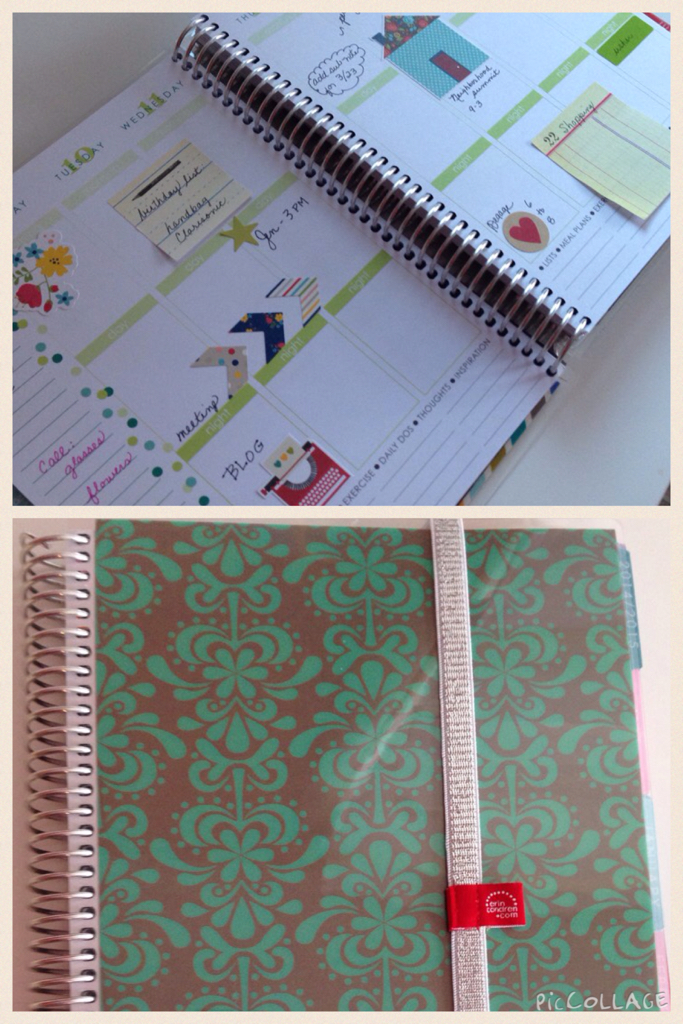
Erin Condren planner

Isn’t she pretty?

But this January I got a hankering again for one of those little bundles of organization. You know, the tabs for notes, the address book, the nifty little slots for business cards, and the cute zip lock pouch. I couldn’t put my finger on why, exactly, I wanted to go retro, but there it was. Unfortunately, the pickins’ were slim Office Max in that beloved 5X7” size I loved so well. In fact, I don’t even think they had a Day Runner. I contemplated a Filofax from Amazon. I even looked at printables on Etsy. Bah.

About the same time, a couple of the vloggers I follow unboxed their Erin Condren planners and I think I can safely “blame” Michele1218’s video for pushing me over the edge. (I knew a teacher who used one of EC’s teacher planners, but I didn’t know about her Life Planners.) So I stalked the site online for a few days and joined a couple Facebook groups just to see what the fuss was about.

What I liked about this new wave of paper planner addicts was their penchant for embellishing their weeks, very much like the scrapbooking I do. Now, some of it is a little overboard for my taste, but it looked fun, all the same. I also liked their DIY spirit–all these women laminating scrapbook paper to make something called a dashboard; cutting the Life Planner apart and re-punching it to fit a Filofax; making their own customized stickers, for goshsakes (and buying $150 Silhouettes to do so!); runs to Target to see if the Dollar Spot had added Easter post-it flags; back and forth flurries of RAKs (Random Acts of Kindness) in which planner junkies send a small package of planner goodies to surprise another junkie.

I was in.

Ten days later I had my very own Ready to Ship Life Planner, complete with a some extra doo-dads: a few cards and stickers, a couple of paper clips. And that much talked about coupon code I needed to customize a cover of my very own.

I love it. Like I said, my tastes run to the understated. I had a couple early mis-buys:  shiny vinyl stickers in bright primary colors, some pastel Sharpies that just aren’t me. But a couple hours of browse time later (and a quick run to Hobby Lobby) and I found my look in the sticker line Sn@p by Simple Stories—they’re  happy, but not cutesy, in muted colors that are a perfect complement to the Erin Condren palette.

What’s this craze all about? Let’s face it, life is hectic. I’ve got appointments and shopping lists and work outs and school deadlines and birthday parties and church … you get the idea. All that hectivity can sometimes whorl around me, kind of like the cloud that surrounds Charley Brown’s Pig-Pen character. Putting it down on paper gets it out of my head–it’s a physical way I can control the, well, uncontrollable.

So that’s the fancy pants reason for you–but it’s also plain old fun!

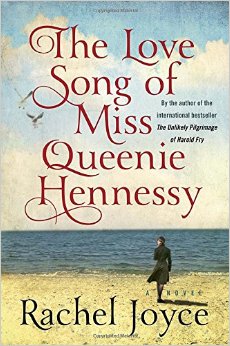
The Love Song of Miss Queenie Hennessey (Edelweiss DRC)
Rachel Joyce
Random House

We expect our happiness to come with a sign and bells but it doesn’t.

When The Unlikely Pilgrimage of Harold Fry by Rachel Joyce was published in 2012, the novel was short listed for the Booker Prize and won UK National Book Award for New Writer of the Year. And it was that good. Harold Frye, a kind of work-a-day Everyman, goes out one day to post a letter to an old friend who has written to say she’s dying and finds himself walking from one mail box to another until he’s out of the city and into the countryside. A couple miles out, Harold decides he’ll just keep on keepin’ on and deliver the letter himself. He calls the hospice where friend Queenie now lives and asks the nurse to give her a message: “Wait for me.”

Along his nearly 700 mile pilgrimage, Harold reflects on his marriage, his failure as a father, his lonely childhood, and his pedestrian work life (pun intended). Harold dutifully calls his wife Maureen each day and buys souvenir trinkets along the way for both her and Queenie. Writer Joyce also gives the reader Maureen’s point of view and we can begin to unravel the pain and hurt that has scarred this couple for the past two decades. After some little publicity, Harold is joined along the way by a rag tag bunch of followers who co-opt his mission, but he ends his journey as he began: alone. His goodbye to Queenie isn’t what he (or, probably most readers) quite expected.

In her second novel, The Love Song of Miss Queenie Hennesey, Joyce tells the story from Queenie’s end. And I must say, I think it’s the better novel.

Love Song of Miss Queenie HennessyQueenie Hennessey, thirty-something and pregnant, moves to Kingsbridge to start anew after a love affair gone wrong. Oxford educated, she’s floated through life, rudderless. Moored by the pregnancy she applies for a job as an accountant and refuses to budge from the office of the misogynistic factory boss who won’t interview a woman for the position. Her tenacity pays off and Queenie begins work, almost just as her pregnancy ends in miscarriage. But in the pain of losing her baby, she’s touched by a stranger–one Harold Fry, a diffident man, rather timid, and very tall. Because she needs to visit the brewery’s accounts scattered around the county and because she is a woman, the brewery boss Mr. Napier delegates Harold to drive Miss Hennesey to her appointments.

And so begins their ten year friendship. Queenie sees it at her job to make the uncomfortable Mr. Frye relax a bit, and he, in turn, treats her with gentlemanly respect and kindness. Queenie finds herself in love, but never speaks of her feelings. After several years, Queenie meets a belligerent (and probably drunk) young man on the street, immediately recognizing him as Harold’s son David. The two begin a secret friendship of sorts, neither mentioning Harold.

As often happens when secrets are involved, tragedy strikes. Queenie sets out again to begin anew, settling far away in a beach cottage in Northumberland where she creates fantastical natural sculptures in her beach garden—figures of driftwood, draped with seaweed and strung with shells. Queenie finds whatever peace she can until cancer strikes, disfiguring her and robbing her of speech.

In hospice, Queenie is cared for by tender and rather eccentric nuns: Sister  Lucy, Sister Philimena, and Sister Mary Inconnu. When news of Harold’s pilgrimage reaches the residents, they follow his trek via the post cards he sends Queenie and whatever news they can find in the newpaper or on television. To help Queenie come to terms with her life and loss, a Sister Mary Inconnu helps her write another letter to Harold Fry, but not “the sort of message he might expect from a gift card. Tell him the truth, the whole truth. Tell him how it really was.”

And so she does. Queenie’s story is, I think, more honest than Harold’s in Pilgrimage. Her voice is tender and raw and so much poetry: “Now that I have shaped the songs in my head and placed them on the page, now that my pencil has turned them into lines and tails and curls, I can let them go. My head is silent. The sorrow has not gone but it no longer hurts.”

Oddly (or maybe not) I read the two novels out of sequence. I got Love Song as an advance reader’s copy and liked it so much I wanted to hear Harold’s story, too. Both books would make a lovely gift pair and both stories are a testament to the extraordinary grace of ordinary lives–but it is Queenie’s words that are  with me still.

the little Jeep that could ♥ red, red wine ♥ snowblowing ease ♥ a novel journal ♥ again and again ♥ doggie love ♥ butterfly meadow ♥ birdfeeder, all aflutter ♥ a tenting we will go ♥ nap, well-taken ♥ greasy pizza yumminess ♥ heart-broken crash ♥ Gorilla glue ♥ creamy avocado ♥ free night for homemaking ♥ stumbling over Shakespeare ♥ wind-up februarymonkey ♥ steadfast ♥ bread & wine ♥ welcome with smiles ♥ love lost ♥ sober truth ♥ losing pride ♥ finding strength ♥ making peace ♥ shade tree’s summer peace ♥ black shadow-cat ♥ there but for the grace of God ♥ Truth with a capital T ♥ ticket to laugh ♥ uncountable rocker hours ♥ a teacher’s heart ♥ marriage blessing ♥ a home for Buddy-bear ♥ snow day French toast ♥ fatoush with a love ♥ walkabout ♥ grays that I’ve earned ♥ bubbling mac ‘n cheese ♥ baby blanket, soft and silky ♥ a step forward ♥ melting heart ♥ I Love Lucy ♥ Fr. John ♥ rusty red tobacco tin ♥ pretty, pretty planner ♥ an awful August night ♥ eye crinkles

You can learn more about the Joy Dare on Ann Voskamp’s blog A Holy Experience (link).