This is my symphony

What I read & what I lived …

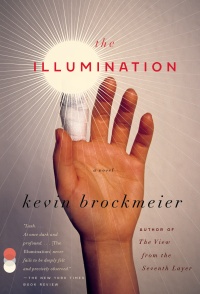
The Illumination
Kevin Brockmeier

There is a crack in everything. That’s how the light gets in. ~ Leonard Cohen 

Kevin Brockmeier creates a very believable world where every hurt–from hangnail to heart attack–shines with some sort of light, either shimmering, pulsing, flickering, blinding.  At the very outset of the Illumination, as it was almost immediately called, Carol Ann Page watches a young accident victim die in the hospital bed next to hers–but not before the woman bequeaths her journal. The book contains love “post-its” (rather than love letters) left by her husband and recorded in the diary. Assuming the woman’s husband died as well, Carol Ann takes the book after her death and relishes the intimacy on the pages: “I love the last question you ask me before bedtime. I love the way you alphabetize the CDs but arrange the books by height. I love you in your blue winter coat that looks like upholstery fabric.” 

The novel then follows five other people as they come into possession of the journal. Its impact on their lives ranges from profound to superficial. There is the author of the love notes, photojournalist Jason Williford, not dead after all, who at this very outset of the Illumination seeks relief from his grief by cutting, watching the light bars pulse and fade as he self-mutilates. Then there is young Chuck Carter, only ten, but already an old soul. Possibly autistic, Chuck suffers bullying at school and abuse at home. Chuck sleeps with the book under his pillow where it “shone like a wounded animal. The light was sad and bright and comforting to him.” Ryan Shiffrin is next, a door-to-door Christian missionary pounding the world’s pavement for the sister who died of lung cancer; then, Nina the author and Morse, the homeless man. Each character’s story flickers with its own suffering and the diary, somehow, lightens their world for however short a time.

And the Illumination itself, even as a literary device, seems to portends so much. Yet though people notice the light, they seem unfazed. Some believed that “the light that had come to their injuries would herald a new age of reconciliation and earthly brotherhood” and that “making [pain] so starkly visible … would inspire waves of fellow feeling all over the world, or at least ripples of pity, and for a while maybe it had” but “still they grew into their destructiveness, and still they learned whose hurt to assuage and whose to disregard, and still there were soldiers enough for all the armies of the world.”
Brockmeier is masterful at making the magical seem perfectly believable and his prose is a gorgeous wash of sensory imagery. Take this passage as eighty-one-year old Ryan Shiffin’s slides into dementia: “He couldn’t wait to start high school next fall, and his hip was achiing with a soft lucidity, and his hands were stained with liver spots … but that did not keep him from catching the Frisbee his scoutmaster was throwing through the crisp November air, nor from knocking on a hundred doors each afternoon with his satchel and his leaflets, though he confessed he found it hard these days to tie his shoelaces and operate his telephone, and he had been away from home now for such a long time.” I find the cadence and imagery of such passages breathtaking.

As might be expected, I couldn’t reconcile the novel’s end and will, no doubt, return to it again and again. If the chick lit and page-turners of summer reading don’t satisfy after a while, this other-worldly story with gorgeous prose just might.

Next up: Elizabeth I, which was a previous “Next up” until I lost the book in the back seat of my car sometime in the last two weeks of school. Go figure. I’d read almost a quarter of the book and am enjoying her company.
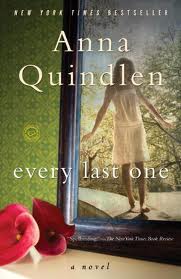
Every Last One
Anna Quindlen

Mary Beth and Greg Latham have a picture perfect family:17-year-old Ruby, a talented writer; and twins Alex, a budding athlete, and Max, the drummer. Mary runs a successful landscaping business and Greg is a respected local doctor. Add to that their sprawling home in a small town, surround them with close friends, and top it all off with a retriever named Ginger … and any reader should be mightily convinced this kingdom will tumble.

While Quindlen doesn’t allow all the King’s horses to fall until halfway through the novel, the edges do start to crumble from the very first page. Mary Beth, it seems, is not quite so satisfied with this life, Max is withdrawn and perhaps depressed, and Ruby is head-strong and ready to break free from her overly-attached boyfriend Kiernan. But that’s life–seldom do we recognize the joyful beauty of our Everyday.

Until it’s gone, that is. And Quindlen brings down Mary Beth’s world in one swoop. As she tries to rebuild her life, Mary Beth relives a past that may indeed have contributed to the violent act that destroyed her–and she also must face the fact that she ignored too many warning signs along the way.

I love Quindlen for one main reason:her incredible ability to see family and children through the eyes of contemporary mothers. Professional mothers who sometimes put work before family. Moms who wonder about the durability of their marriages. Mommies who doubt their ability to meet their children’s needs. Mothers who worry. Incessantly.

I was impatient for the “shocking act of violence” the novel’s blurb promised and I saw it lurking behind all the wrong places. But I took away the gentle assurance that we choose the families we live in–and must embrace our Everydays.

Next up: Illumination by Kevin Brockmier. Imagine a world where every hurt and injury shines with light. Can’t put it down.

Misfortune
by Wesley Stace

Is Rose Loveall “Miss Fortune”? Did her fortune pass her by miss her? Did she long for miss fortune? Or, is her cross-dressing life itself a misfortune? I loved Wesley Stace’s By George and wasn’t displeased with Misfortune, either. It is, however, a riot of a novel filled with more characters and subplots and back stories than the novels of Charles Dickens himself. What I like about Stace, though, is that his stories are original (no run-of-the-mill Chick Lit here) and fresh: an orphaned baby boy is thrown out on a London garbage heap, picked up by a dog, rescued by Lord Loveall, a Johnny Depp-like misfit, and raised as the girl Rose. See what I mean?

Not that Rose’s young life wasn’t idyllic. Understanding that he needed a wife to have produced this infant (apparently one can’t just pick a baby off the rubbish pile and take it home), Lord Loveall quickly proposes to the librarian of Love Hall who sequesters herself until the baby is “born”. (Mother Anonyma, long infatuated with dead poet Mary Day finds original manuscripts in the library over which she spends hours of study, so that ruse is not hard to pull off.) There are playmates and picnics and music and books–the entire manor revolves around young Rose and her every need. But misfortune comes to Miss Fortune when Lord Loveall falls ill, slipping away from reality, and slowly, carriage by carriage, relatives descend on Love Hall to sniff out opportunity–young Rose, of course, will need a husband to produce the future heir.

And as if the the plot wasn’t extravagant enough already, the relatives’ arrival and Rose’s awakening sexuality collide with devastating consequences for both Rose and Anonyma when Lord Loveall dies. For my taste, I enjoy the romp of a Dickens-like tale–but after a while the back stories that connect characters, the poetry and song lyrics that slow Rose’s story, weigh down the novel like one too many sweaters on a spring day.

The beauty of the novel, however, was the unabashed look the reader has of cross-dressing, sexual identity, and gender identification. For Rose, though physically male (and sexually attracted to at least one woman), never gives up her gowns, stockings, and long locks. Her struggle with identifying (and dressing) as a man almost leads to destruction. Her family, too, wrestles with Rose’s identity–but in almost losing her they find that what they really want is Rose, with all of her grace and tenderness. While I still might not understand, intellectually, those gender identity issues, Stace led me to accept and understand Rose with my heart. And isn’t that what matters in the end?

Next up: Oh, my. Dare I even try to write about 50 Shades of Gray? I’d better, because I’m blowing through book two already, but whatever shall I say …

The Leftovers
Tom Perrotta

As I mentioned last post in my ‘Next Up’ blurb, I loaded The Leftovers by Tom Perrotta on my Kindle after leaving behind (pun!) Misfortune at my daughter’s. When the Left Behind series was all the rage several years ago I had no desire to even pick up the books. In no way does pre-millenialism figure into my beliefs–and, in fact, the idea is so abhorrent to me that the very word makes me shudder. (And now that I’ve alienated a certain percentage of my readers, I’ll continue.) But the idea of a secular author writing about an idea usually associated with conservative Christians definitely aroused my curiosity–and while I can nitpick about certain plot devices or characters, I must say I was strangely okay with the novel.

This rapture differs from the version I’ve heard about most often where the righteous are taken up to Heaven in a blink of an eye to be spared from the great Tribulation that will serve to purify some of the dross so that those souls, too, can enter Heaven–and the rest … well, we know where they go. (Okay, so you might have guessed I have been exposed to this teaching a little more than I’d like to let on!) No, the rapture in The Leftovers is indiscriminate, taking sinners as well as saints. That, it seems, is why these departures are so disturbing–there is no explanation why some are taken and others not. And it’s that dissonance that leads to the leftovers’ anxiety.

So we watch the Garvey family fall apart: wife Laurie joining up with the Guilty Remnant, fanatics who keep a vow of silence and follow folks to intimidate them into moral living; son Tom, to the Healing Hug movement, started by fanatic Holy Wayne; and husband Kevin, the small town mayor who tries to hold it all together for  daughter Jill. We follow Christine, Holy Wayne’s pregnant sixteen-year-old spiritual wife, his Holy Vessel, as she travels incognito to safe shelter with a supporter, and Nora Durst, known as the Woman Who Lost Everything–her husband, son, and daughter. Each deals with the “Why me?” that accompanies any disaster and seeks to fill the void any way they can: some with alcohol, others with fanaticism, and still others with isolation.

One of the devices I loved in the novel was Perotta’s effortless use of what I’ll call public euphemism–kind of like what we have after 9-11: Ground Zero, Patriot’s Day. In this world they celebrate Departed Heroes Day of Remembrance and Reflection, for instance, and Hero’s Day and whispered around those who were Eyewitnesses, those who actually saw the departures. I have to believe if something like this happened, the United States would also shut down schools and honor the departed. I think I’ve finally identified a plot trend that really, really causes me to dislike contemporary fiction, though–like The Cookbook Collector this novel almost read like a screen play for a movie or TV show. The description of events, people, and places isn’t even writer-ly–but I could sure see it on the small screen. That gripe aside, The Leftovers kept me turning swiping the page. And any book that ends with a baby and this note “This little girl has no name. Please take good care of her.” has my vote. I think they should name the baby Hope.

Next up: … is really last up–my Misfortune has returned and I am well on my way to finishing it. Odd. Puzzling. Gender-bending. Very worthwhile read if you can take the odd, the puzzling, and the gender-bending.

The Tiger’s Wife
by Tea Obreht

Magical realism is just not my thing. I want to feel oh-so-cultured and understand the hidden meaning and deeper beauty. But Love in the Time of Cholera, Beloved and Like Water for Chocolate were just too obtuse for my story-loving taste. (Although, Time Traveler’s Wife and Life of Pi are among my favorites … so who knows?!) But this novel, and its author, have garnered so many accolades, I felt compelled to give her a try. And magical realism or not, the book was lovely.

I must also admit that I (shamefully) had to resort to Wikipedia to brush up on my understanding of the Balkan conflict. The novel takes place in an unnamed fictional country, probably Bosnia-Herzegovina, and begins with doctor Natalia Stefanovi heading off to an isolated orphanage to administer vaccines, as well as trying to unravel the mystery of her ailing grandfather’s death in a nearby village. And each moment in Natalia’s present seems to trigger a memory in her past–the stories her grandfather told of the tiger’s wife and the deathless man.

The tiger’s wife was a deaf mute Muslim living with her butcher husband in Grandfather’s boyhood village. Abused and isolated, she feels kinship with an escaped tiger hiding in the mountains and terrorizing the village. Whether her connection went as far as Grandfather and the villagers dreamed was beside the point. I believed in the tiger’s wife. The deathless man made his way in and out of Grandfather’s life, perhaps for the last time just days before his death. After altering fate by cheating his beloved’s death, the deathless man is doomed to eternal life … on earth. Neither gun shot nor drowning can stop him and catastrophe follows his appearances over sixty years. And in Obreht’s hands I also believed in the deathless man. Both “stories” might very well be metaphor for how people in war torn countries deal with death and uncertainty, but I read them as no less real than Natalia and her grandfather.

Only twenty-five when Tiger’s Wife was written,Tea Obreht’s storytelling is flawless and her prose evocative. What an incredible gift this young woman has given us.

Next up: I started Misfortune by Wesley Stace and was loving the first hundred pages of the rollicking tale of an orphaned he-turned-she … but then I left it behind, a state away, at my daughter’s, leaving me bereft and at loose ends. Today my task is to find a quick read for my Kindle, just to tide me over until she brings it up with her next month.

Post script: Just bought the Kindle edition of The Leftovers by Tom Perrotta. Not a premillenialist by any stretch of the imagination, I’m intrigued to read a story about this weird concept, the rapture, written by someone other than an evangelical Christian ala Peretti (although the similarity in the names had me confused for a bit). Perrotta’s Catholic roots and Hollywood ties should put an interesting spin on an evangelical stronghold.

By George

Wesley Stace
I love a book that puts me in a place I’ve never been before with people I’ve never met—By George did just that. The novel’s opening starts with a ventriloquist act, waiting in the wings to take their places on stage. That brief prologue ends with, “The great ventriloquist is more than an illusionist; he is a creator, a dream maker, a god. And I should know: I’m his dummy.”  How enchanting is that? With that, the promise of a delightful novel was offered up.
The novel winds its way in and out and in-between a great stage family. Enter Echo Ender, grand dame; Joe, her son; Queenie, her daughter-in-law; Frankie, her granddaughter; and George, her great-grandson. Add to the slate of humans, the dummies, or dolls, or, as the Fisher family prefers, “boys”: Narcissus, Pipsqueak, George, and (a rarity) a “girl” named Belle. This is one family whose secrets are many and whose fathers are more often than not, missing.
While the back story of Echo Ender’s great fame, is interesting, it is the story of George, her great grandson, that takes front and center. George is the one member of the family who self-consciously watches from the wings—literally and figuratively. And the family drama that he sees played out leads him to unravel the story of a missing aunt, a father presumed dead, and a grandfather long thought to be killed in World War II. It’s almost as if thisGeorge (named after his grandfather’s boy) is the one character in the novel who refuses to accept the script of his life at face value—and in doing so unwittingly re-writes his family’s story … but only after finding (and also losing) his own voice.
While the novel’s opening intrigued me, it was a chore, at first, to keep track of three generations of stage acts: names, places, theaters, acts. And truth be told, it probably took me almost eighty pages to reach that sweet spot where I felt compelled to read, where the book beckoned me away from lesson plans, dinner preparations, and laundry. I’m slow that way. But By George is a fantastic story, one thick with motifs of storyand voice and act.
( I loved it, Denise!)
Next up: I just started reading The Tiger’s Wife. I’m already hooked, yet more than a little ashamed that my fascination with all things geopolitical hadn’t yet been born during the Balkan conflict and I am a bit lost figuring out who is whom in this Balkan country. I’ve just met the deathless man and, myth or no, magical realism or not, I’m enjoying myself immensely.

The Fault In Our Stars
by John Green

  “The fault, dear Brutus, is not in our stars,
But in ourselves, that we are underlings.”
                                     ~ Julius Caesar

Last month I heard author John Green on NPR and immediately added this book to my wishlist (link). And what should I see just a few days later, stacked atop one of my students notebooks but this novel?! “It’s the best book I’ve ever read.” isn’t a bad recommendation, coming from a sixteen-year-old. My copy of this tender read arrived the week of Valentine’s day, a gift from my sweetheart.

Sixteen-year-old Hazel and seventeen-year-old Augustus are in love–not very unusual as teenagers go. But how many teens meet in Cancer Kids Support Group? And how many girls won’t let themselves fall in love because they worry about the effect their death will have on their boyfriend? At that fateful meeting, Hazel squirms under Gus’s intense stare–with her portable oxygen tank and face swollen by a cancer trial drugs she doesn’t feel attractive. Gus, on the other hand, tall, muscular, and oh-so-cute appears to be the picture of health, albeit short one leg. His cancer was caught, amputated, and annihilated. Hazel isn’t so lucky–her prognosis is not if but when. 

Both teens have lived with death hovering close–and they see its shadow on the faces of their family and friends; it stands between them and high school and Friday night basketball games and all things normal. A loner and avid reader, Hazel reads and re-reads An Imperial Affliction, a novel which echoes her life philosophy. Because the book’s ending is unresolved, Hazel writes author Peter VanHouten again and again asking for answers. After reading the novel himself, Gus also writes VanHouten and receives an email from the writer’s assistant Lidewij Vliegenthart promising a meeting should they ever visit the Netherlands.

Gus uses his Wish to travel with Hazel (and Hazel’s mom) to meet VanHouten. While their visit with the author is disappointing to say the least, their days in Amsterdam are anything but. The young lovers tour Anne Frank’s home, share a romantic champagne dinner by the canal, and watch  life spinning around them– on roller blades, bikes, canal boats, walkers. Until, that is, the life in them starts to spin out of control.

No spoiler alert here. I had a hunch at what might occur, but even its realization was unsettling–I spent the last hour reading through a wash of tears, sometimes unable to see to read. (In fact, I might re-read the end when I have some distance.) The best read ever? Probably not. But a solid story, well-crafted, with enough soul to lend it some weight. Thank you, Esther!

Next up: By George by Wesley Stace–narrated by a ventriloquist’s dummy. Puppet? Mannequin? Whatever the case, who can go wrong with a beginning like that? 

11/22/63
Stephen King

“The past fought change because it was destructive to the future.”

Never in my life did I think I’d read two Stephen King books in one year. You might remember that last spring my book club Chicks on Books read Full Dark No Stars … and that, surprising to me, I loved it. Well, it’s happened again, and this time we decided on 11/22/63. One English teacher friend said it was the best novel he’d read in the past year … and (maybe this time not so surprising) I loved it. In the spirit of full disclosure, I am a time travel fan–Time Travelers Wife, Time and Again, From Time to Time–so my standards are high. 11/22/63 didn’t disappoint.

High school English teacher Jake Epping, (okay, King might have had me right there!), still a bit shaky from his divorce,is anticipating a summer free from any encumbrance. Local diner owner Al Templeton, however, has designs on Jake’s time. In what  is apparently his dying wish, he asks Jake to travel back to November 11, 1963 to stop Kennedy’s assassination. Al, it seems, has been traveling back to the early sixties for years, supplying his diner with a never-ending supply of hamburger at fifty-year-old prices. Knowing the portal could be an incredible gift to humankind, Al wants to do more. Forestalling Kennedy’s assassination might prevent Vietnam, the Cold War, and who knows what else? And so disbelieving, humoring, curious, and drawn, Jake takes those steps in Al’s cooler–it is Al’s dying wish, after all–and finds himself in 1958.

And so starts Jake’s journey back and forth in time. And so starts the Butterfly Effect–that condition in chaos theory that contends even a small change in one place can affect large differences in another state. By bits and pieces, patches and random stitches, Jake begins to experience the changes his presence makes. He can prevent a man from murdering a family–but at what cost? He can stop his true love’s horrific death–but to what end?

This is one post that won’t deal with much of the plot. King is first and foremost a storyteller–no long passages of poetic prose here or any avant-garde conventions found in so many contemporary novels. Just a good, satisfying story with a beginning, middle, and oh-so-tender (and tear inducing) end.

* I read this one using my Kindle app–849 pages makes for one thick book! 

Swamplandia!
by Karen Russell

This book sat tucked away for several months– a reader’s copy, passed on by a lucky friend who attends the Michigan Booksellers Association every year– until it finally wormed its way off my bookshelf when I heard NPR’s own Nancy Corrigan add it to her “10 Best Novels of 2011” list.  Now the synopsis had always sounded a bit John Irving-esque, which was its appeal. Always up for quirky characters in impossible situations, how could I pass up a novel about a family of alligator wrestlers who run an alligator themed park?

And, to be sure, I wasn’t disappointed for the first several chapters. Ava Bigtree has potential has the next star in Swapmlandia! She loves to perform and is quick and agile–qualities essential in gator wrestling. But Ava’s young mother has died, her father and brother disappear, and Ava is left alone on the family’s Everglade island with a sixteen-year-old-sister in love with Ouiji boards and possibly having an affair with a ghost. That all fits the Irving bill. Add to the plot that brother Kiwi is found working at Swamplandia!s rival World of Darkness park and the Chief at a casino and the novel seems on it’s way to another Hotel New Hampshire.

[spoiler alert]
But Russell’s characters don’t have the innate goodness of Irving’s, nor do they seem indomitable, and the novel takes a dark turn into a child’s rape and abduction. And while many contemporary novels deal with life’s dark realities, Russell never brought her characters back into the light–and I feared for the future of Ava and her siblings, even though the writer seems to want to convince us that the story has a happy ending.

Next up: 11/22/63 by Stephen King, our next book club read for March. I am delighted after only 75 pages and I am looking for my own portal into the past.

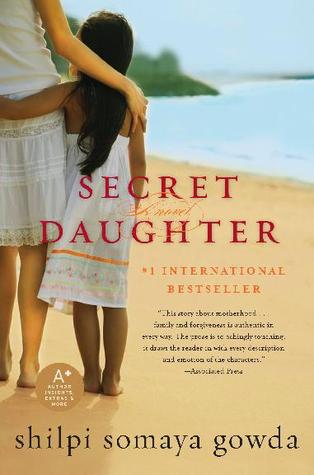
Secret Daughter
by Shilpi Somaya Gowda

Somer and Krishnan have it all. Meeting in med school he was drawn to her American optimism  and drive, she to his British accent and exotic Indian homeland. Marrying to improve their chances of being assigned a shared residency program, they set out (as most do) with the dream that their perfect professional lives would blend seamlessly with their perfect family life. But several years into their marriage and several miscarriages later, that dream is fading. The waiting list for adopting a baby is crushing–then,  in what seems like a perfect solution, Kris suggests they travel to India where his family has ties to an Indian orphanage. Female newborns are often abandoned because families value boys and the child would look like Krishnan. I had a real problem with Somer’s reluctant response, which didn’t seem to jib with the social conscience of the late eighties. But the need for a baby overcame Somer’s ojections and a few months later they are back in the States with beautiful Asha.

Parallel to the story of Somer and Krishnan is that of Kavita and Jasu, Asha’s birth parents. Still mourning the loss of her first daughter, torn from her arms and killed by Jasu’s brother, Kavita vows that if her second child is a daughter, she will travel to a Mumbai orphanage so that at least the child will live. So the day after her baby girl Usha, meaning Dawn, is born, Kavita and her sister journey to the orphanage, Kavita’s sorrow palpable in her weeping. Kavita and Jasu’s life is one of poverty, hardship, and abuse; Somer’s and Krishna’s one of privilege and comfort … and both families find happiness or peace of mind elusive.

It was easy to fault Somer for her discontent; her reluctance to embrace the culture of her husband and daughter eventually drove a wedge between mother and daughter and wife and husband. But I did like watching Asha’s  own homecoming,  living in India for a year to internship at The Times of India.Asha grows to love India and her lively aunts, uncles, cousins, and grandparents. Though perhaps a bit too pat, a tragic event brings Somer and Kris to India, where they attempt to mend, and Asha, which means Hope, lives up to the name they gave her.

Secret Daughter was not overly demanding and provided enough of a glimpse of Indian culture to make it satisfying. A good read overall.