This is my symphony

What I read & what I lived …

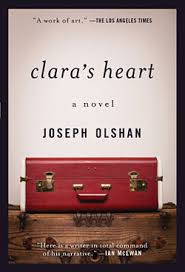
Clara’s Heart (NetGalley)
Joseph Olshan
ebook released July 2013

Joseph Olshan’s Clara’s Heart is probably best known as the 1988 movie starring Whoopi Goldberg, which, coincidentally, I’ve not seen. So it was with fresh eyes and ears that I read the novel, recently released as an ebook. The story centers on David and his parents as the family navigates the death of a newborn sister, depression, infidelity, and divorce. It is Clara–a fiercely loyal and loving Jamaican woman–who comes to care for David and steers him through those years of turmoil.

Suspicious of her at first, eight-year-old David quickly bonds with Clara who also seems to have resurrected his mother after baby Edith’s death. A chubby little boy with few friends, his world centers on home … and Clara. The two watch her soap operas together, David learns to love

Jamaican food, and he can even imitate her patois flawlessly. He visits her apartment in Brooklyn and spends time at the beauty parlor where her friends gather. But soon enough, we also see the flip side to such closeness. David fails to respect many boundaries, disobeying Clara repeatedly, snooping in her room–driven by an intense longing to know as much about her has he can, to plumb the depths of her life and its secrets.

And just as David is drawn to Clara after the family’s tragedy, David’s mother Leona is pulled toward Eastern philosophy (and her teacher), giving up her smart skirts, sweaters, and pearls for peasant skirts and blouses (it is the early 70s, after all). David’s father retreats into his work as an international lawyer (and his young assistant). Clara pleads with Leona to put her child above all else. In some parenting advice that is at once out-of-fashion, but perhaps oh-so-wise, Clara implores David’s mother to put her son before her lover, “A child is de only real thing you have, Mrs. Hart … a child is constant. Whereas love wid a lover is a most strange thing. Some days you so sure it’s dere and then tomorrow it suddenly gone like sandpiper.”

Eventually, David must give up Clara and move on, something he doesn’t think he has the courage to do.  Clara promises she will answer all his questions about her life, but only after he has grown to be a man and she sends him a sign. But Olshan’s novel ends only four years after it began, and David does learn Clara’s secrets.

While David’s voice was not consistently child-like (gifted child or no), and Clara’s secret seems (to me) a bit contrived, Clara’s Heart is a fairly satisfying read–and Clara proved an interesting counterpart to Gloria (link). Two powerful Jamaican women to grace your e-reader this summer.
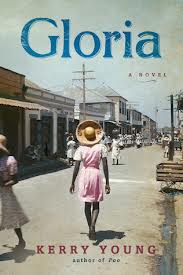
Gloria (NetGalley)
Kerry Young
release date: July 16, 2013

Gloria’s story covers nearly thirty years, from the horrifying murder at the novel’s beginning to her discovery of a brother she never knew at its end. And in between is a series of hills and valleys,

losses and gains. A runaway at sixteen, Gloria raises her younger sister Marcia on the outskirts of Kingston, Jamaica. They are shop girls and domestics–until the house across the street beckons with its lively Calypso blaring from the radio on the porch, the friendly women, Beryl and Sylvia, the mouthwatering smells of home-cooked food, and the many visitors coming and going. Gradually the girls come to realize that Beryl and Sylvia are prostitutes, and even more gradually begin their working lives in the home.

The life of a woman on her own was not an easy one–but the wife of a married woman was often no better. Sybil explains that for a woman being a prostitute is a means to gain control of her life and claim her power: “…every woman is a whore … she is a thing. A thing for [men’s] comfort and pleasure, their pride or amusement. She there to mek them feel good. People think being a whore got to do with what gwaan in the bedroom but it not. Being a whore is about who is in charge. And who can mek who do exactly what they want …” She then goes on to explain that in many ways women are still enslaved. “The woman is still living her life under the control a the man, under his law and regulation and goodwill. And her body is occupied … it belong to him.” For these women, prostitution means freedom and self-determination–a spin on prostitution seldom posited.

But two men do play a role in determining Gloria’s destiny: Yang Pao, her Chinese customer-turned-lover; and Henry Wong, a wealthy wine merchant and grocer. In their own way, both men love her and Gloria’s life would have turned out much different, one suspects, if it hadn’t been for their protection and influence. In her twenties, Gloria gives birth to Pao’s daughter, Esther, and the two leave the house in Franklyn Town. Gloria goes into the money lending business with Henry and life for the family of two settles into a slow, Caribbean rhythm. In her thirties, Gloria becomes involved in the People’s National Party, even traveling to Cuba to help the Socialist movement there. She is introduced to Simone de Beauvoir and Betty Friedan and realizes, “how the struggles of women different if you also poor, or black, or homosexual. And that it just as important as anything the white woman got to face.”

Cuban communism? Women’s liberation? Gay rights?  Those plot strands were a weakness in the novel, in my opinion, and the character’s dialog sometimes turned didactic. Although I liked Gloria well enough, I would have loved the novel even more had it turned its eye more intently on the slice of life that is Jamaica. I’m interested to measure Julia against another Jamaican woman; Clara’s Heart, by Joseph Olshan, will be released as an e-book in early July and I’ve just started my NetGalley download. Stay tuned …

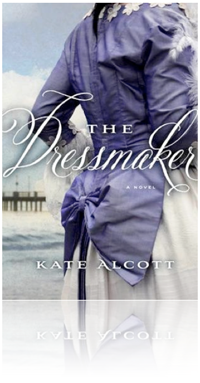
The Dressmaker
Kate Alcott

A poor, but talented (and spunky!), young seamstress; a wealthy (and imperious!) fashion designer; the doomed Titanic and overcrowded lifeboats–what’s not to like? Kate Alcott’s The Dressmaker is a novel with the same flavor as The Guernsey Literary and Potato Pie Society. Base it on historical fact, populate it with sympathetic characters, throw in a love story, and you’ve got a story sure to please. Add to the mix a host of English characters to please the Anglophiles and it can’t get much better.

Tess is that seamstress who finagles her way onto the Titanic as a maid for the wealthy designer Lady Lucille Duff Gordon. And while Tess isn’t much of a maid, she does win Lady Duff’s approval as a seamstress. Tess also meets the approval of two men on board the ship: the rich businessman Jack Bremerton and the poor sailor Jim Bonney. For the rest of the novel, they’ll vie for Tess’s attention, but only one will win her love.

Alcott captures the slow motion chaos of the tragedy, the alternate panic and disbelief  as passengers either stood stunned or shoved towards the lifeboats. Lady Duff becomes the villain when it’s discovered that her lifeboat, designed to hold forty to fifty passengers, launched with only twelve. That scandal, followed by feisty young girl-reporter Pinky Wade, is at the center of the novel. Senator William Smith actually meets the rescue ship Carpathian to assess the situation and launches hearings immediately upon the ship’s docking so that none of the important players disperse across the country.

As she watches her employer’s life unravel, Tess finds herself in charge of the workroom at Lucille, Ltd., preparing for the spring fashion show and trying to tie up all the loose ends, from wardrobe malfunctions to dress re-designs and sulky models. Will Tess stand by her benefactor despite her doubts about Lady Duff’s character? Will Tess fall for the temptations of wealth her older suitor promises? Or will her first love be her last love?

My hunch is that even if you can already guess the answers to all those questions, you still won’t be disappointed in The Dressmaker. And although I’m not a betting person, I’d bet this Cinderella story is picture-perfect for a movie.

How it all began
Penelope Lively

Ever since I turned the last page of Penelope Lively’s Booker Prize winning novel Moon Tiger nearly 25 years ago, I was hooked. Her peek inside modern British culture was a look at a world that probably no longer exists. Lively’s characters are complex–especially her women–and drive the story; I’ve often envisioned the conversations we’d share.  And so The Road to Lichtfield, The Photograph, and Moon Tiger remain some of my favorite reading memories. The author is now eighty and I’d thought she was no longer writing–so imagine my delight when I discovered How it All Began written in 2011.

I loved the concept–one event sets off a series of events ala the butterfly effect–when I read the blurb. The elderly Charlotte Rainsford is mugged and must move in with her daughter and son-in-law after her release from the hospital. The web of characters affected by this event move outward from there: Charlotte’s daughter Rose, Rose’s employer Lord Henry, Henry’s niece Marion and her lover Jeremy, Anton, the eastern European immigrant Charlotte comes to tutor.

The makings of a satisfying read … except it’s not. The characters are not interesting enough to carry a plot and by the end, I simply didn’t care what happened to them. To make matters worse, the last chapter was six pages of disappointing epilogue. How sad that this will be my last impression of Lively’s work.

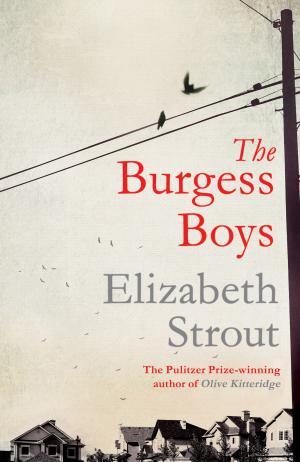
The Burgess Boys (NetGalley)
Elizabeth Stroud

I must admit that I wasn’t a fan of Olive Kitteridege, Elizabeth Stroud’s Pulitzer Prize winning novel. Maybe it was just the teacher in me who found the retired teacher Olive so unlikeable; maybe it was the fact that the interlocking tales just didn’t interlock completely enough for me. (I’m nothing if not a fan of a good plot.) So I was a bit worried about Stroud’s The Burgess Boys, especially after I read one review that characterized the novel as rambling. But The Burgess Boys is rich and engaging (and, yes, maybe rambling) and oh-so-satisfying.

Jim and Bob Burgess, along with sister Susan, found their emotional lives constrained by a tragic accident: when he was only four, Bob ran over their father with the car, fatally injuring him. For the

rest of their lives, Bob lived in his brother’s shadow, never quite measuring up to his own (or anyone else’s) standards. Although he’s an attorney, Bob works in Legal Aid. Burdened by worthlessness, Bob describes himself as a “big slob-dog” and Jim as “someone born with grace, someone who walked two inches above the surface of the earth.”  Susan’s life also sags under the weight of small town gossip and a messy divorce. Only Jim Burgess, wealthy, successful New York attorney, escapes. Or does he?

The plot centers on the trials of Susan’s son Zachary, an odd, friendless boy “quiet, and hesitant in all his actions” whose own mother thought “the package of Zachness added up to not quite right.” The small Maine town of Shirley Falls has seen an influx of Somali refugees. They are Muslim, and this otherness isolates them. Zachary, in a thoughtless random act of delinquency, throws a thawing pig’s head through the door of a Muslim mosque–and the brothers Burgess hurry to his side. Or rather Bob does; Jim is vacationing at an island resort. And Bob, in true Bob-fashion, mucks up his rescue by almost hitting a Somali woman with his car. Hurrying home, Jim tries to spin Zachary’s act, rubbing shoulders with local officials and speaking at a unity rally.  The feds file a civil rights violation against Zachary. Life begins to break up.

The secondary characters in the novel propel the plot, but only just interest the reader. Bob’s ex-wife Pam begins to see her trade-up as (possibly) a raw deal; the Unitarian minister flits in and out of the plot as a mediator between the Somali and white community. Helen, Jim’s trophy wife, can’t take the heat and falls back on family money. But perhaps most interesting is Abdikarim Ahmed, the Somali cafe owner, who first testifies against Zachary and then begins to see beyond Zachary’s crime into his heart.

 Jim has a great fall; Bob picks up the pieces. Zachary re-invents himself; Susan carries on. And Stroud takes this Humpty Dumpty family and puts them back together again–thankfully not quite the same as before, but new, improved, and self-aware.

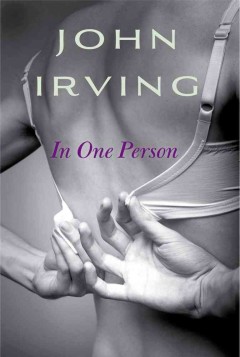
In One Person
John Irving

My love affair with John Irving began nearly 25 years ago when I discovered Hotel New Hampshire, following it with The World According to Garp and then Owen Meany. I’ve continued to read nearly everything Irving publshishes (even the odd little Trying to Save Piggy Sneed) though I’ve found that few books carry the magic that his earlier work did. So In One Person landed on my stack of books.

Billy Abbott lives in First Sister, Vermont, is 13, and frustrated that he always seems to crush on the wrong people–his friend’s mother, an older classmate, and, most significantly, the town librarian, Miss Frost. We have hints early on that Miss Frost is not all she seems to be. Billy’s aunt and grandmother almost seem to hiss her name, Miss Frost, commenting on her “training” bra. So the reader knows well before Billy does that Miss Abbott is transgender. But Billy’s grandpa has perhaps eased Billy into this transmutable idea of one’s sexuality–Grandpa, a powerful local businessman, is also an amateur actor who often plays (quite fetchingly) female characters in the town’s theatrical productions.

Billy’s story meanders on in true Irving fashion and by the novel’s midpoint, we’ve the history of Miss Frost, Billy’s missing father, and Grandpa’s continuing gender bending in the nursing home. And in true Irving fashion, the writer pulls no punches–we are privvy to Billy’s sexual exploration with Elaine and we’re there when he loses his virginity (Or does he? Billy is quick to tell everyone “there was no penetration!”) with Miss Frost. Irving to the core.

Except that, for some reason, instead of being captivated, I found myself bored with Irving’s world and Billy’s endless kevtching. With all the “do I’s?” and “don’t I’s?” the characters became flat, almost characatures. I suppose Irving could have rounded out those characters in the novel’s second half–but I’ll never know because I stopped reading, something I never used to do but find myself doing to more and more. Life is too short, Irving or no.

Don’t get me wrong. I am drawn to novels in which characters blur the edges of their sexual identity. See  my reviewa of  The Rebellion of Miss Ann Lobdell (link) and Misfortune (link). So it’s not the content. I think one of the biggest weaknesses of In One Person is that there are just one too many similarities to John Irving’s own life. It didn’t ring true as a novel. Rather than write a fictionalized account of his life, he just might have been more successful had he written a memoir.

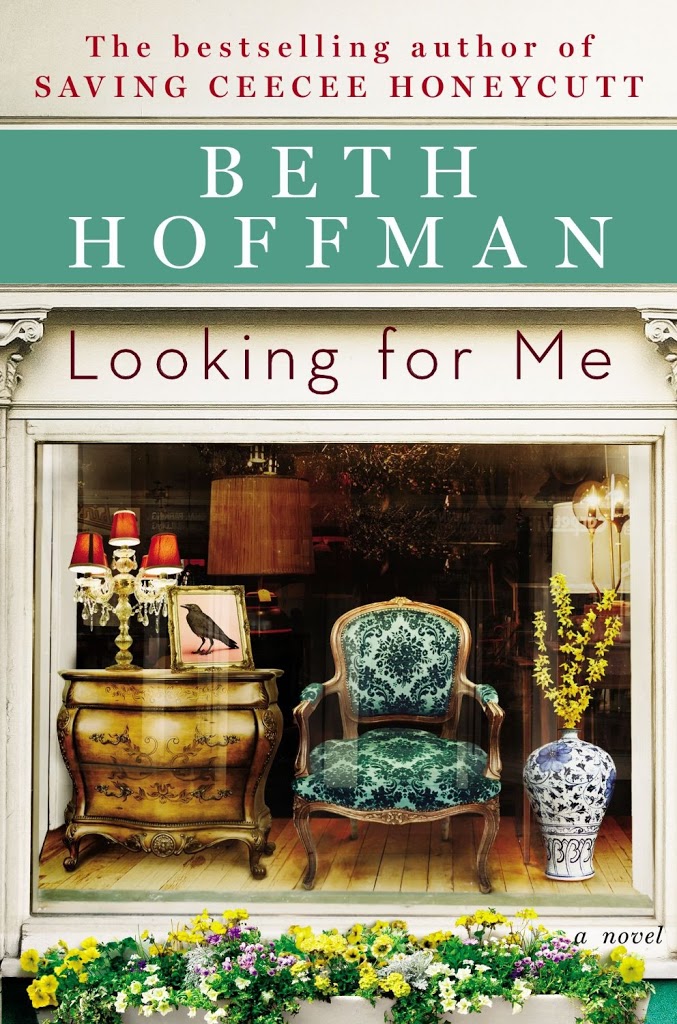
Looking for Me (NetGalley)
Beth Hoffman

Albert removed the chair seat and set it aside. “Don’t look too close. That old chest been through a whole lot. It ain’t never gonna be perfect.” I ran my fingers over the front of a drawer and whispered, “Neither am I, Albert. Neither am I.”

Teddi had a gift. At age ten she dragged a broken-down chair home after finding it by the side of the road. Cleaning, buffing, and oiling it, Teddi had found her true love. From that first chair, her life was one chair, after sideboard, after armoire, after another. And while selling those treasures in the front yard of her family’s Kentucky farmhouse, Teddi dreamed of her future: selling her fix-ups in her very

own shop.  Teddi’s life changed forever when she made her first big sale to an antiques dealer from Charleston, Jackson T. Palmer.

Teddi’s mama, on the other hand, wanted her settled in a job with good benefits and pushed secretarial school brochures her way.  So after high school graduation, Teddi left home in the dead of night, headed for Charleston, where Mr. Palmer took her under his wing shortly after her arrival. And although she missed the farm and her family back home, Teddi had found her place–she turned Mr. Palmer’s shop around, lived in a tiny apartment over a bakery, and spent the weekends searching through yard sales for just the right piece. In Charleston Teddi made her mark, lost her place when Mr. Palmer died, and re-made herself again.

Teddi’s younger brother Josh also has a gift–he is keenly in tune with nature, a boy who heals and tames owls and hawks, who knoww every nook and cranny of Red River Gorge. Quiet and pensive, even his classmates know little about him. And so, a few years after her departure, Josh followed in Teddi’s footsteps, leaves home … and goes missing. Devasted, the entire community comes together to search for him. Was he injured? Did he fall to his death? Had he run away? The mystery of Josh’s disappearance would always shadow Teddi’s family.

Author Beth Hoffman alternates between Teddi’s past and present and the reader is drawn into the mystery of Josh’s fate. We meet Teddi’s best friend Olivia, her Grammy Belle, her employees Inez and Albert, and, finally, her love interest Sam Poteets–but these relationships are almost after-thoughts, and I sense Hoffman needed them only to drive the story of Teddi and Josh forward. Looking for Me is a light read, enjoyable, and satisfying, but not too demanding. If you liked The Knitting Club or The Jane Austen Book Club, you won’t be disapointed in this book. I certainly wasn’t.
___________________________________________________________________________________

What’s new in my stack o’ books? Gloria by Kerry Young–a coming-of-age story set in Jamaica and Cuba in the forties and fifties and Top Down by Jim Lehrer–a story set against JFK’s assasination–which I’m so excited to have recieved!

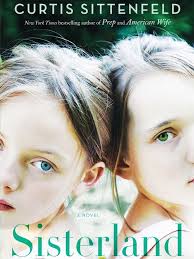
Sisterland (NetGalley)
Curtis Sittenfeld
release date: June 25,2013

Daisy and Violet were identical twins who couldn’t have been more different. Daisy longs to fit in; Violet couldn’t have cared less. Daisy is pretty; Violet overweight. Daisy has the perfect family: loving husband, toddler Rosie and baby Owen; in her 30s Violet is still single and trying to “decide” whether or not she’s gay. But the girls do share a depressed mother who can’t get out of bed most days and a distant father. They watch TV and play-act away long afternoons when they’re not in school in the bedroom refuge they call ‘Sisterland’.  And perhaps most important of all, they they share the “senses”.

When she was four, Violet was awakened by a nightmare of a neighbor’s house burning. The next night a neighbor lost their home in a fire. About the same time, Vi wondered why “Aunt Emma’s heart hurt” and only months later Aunt Emma died of a heart attack. The girls could hear each other’s thoughts and knew their incredible gift set them apart even more than their twin-ness.It was in middle school that Daisy started to turn away from her senses after a disastrous slumber party and a turn at the Ouiji board–in that awful middle school way, their classmates label the girls witches. Vi, however, continues to embrace her gift and in college encounters a “crazy yellow light” and a voice that tells her, “You’re not meant to suffer … you’re on a journey of discovery.” Violet drifts and Daisy settles.

Eventually, Violet ends up using her senses to help police find a kidnapped youngster and begins to support herself as a psychic. Daisy puts all that senses nonsence behind her, changes her name to Kate, and begins the perfect family she always wanted. Life seems good. Until the earthquake. In a rare twist of the earth, St. Louis experiences a minor earthquake that shakes their world. Violet predicts another one. She’s interviewed (twice!) on the Today Show. Daisy’s loyalties are torn between her New Age sister and her scientist husband–she can’t seem to ignore Violet’s sense–and she lives in dread that the earthquake will (or won’t) occur.

Author Curtis Sittenfeld was a master at capturing childhood in the 70s and 80s. Who over 40 can’t remember watching soap operas after school and “eating either Cool Ranch Doristos, Wonder bread toast topped with butter and  cinnamon sugar, or tiny pieces of American cheese melted in the microwave onto Triscuits”? Sittenfeld caught the social lives of tweens and their insecurities almost perfectly. We also come to feel  acutely the desparation which impels Daisy to build (and hold on to) the house of cards home she’s built.

No spoiler alert here–even if I tell you there is an earthquake. Because not every earthquake we experience is literal and it just might be that we all have a bit of the senses.

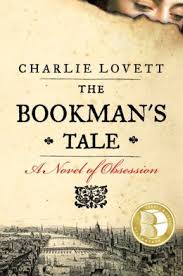
Bookman’s Tale (NetGalley)
Charles Lovett

A dreary day–rain drenched Wales–a bookshop–a rare book collector. The opening paragraphs of Charles Lovett’s recently published The Bookman’s Tale is sure to hook any bibliophile. And so begins the story of Peter Byerly: book binder, bookseller, recently widowed, and grieving. Peter walks into that bookshop, opens a book, and absent-mindedly picks up a paper that flutters to the floor. What he isn’t expecting to see is a small watercolor of what looks like his dead wife. Shaken, Peter begins a search to find out the woman’s identity and just how she came to be in the book in the first place. When I first read the publisher’s blurb, I hoped thought this just might be another time travel novel–I kept waiting!–but about halfway through Tale I realized I was immersed in a mystery. (And the woman’s identity was revealed at the end!)

Lovett shifts between Peter’s present story, his life before the death of his wife Amanda, and even still further back to the eighteenth and nineteenth century. It is when Peter interns as a college student in the university’s special collections that he learns the ins and outs of  rare books–and the forgeries that sometimes become almost as valuable as the special collections themselves. Peter’s search for the truth about that watercolor lead him into the world of Shakespeare deniers, and it soon becomes clear that he just might hold the key to proving whether or not Shakespeare was indeed the writer of the works ascribed to him–could the copy of Pandosto (an early version of Shakespeare’s A Winter’s Tale) that Peter holds be the key?

In terms of simple storytelling, I found Peter’s present and recent past much more compelling than following the subterfuge of the earlier centuries. The names, dates, and texts that traded hands blurred at times, and, my biggest complaint as a reader, I almost think the author tried to cover too much territory–there was a  family feud, mistress, bastard child, and forgery that changed hands four (?) times. Peter and Amanda’s story was powerful enough.  I felt as Amanda did during their courtship when she  listened to Peter’s rare book discoveries and “quietly indulged his passion, despite the fact that she could not keep straight the maze of collectors and dealers with whom [Peter] had interacted.” Only I was indulging the author’s passions.

But I’m not a great reader of mysteries, so this might just be my own shortcoming as a reader! Overall, I enjoyed Bookman’s Tale … and the ending that was just shy of happily ever after.

Meg Wolitzer reviewed Jeanette Walls’ Silver Star today on NPR (link) and while I don’t disagree with some of her criticism (sometimes the direction was shaky, and maybe the girls are a little too resourceful), I also couldn’t help but think that she totally missed the mark on why some readers return to a favorite author in the first place. After fan-girling for a stunning best-seller, we turn to an author’s subsequent books because the characters are familiar, the themes ring true, and the plots are as comfortable as a well-worn pair of jeans. We don’t always need for their work to be “more textured and moving and real”–we’re not asking for “complexity” or “richer, subtler notes”.  Sometimes we just want to hang out again with old friends.