This is my symphony

What I read & what I lived …

art·sy-fart·sy/ˌärtsēˈfärtsē/adjective INFORMAL•DEROGATORY
1. associated with or showing a pretentious interest in the arts.

No one would ever call me artsy fartsy. This, despite the fact that my father was an architect and a watercolorist. Let’s just say I didn’t get his art gene! Mind you, I love visiting the Chicago Art Institute–but mainly because I like to see the famous paintings in real life like Sunday Afternoon and Nighthawks and Child’s Bath and American Gothic. And I’m one of those I-know-what-I-like type of museum goers. When it comes to art, I’m usually out-of-my-comfort-zone.
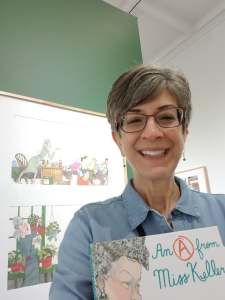
But this past month I’ve seen some fine art– both as in fine art, and fine. art. Friend Denice and I went to the Muskegon Museum of Art to see an exhibit of Patricia Polacco, children’s book writer and illustrator. The exhibit was in honor of teachers and so it was fitting that I attend with Denice, a retired school librarian and book store colleague in our previous lives. My familiarity with children’s books ended with my time at Pooh’s Corner (a children’s bookstore), so I wasn’t familiar with the illustrations on exhibit, but I sure did fall in love with some new titles. Especially An A from Miss Keller, in which Tricia takes Miss Keller’s creative writing class and gets the greatest accolade of all–Miss Keller’s comment, “You’ve given your words wings.” Now that, my friends is what I miss about being in the classroom–the opportunity to watch kids soar.

My Town recently installed public art on electrical boxes throughout the downtown area. Based on Kate Schatz’s children’s book Rad Women A-Z the twenty-six installations feature rad(ical) women from Angela Davis to Zora Neal Hurston. Represented are women in entertainment, the arts, science, and civil rights. I was lucky enough to join up with a walking tour of the exhibit that just happened to include the ribbon cutting for the installation–and writer Schatz walked along, too! The boxes were painted by local women artists during Women’s History Month. We walked up hills and down and heard stories of incredible women, many I’d never heard of before. (Look up the Grimke sisters and Lucy Parsons.)
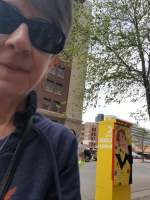
Can you say “Carol Burnett”?!

It might be telling that both exhibits were inspired by children’s books where, my experience tells me, the best writing and artwork is often to be found–and certainly the greatest Truths.

Perfect for a beginner like me.
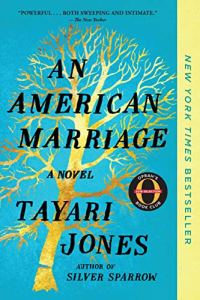
What I read

Roy Hamilton and Celestial Davenport are on their way up. College educated young professionals in Atlanta they are confident and accomplished–Roy, in the business world; Celestial in the arts. Theirs would be a good life, stepping from one rung on the ladder of success to the next.

Their marriage isn’t perfect: there is her fierce independence and his flirtations. Their marriage is young: only eighteen months give or take. But love? They had it. Passion. Check. Commitment. You betcha.

And then Roy and Celestial’s world turned on its head after a night in a small town hotel when Roy, a good Samaritan, is accused of rape, arrested, and convicted. But innocent, no doubt.

What happens to that marriage when the couple is separated? Roy’s sentence is twelve years, but Celestial’s lawyer uncle gets busy appealing the conviction, and, for a time, weekend visits and letters seem to hold the marriage together.

Until it falls apart. Celestial’s hand-sewn dolls–and the artist herself–gain some fame. A woman has needs. Not only for sex, but for companionship and a co-created life. It is in the human soul to want a partner. So Celestial finds herself a married woman engaged to another man.

An American Marriage by Tayari Jones also tells the story of parents who drop the ball and parents who never even caught it. Of parents who play the game with skill. Jones explores love and loss and the glue holds men and women together. Or doesn’t. Hers is a tender perspective on that old proverb that the greatest act of love is letting go.

What I lived

I’ve done this marriage thing twice. It’s complicated. Even more so when the principle players don’t have their shit together and must explore the idea that they might have built a house of cards.

Or not.

When it comes to love and loss, I tend to side with Glennon Doyle’s Love Warrior philosophy. But that requires a whole lot of vulnerability and willingness to trudge through the muck. Sometimes that just ain’t happening for one of the players or another. Sometimes the warrior becomes a conscientious objector.

Like I said, it’s complicated.

What I read

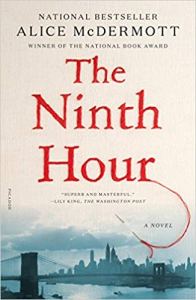
Alice McDermott is one of my favorite writers. I haven’t read all her work, but That Night and Charming Billy are books that have stayed with me. McDermott’s characters are finely drawn and her sense of what it is to be human is spot on.

The Ninth Hour is no exception. It’s a story of women who, while their lives might be restricted by the actions of men, are enlivened by a circle of women. Annie is young, newly married, and pregnant when her husband Jim gasses himself in their Brooklyn tenement. The Church refuses him a Catholic burial and Annie is bereft. The Little Nursing Sisters of the Poor step in. Sister St. Savior and Sister Jeanne prepare Jim’s body and sit vigil with Annie. They see to the burial in an unmarked grave. And they put Annie to work in the convent laundry with Sister Illuminata, a demanding taskmaster who comes to care for Annie in her gruff way.

Annie’s life–and, in turn, her daughter Sally’s–is as full as life can be for a poor widow and orphan in the early years of the twentieth century, and most of that can be attributed to the safe harbor the nuns provided. But as her years of mothering Sally come to an end, Annie feels drawn to the convent’s milkman Mr. Costello. She misses the companionship of a man. Sally, meanwhile, contemplates becoming a postulant and in her training begins to care for Mrs. Costello, his invalid wife, in their home. The story opens with the cover up of Jim’s suicide–and from there the secrets snowball.

The Ninth Hour is a story about the weight of secrets and how our lives often pivot on a single word left unsaid or an act concealed. Deceit can throw a shadow over an otherwise happy life–but it is for each of us to decide what good might be possible should what was hidden come into the light.

What I lived

I must admit I’m always a little shy around Catholic sisters. As a convert I don’t have the stories so many cradle Catholics revel in telling–there were no sisters rapping knuckles or throwing chalkboard erasers in my Protestant upbringing. But I also don’t have a sense of familiarity and ease around them, either. They are a bit mysterious.

Despite the fact that women religious are under the thumb of the Church’s patriarchy, the sisters I’ve met are curiously powerful women. And despite the sacrifices they make as religious, their sense of agency is solid. (One sister I knew would loudly replace “Him” with “God” in the liturgy wherever possible.) Or maybe I’m just judging sisters based on my own biases. I do take weekly yoga classes at the local Dominican Center, and, on occasion attend one program or another the sisters offer–I’ve walked the labyrinth and zoned out with Zentangle; I’ve meditated on the St. Francis sculpture path. Yesterday I took a class on the rosary. I admire the Dominican sisters’ spirituality and commitment to social justice. But it’s stories like The Ninth Hour that help me understand these strong women.

My earliest memories are of tree canopy and the smell of fresh cut grass, of singing sand and lapping waves and drizzly Sunday afternoons. I’ve never known a life that isn’t saturated with green, that wasn’t waterlogged.

My world, clothed in beauty–what I see when I hear the words, “And God saw everything she made, and behold, it was very good.”

Last summer when I traveled for the first time to New Mexico for a writing retreat, I allowed myself a few days of travel on my own to explore countryside I’d never experienced. I was enchanted with the wide open spaces and touched by a spirit (Spirit?) that blew in and out and around on the breeze. And I filed Santa Fe’s high desert beauty in my heart under “magic”.

How’s this for a driveway? Their home sits at the base of the Catalina Mountains

I traveled back to the Southwest in April, this time to Tucson, where my son and his family recently moved. And of course, they were the main attraction! But the country? It was no less breathtaking New Mexico.

Puzzle fun at the visitor center

When Grandma comes to stay only twice-a-year, the first day or two are best spent doing, to ease into the visit and get comfortable with each other again. So we played mini-golf and went out for a bento lunch and did some grocery shopping. Just down the road from my son’s house, the Sabino Canyon Recreation Area in the Coronado National Forest is a fine place for exploring with a four-year-old. (It’s also one of granddaughter’s favorites!) The visitor center has a sweet little corner with books and wildlife puppets and crayons and puzzles–the perfect spot for some kid time–and we took a tram ride deep into the canyon. A saguaro forest covers the sides of the mountains, the Sabino Creek runs swiftly over the nine stone bridges we crossed–and dozens of hikers walked alongside the tram, trekking the four miles to the top on foot. The one-hour tour was just right for a precocious four-year-old. She listened and looked … and answered every one of the rangers throw-off comments as if a response was required. Ranger: “Is everyone loving this beautiful weather?” Granddaughter: “YES I am!”

The Sonora Desert is the most bio-diverse desert region in the world.

When work and day care sent the family their own ways, I drove out to the Arizona-Sonora Desert Museum. Every “What to do in Tucson” site I read before my trip rated this a Must See. And it was. A kind of botanical garden-cum-wildlife rescue-cum-nature preserve, the museum is spread out over 98 acres; walking paths cover over 2 miles. Very manageable even in the heat. I only spent about three hours at the museum, but I could have stayed the day. The docent-led tour I took to orient myself was a great place to start. (Plus I learned to tell the difference between cat prints and coyote, and distinguish cougar poop and from wolf–truly a life skill not to be missed!)

Barren … that’s what I expected of the desert–a dry, dusty landscape. It wasn’t. The desert was blooming with color and awash in dusky green. Every morning the quail and cactus wren and Gila woodpecker chattered, while hummingbirds flitted from tree to tree. The sky was clear and lapis blue, the mountains benevolent and watchful. Giant saguaros lifted their arms in benediction.

Beauty itself, wearing different clothes. And it was very good.

Today marks the 20th anniversary of the Columbine shootings on April 20, 1999.

I attended the March For Our Lives last March in Grand Rapids

Not even a year later, a teacher across the hall from me intercepted a note. In the note, one student told another he wanted to napalm three teachers on 4/20 and watch them burn. I was one of the teachers named. Now I’m not naive. Kids have always talked smack about teachers–especially when grades are in play or they feel some injustice has been done to them. But this note was passed only ten months after Columbine. Teachers and students everywhere felt–quite literally–in the cross hairs.

Teach your children well

In response to Columbine, Michigan legislators amended school code to include what was informally called a snap suspension. The new legislation stated that teachers could impose a one-day student suspension if they felt threatened. And so the three of us teachers named in the note met with the assistant principal after school, gave him a photocopy of the note, and asked that the one-day snap suspension be carried out. It was all we wanted, really: to send a message that language such as this was no longer acceptable. Because while the student’s sentiment was scary enough, we were living in a new era: one where violent rhetoric–even what might once have been considered a normal teenage rant–could not longer be tolerated in school.

A child shall lead them …

What followed was a mess of grand proportions. After meeting with the parents and students, the principal decided a written apology was sufficient. (These were good kids, after all; it was all in the heat of the moment.) We teachers refused the apology. Administration maintained it was not a “real” threat. Union lawyers became involved. The gossip mill in our small community turned fast and furiously. Public comments at a school board meeting were largely in favor of the teachers, as were the letters to the editor in the local paper. Lawyers proposed we seek a personal protection order. The superintendent sent the teachers home until things settled. A judge dismissed the petition.

The teachers involved felt unsupported by administration; the administration felt attacked.

The district did adopt a procedure requiring that if and when similar situations occurred students be given a risk-assessment by an outside agency. And the risk assessment has been used in the last twenty years. Several years after my own incident, a student posted inappropriately about a teacher on social media, and later still there was an incident of student stalking. Other than that, what good came of my experience?

Since Columbine there have been at least ten school shootings. Several hundred staff and students have been injured or killed. (I’d suggest not looking at school shooting memes on the internet because it is clear that the attitude towards school violence is irreverent and dismissive, at best.) Set aside the fact that my own incident didn’t involve the horror of gun violence, it was dreadful nonetheless.

We three teachers went on to have successful careers. One of us is still a teacher in the prime of her career. Another is an education professor at an Ivy League university. I am retired. But I find myself thinking about those students quite often. They are now in their mid-thirties, with families, I’m sure, and probably children of their own. I assume they felt as swept up by the moment as we teachers did; I’m guessing they also felt victimized by the situation.

But how could those students–now adults–not regret writing those words? I used to think if they were truly sorry, they would some day offer an explanation–if not an apology–to make amends. But after twenty years I doubt that will happen.

Now I wonder if they think about that cold winter day in January at all.

I do.

What I read

I’ve been glancing over Lillian Boxfish Takes a Walk for over a year now. The book’s cover showed up in New Yorker ads for a time and on my Amazon “Customers who bought this also bought” feed and on the digital galley platform to which I belong. I’ve passed it on the “We Recommend” table at the bookstore. Stopped. Read the cover blurbs about New York (I’ve never been), 1930s (not even I am not that old!), walking (on a good day, yes …) and just figured it wasn’t for me.

Oh, how wrong I was.

Kathleen Rooney’s Lillian Boxfish is everything I want in a good character: she is witty, perceptive, brutally honest, open-minded, and loyal. She’s also a bit tetchy. Yes, Lillian does traipse through New York City of an evening–New Year’s Eve, no less–but along the way she stops where she experienced some monumental shift in her eighty-four years. There’s the Back Porch, a corner bar where she stopped over the years for a cocktail and maybe a chit chat with the bartender. Delmonico’s, where she and her husband ate after the court date that finalized their divorce. Madison Square Park, where she lunched as a working gal and wrote her poetry. And Macy’s, where she took the U.S. by storm in the thirties, the much-talked-about copy writer, highest paid girl advertiser in the country with newspaper headlines to prove it. St. Vincent’s Hospital, where she arrived when life spun out-of-control.

And that’s how we learn her story. At each stop Lillian reflects on her life–and also meets someone in the present with whom she can connect. Because even though Lillian is eighty-four-years-old, she is forward thinking. We learn that her early life is by turns tragic and comic; her life now, a dance between reaching out and turning inward. As the night creeps closer to 1985, the reality of having one foot in the past, and one in the future becomes oh-so-poignant, and Lillian welcomes the time when the future is no more, when the end will arrive:

“The future and I are just about even, our quarrel all but resolved. I welcome its coming, and I resolve to be attentive to the details of its arrival. I plan to meet it at the station in my best white dress, violet corsage in hand …”


What I lived

I started Lillian Boxfish Takes a Walk at home on my bed, tucked in snug, everything around me dear and familiar. I finished it on an airplane returning from a visit with my son and his family.

And there’s nothing like a visit with one’s distant children to look back over life, even if only the motherhood part. (Although, truth be told, distance provides space to think about any number of life’s conundrums.) I did some things right. And some things pretty crappy. I wanted my family to be just. so. I wanted to get it right. (And you wouldn’t be inaccurate if you read “controlling” there.) I pushed and prodded at times when I should have offered a hug and one more episode of Power Rangers. I was a hard taskmaster when I should have let the dishes wait until morning. I accepted no backtalk when I should have let my chicks puff out their feathers a bit.

Somehow we survived and somehow we are reasonably amiable.

But Lillian’s experience is now in my field of view. Yes, the future is still out there a ways before I meet it, God willing, and knowing that means I have some time. Time to reach out while turning in. Time to figure out how I’ll “meet it at the station”. Time to figure out what I’ll leave in my wake.

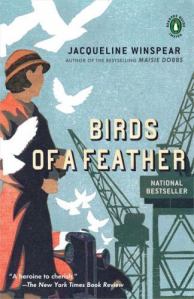
Birds of a Feather
Jacqueline Winspear
Soho Press (2004)

If Maisie Dobbs had had a child, she would have been Flavia de Luce. Now, I know, I know–Flavia has had a perfectly good mother in Harriet. But, readers, really!

Last week I read the second in the Maisie Dobbs series, Birds of a Feather. And while I wasn’t averse to the first Maisie mystery (I don’t think I even reviewed it here) I found it a little … plodding. At least for a whodunit. But I had another reaction altogether when I read the second in the series, Birds of a Feather. It’s obvious why Jacqueline Winspear is up to fifteen novels and counting.

It’s 1930, the Great War is now over a decade behind her, yet Maisie’s world is still reeling from its effects: she continues to mourn (and pay hospital visits to) her comatose fiance Simon, and assistant Billy Beale is dealing with the pain of his injuries in a destructive way. But Maisie still has work to do. In this case, to find the daughter of grocery magnate Joseph Waite. Seems that his daughter Charlotte has disappeared (again, I might add) and it’s Maisie’s job to find her and bring her home to her overbearing father.

In the meantime, however, Charlotte’s friends start showing up dead. All killed the same way: first poisoned by morphine and then stabbed multiple times. Maisie suspects that Charlotte’s disappearance, Waite’s insistence that she return even under force, and the women’s deaths are connected–and she’s off an running.

What gives the Maisie Dobbs novels a bit of … errrrr … novelty is the mystic gift she relies on. Maisie senses–sees–hears things at the crime scene that others cannot. She also practices meditation which calms and centers her and allows her to receive insight that helps solve crimes. A bit of New Age in the Jazz Age. I’ll have no problem picking another Maisie Dobbs mystery when I need a fun read.

But I digress. Maisie Dobbs could very well be the mother of Flavia de Luce, at least in spirit. HOW HAVE I NOT READ ANYTHING ABOUT THIS ON THE INTERWEBS?! The Maisie novels are set in 1930 and the Flavias in the early fifties. Okay, so maybe grandmother instead of mother. But it’s as if the characters are genetically related: independent, out-of-the-box thinking women with unique talents. Women who don’t quite fit their time and place because of their gifts. Women who don’t have much of a filter. And the evolution from Maisie to Flavia makes sense if you think about how one generation changes from the previous. Maisie relied on the metaphysical and Flavia on the physical world of chemistry.

I searched the internet for fan fiction, thinking “Who could pass up such an opportunity?!” But, nothing. All I found was a bunch of “If you liked this, you’ll also like …” posts. I tried to find an interview of the authors–maybe on a panel at some writing conference. Nada. You’re telling me no publisher has ever thought of booking these two headliners together?!

For now, I guess, I’ll dream on my own what mischief these Girl Wonders could conjure up together. What a team they would make!

School started on a Tuesday in late August and there I was for the first time in twenty-five years–home and in my PJs at 7:30 AM. First hour was about to begin.

To quote Shakespeare (as, I suppose, any good English teacher would do) I met that day with bated breath. Would I feel unmoored? Purposeless? Would I crave the hustle and bustle of football games and spirit week and SAT testing and staff meetings? Would I miss those 700 souls I’d lived with day in and day out over the past two decades plus a few?

I woke up and the wobblies were gone. I had planned well.

That first official retirement morning I spent walking in Frederik Meijer Gardens with friend Denice, my retirement ‘midwife’. She had blazed the trail a few years before me and was firm in her advice: 1) don’t rush into anything 2) let yourself meander through your days 3) keep your commitments to a minimum. After a year, she said, I’d know better how I wanted my retirement to look. That morning we wandered the sculpture garden and for once my direction was spot-on, and I didn’t get lost. We stopped to admire the farm garden and chit-chatted with the garden volunteers. I learned what amaranth was. We swapped stories on the boardwalk about herons and loons. Lunched at Panera. In the evening, my husband and I had tickets to see Lyle Lovett, our favorite summer concert tradition. Lovett is so entertaining, warm, and personable that you’d hardly think he was playing to a crowd of nearly two thousand. The perfect end to a milestone of a day.

And then came Tuesday when I unexpectedly babysat a sick grandson and Wednesday when I spent half an hour talking to a stranger–the young mom behind a farm stand at the Farmer’s Market–about public high schools and curriculum and her son’s needs and why she was homeschooling and … and you get the picture. I had time–and energy–to stop and connect without rushing on to the next thing on my long to-do list.

I’ve had no regrets.

The esprit de corps among teachers is a powerful thing, though, and those first six months I mourned the loss of my teaching buddies nearly every day. We were in the trenches together and that’s potent stuff. We kvetched together. Laughed until we cried. Got tipsy on the occasional Friday after work. Attended each other’s weddings and parent’s funerals. But even that ache is waning. I still see those who have been fast friends, and the rest are fading into fond memories of a life I no longer live.

I read more widely than I have before. Because I have the time, and I’m not reading Marzanno’s Classroom Instruction That Works for Professional Development (!). I’ve spent time developing my writing workshops. Through an online social media platform for neighbors, I organized a neighborhood book club with women I had never met before–not something I would have ever done in my previous life. I’ve taken a few online writing and blogging courses. I volunteer one very full day a week for an incredible organization that provides healthy home-cooked meals for individuals living with chronic illness.

While I no longer live at breakneck speed, juggling thirty-seven things at once, I do have busy days, believe it or not. (Although I suppose even that is relative!) And then sometimes I don’t–but I’m okay with that. I’m not living the high life that some retirees seem to because life got in the (financial) way, but that’s okay, too. I am living happy, wild, and free–and I’ve never been more comfortable in my own skin.

Life is good.

Before school started last year–before my hall buddies returned to long, hot days in un-air-conditioned rooms, a new principal with all the uncertainty that brings, and meetings, meetings, meetings–I met friend Lindsey, my neighbor in the room next door, to set up a little surprise that I hoped would soften the institutional edges of my teacher friends’ days, even if only a bit. My going-away present to them.

Because teachers don’t get squat when it comes to comfortable–or nice-looking–interior decorating.

The district Central Office and high school offices had been redecorated at least once each during my tenure with the district … but my room in the original wing? Nary a lick of paint in all those years. A window that had no latch so that snow would sometimes blow through the crack. An office desk at least forty years old and file cabinets even older. For more than a few years, I’d tripped over a loose carpet seam until it was finally replaced. No working lock on anything (cupboard, desk, or cabinet) to hold my personal belongings. Staff break rooms are a mix of cast off furniture and appliances and the rest rooms are barely a step up from a highway rest stop.

But I digress.

What I was not prepared for the evening before school started–the year I wouldn’t return–was the wave that washed over me, memory so powerful it nearly knocked me over. The dusk was warm, sun sinking behind the trees as the band and color guard practiced in the parking lot–flags twirling, megaphone blaring, xylophone tinkling–just as they do every autumn. The halls were quiet as I climbed to the second floor, lights dimmed on the timer. And there was that smell, distinctive only to school buildings–some indeterminate combination of sweat and Expo marker and gym shoes and dust.

There is no other place on earth like this. None, I thought to myself.

And I remembered walking up those same stairs over Christmas break, probably to make copies or rearrange desks or change a bulletin board. How I climbed those stairs to leave lesson plans the night my dad died. I remembered leaning out of my second floor window oh so long ago to wave to my son (then 18, rebellious, bedecked in chains and JNCO jeans) when he dropped off something or other I needed from home. I remembered standing at the door of my room after state testing, passing out M&M(E) bars to the juniors I proctored. I remembered stacks of enveloped invitations and prom favors that covered every flat surface the month before prom. I remembered the personal protective order I filed against two students, the media hullabaloo that followed–and the administration that, in many ways, failed me. Reciting the pledge each morning with black, brown, white, and native kids; gay and straight; able-bodied or not; Christian, Muslim, Jewish, Sikh. I remembered the times I called for Mr. MERT–frantically–while also trying to comfort: “It will be okay. Help is coming, sweetie.” I remembered dark, dark days of my own when Room B209 was an anchor and it was my students who kept me putting one foot in front of the other.

But I didn’t take a peek in the room at the top of those stairs, my home away from home for close to twenty years. Memories or no, I couldn’t. It was no longer my room–I knew that. This was no longer my place … and I was okay with that.

Which is not to say I left dry-eyed.