This is my symphony

What I read & what I lived …

The Perfect Mother
Nina Darton
Plume

Jennifer Lewis leads a perfect life—her Connecticut home is oh-so-shabby-chic, her lawyer husband handsome and successful, her three children active and popular. Jennifer herself gave up a career as a model and TV actress so that she could dedicate all of her time to family. Jennifer is the Perfect Mother.

Until a middle-of-the-night phone call threatens to destroy her reality. Daughter Emma, spending her junior year (from Princeton, no less!) abroad, calls from Spain—she’s in jail, claims rape, and is accused of being an accomplice to murder. As all Perfect Mothers do, Jennifer flies to her side, but is taken aback by Emma’s aloof, maybe even ungrateful, demeanor. The weeks that follow put Jennifer under the reader’s scrutiny, especially once dad Mark arrives in Spain and doesn’t fully believe Emma’s story—that the murdered boy followed her home and dartonforced his way into her apartment at knife point; that a young Algerian heard her cries and came to save Emma, stabbing her attacker in a struggle; that the Algerian, undocumented and fearful of being deported, ran away into the night. Jennifer and Mark fight; Emma and Jennifer argue.

Enter Emma’s lawyer, Jose, who reveals to the Lewis’s that Emma may have been leading a life on the edge. Her boyfriend, Paco, is a drug dealer who has vanished and the police want him for questioning. Emma swears Paco sells drugs only to send money to his home village as a kind of Spanish Robin Hood—she claims the police just want to trap him. Jose sets out to find Paco, discover the truth of the attack, and free Emma from prison. He also provides a shoulder for Jennifer to cry on, and their attachment becomes a little too close for comfort.

Young parents always worry that two-year-old tantrums and pubescent rebellion are warning signs that one’s parenting has fallen short. I think, rather, it’s those early adult years that prove the parenting pudding and writer Nina Darton captures this perfectly. When adult children get into trouble, like Jennifer one might have “this pathetic realization that you failed, that you made some terrible mistake that caused this.” And mothers especially, I think, blame themselves. Here’s Jennifer again: “I’m selfish, I’m pushy, I’m too optimistic, or I’m overly dramatic, or I’m too blind, or I’m naïve or see only what I want to see …”

Maybe being a Perfect Mother actually is a curse and not a blessing. Could it be that the time and energy and hopes and dreams we mothers invest into our children end up jinxing them … and ourselves? Darton’s Perfect Mother is rich and thought-provoking, torn straight from the front page ala Amanda Knox—and her plot twist at the end could lead to hours of book group heart-to-hearts.
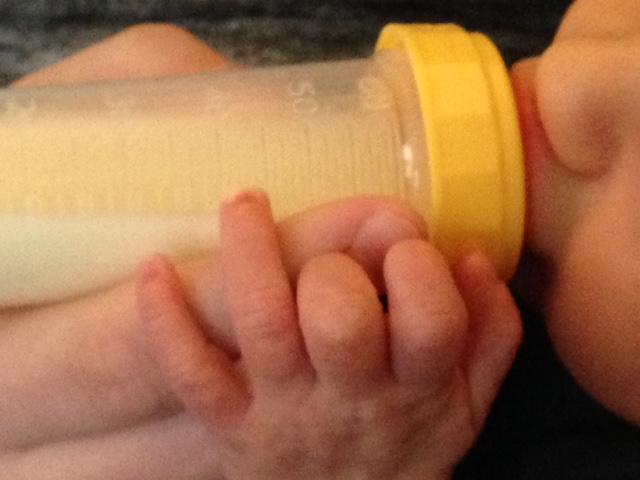
A little over a week ago I welcomed my first grandchild—little J gave his momma a run for her money, but he is (like any good Grammy would say!) the most perfect baby ever.

And just like I did with his IMG_1144 (1)momma and his uncles, I’ll be reading to him from the start. This English language of ours is beautiful and rhythmic, largely written and spoken in iambs, a rhythm that pulses through so much of what we hear—the da DUM of our heartbeat, the bah bo LINK of a backyard bird, the scritch HOP of a skip. Babies, listening to that rhythm in their water world for nine months, are finely tuned, I believe, to respond to iambs. And what better way to introduce them to our wide and wonderful world, but to cuddle them on our laps, snuggle them close, and read?

Which books are must-haves will change by age, but these are mine favorites for bitty babes. You’ll notice that there’s not a Disney book in the mix (not that there’s anything wrong with that) but if you want to choose books whose poetry and prose will sing to those little ears, these few will become a welcome chorus.  (And all are available as board books for tiny hands to touch) You can be sure at least a couple of these titles will show up under little J’s Christmas tree this year!

Goodnight Moon (by Margaret Wise Brown)

Pat the Bunny (by Dorothy Kunhardt)

Brown Bear Brown Bear what do you see? (by Eric Carle)

Each Peach Pear Plum (by Janet and Allan Ahlberg)

Let’s Play, Sleepy Time, and Babies—or any board book written and illustrated by Gyo Fujikawa

The Boston Girl
Anita Diamant
Scribner
release date: December 9

The Boston GirlIn Anita Diamant’s latest novel, eighty-five-year-old Addie Baum tells her granddaughters the story of her life as a girl growing up in Boston in the early twentieth century. Arriving with her family from a small village in Russia, Boston might offer refuge from pogroms, but not from poverty. Her family of four lived in one room—Papa works as a leather cutter, Mameh takes in laundry, and together they scratch out enough of a living to pay for rent and food. Barely. But Addie was a firecracker of a girl, determined to speak English well, attend school, and, like so many immigrants before and after her, follow the American Dream. And it was the neighborhood settlement house that opened Addie to that wider world.

Addie first had to sneak out of the apartment to attend Saturday Club where girls from Italy and Ireland and Russia both share her immigrant story and become fast friends. She spends part of each summer at Rockport Lodge, a hybrid of summer camp and boarding house, where she hiked and picked blueberries and went to town dances—the fresh ocean air of the countryside in stark contrast to the crowded urban (dare-I-say) slum in which she lived for the rest of the year. But it was enough to give her dreams of Something More.

And so Addie quickly became an American Girl, her customs and values clashing with her parents’ narrower view of the world. While she moved quickly towards that Something More, life as a first generation immigrant was not all sweetness and light—this new world also brought  family conflict, illness, and death.

The bookended chapters in which Addie speaks to her granddaughters seem almost unnecessary—I think Addie’s story was powerful enough to carry the novel on its own. For some reason, this was not a quick read for me; it certainly was not as engaging as Diamant’s The Red Tent from over a decade ago. But I felt as if the pace of the plot (which covers over seventy years of Addie’s life) mirrored the pace of a life well-lived. And while I sometimes grow weary if a novel moves too slowly, I didn’t in this case. Because it was Addie herself, this firecracker of a girl, that compelled me to read on.

I’ve already established in another post (link) that I’m a picky reader. Best Seller Lists (even the revered New York Times BSL)

love books

geralt@pixabay

don’t help me much, nor do the Staff Recommends shelf talkers in bookstores.  In my book selling days, I relied on my managers and publisher’s sales reps to pass on good titles, usually as an Advanced Readers Copy.  So what’s a book junkie to do? Here are my top choices (in no particular order) for finding my next read.

  1. Friends. Okay, not just any friends, but inquisitive, sometimes-daring readers whose tastes run close to mine, but who aren’t necessarily my reading clone. Someone who will encourage me try something a little out of my comfort zone. For me right now, that’s friend Denice, my book store compadre and a school librarian in her previous lives. You can read her blog here (link). And friend Mary, who reads anything nonfiction, especially historical.
  1. NPR. Hands down my go-to place for reviews. I’m a big fan of their lists: Summer Books, Best Books Of …, etc. They often feature the recommendations of independent booksellers (yay!) and this blog is rich with titles I’ve found on NPR, like this, and this, and even this. I’m such a fan I was once tempted to bid on the Nancy Pearl action figure on eBay. I find the book reviews that run on All Things Considered and Fresh Air to be a bit uneven—let’s face it, it’s NPR and some of the titles run a little on the sophisticated side for my tastes. But the lists? Hands down winners.
  1. Amazon. Whatever algorithm they use to get the recommendations for the Customers Who Bought This Item Also Bought list of books is usually spot on. Enter a title you’ve loved in the search bar and scroll down until you reach Customers Who … I have taken a few risks and haven’t been disappointed. Like this one and this.
  1. Twitter. I’ve recently started following Huff Post books on Twitter. Great source for reviews, but also a treasure trove of all things bookish—author features, memes, video interviews. I have just begun following some of my favorite writers and bloggers, but I can already tell Twitter will lead me to more than a few good reads.
  1. Goodreads. I know, I know. More of a Facebook-for-readers, so go ahead and snub your nose at this suggestion if you must. But I like Facebook, so why not? Finding the right readers to follow takes a bit of time. I troll over bookshelves and look for titles I love and can usually find a title or two to add to my to-read shelf.  Goodreads has also given me a few opportunities to comment back and forth with authors, something that gets me quite twitterpated (which also reminds me that I also follow Goodreads on Twitter!).
  1. DRCs (Digital Reader’s Copies). NetGalley and Above the Treeline’s Edelweiss. This particular source may not work for everyone. Both websites offer booksellers, librarians, educators, and bloggers the opportunity to request and read titles before publication, just like those ARCs I used to enjoy as a book seller. It’s helpful to have a good feel for publishers and authors. But I have taken a risk on some titles and not been disappointed.

 And since it’s the season for gift giving, this list might also give you some ideas for gifting the best. present. ever. Or, when the weather and shopping or yet another holiday celebration seem just a little too much, a present to wrap yourself around for a few hours of bliss.

The Life We  Bury (Edelweiss DRC)
Allen Eskens
Seventh Street Books

I usually pass over mystery or crime novels–but something in the blurb for this title pulled me in. It could have been that the main character, Joe Talbot, was an English major . It could have been the mention of his autistic brother. Or it could have been the convicted murderer living out his last days in a nursing home. But whatever drew my attention, The Life We Bury was a good read.

life we buryJoe Talbot has finally escaped–his alcoholic mom, his needy autistic brother, and the small town where they lived: Austin, Minnesota, home of Spam. (And that sad fact pretty much sums up Joe’s dismal life.)  He had managed to save enough money for a year at the University of Minnesota and he was out of there. Joe didn’t even allow himself  to dwell on the guilt of abandoning his brother Jeremy. It was either leave or stay forever and drown in bitterness.

But escapes are rarely as easy as they seem in the planning, and Joe’s was no different. No sooner had he started classes than his mother called. From jail. Drunk. And needing him to bail her out and  care for Jeremy, who, at eighteen, was really no more than a five-year-old. Walking in the door and finding Jeremy glued to his current movie obsession Pirates of the Caribbean, Joe makes a snap decision–he’d take Jeremy back to his apartment in Minneapolis.

Carl Iverson had also made an escape of sorts. Convicted of the murder of a 14-year-old neighbor girl, he had done his time, released to a nursing home only because pancreatic cancer would soon kill him. (Not much of an escape if you ask me.)  Joe meets Carl to interview him for a project for a creative writing class. Carl wants to die with a clean conscience–he tells Joe he wants to finally tell the truth. And that’s when the novel starts gathering momentum.

Joe gets the case files, talks to the public defender, pours over old newspaper articles about the trial. He looks up  the victim’s step-brother. He meets Carl’s good friend Virgil who vehemently claims Carl’s innocence. And Joe is hooked.

Of course there’s a girl involved and before long they join forces to prove Carl’s innocence. The only question is … who’s the real killer? And that, crime novel aficionados will realize, results in a chase, a missed clue, and another escape.

Being a Great Lakes midwesterner, I love novels set in my ‘country’. Writer Allen Eskens lives in Minnesota where he practiced law before turning to writing. Eskens captures the decency that (I think) only natives understand. (My bookstore friend also read it and you can read her review here.) The Life We Bury would be a great gift this holiday season–and (shhhh, don’t tell!) if you turn the pages carefully, maybe you could sneak a read before wrapping it up.

Nothing tickles me more than reading my students’ writing when it sparkles. Last week, for instance, I read about a boy who plays baseball “for the man in the clouds”—his grandpa. In that one phrase I see the baseball field in May, those huge cumulous clouds and Michigan blue sky. I hear the crack of the bat and see this seventeen-year-old glance up for a moment as he takes the base.

Now it’s not always easy getting them here—I push. I prod. I question … my voice trails off, hoping they fill in the blanks and capture again their five-year-old selves. You remember, those kids who invent words and dance in the outfield– who tell stories about riding in a parade. Before Twitter and driver’s licenses and Snapchat and high school dances in the gym.

I thought about all this after reading this Huff Post Books article today (link). In 2006, Xavier High school students were asked to write to an author for an assignment. Five wrote to Kurt Vonnegut–and he was the only one who responded.

Now getting a letter from a writer such as Vonnegut would be treat enough. But his advice? If only.

If only my students would keep close to that five-year-old they once were. If only they would dance and sing and paint and write, they’d sparkle. Not for me, mind you, but, in Vonnegut’s words, “to experience becoming, to find out what’s inside you, to make your soul grow.”

If only we all grew our souls deeper and wider, even just a little bit, every day. Because, really, what else is there to do to make our days matter?

Mill River Redemption (NetGalley DRC)
Darcie Chan

Let parents bequeath to their children not riches, but the spirit of reverence—Plato

Josi DiSanti had taken refuge in Mill River twenty-some years earlier after the death of her husband Tony. With daughters Emily and Rose snuggled in beside her and Aunt Ivy at the wheel, her small family was on the run. In Mill River she’d found a new beginning and rediscovered hope. Now her adult daughters return to Mill River for what they assume might be one last visit—this time to say their final good-byes to the mother who had sacrificed so much to keep them safe.

Mill River RedemptionBut as in most families, the past colors the present and Emily and Rose are in no mood to spend any more time together than they must. No longer two peas in a pod, the sisters couldn’t be more different. Emily, single and independent, has traveled from her latest house renovation; all her belongings and her devoted dog Gus fit in her old Subaru. Rose drives a BMW and that just about sums her up–she has a Wall Street husband, designer shoes, Manhattan apartment, and a trophy young son. The girls are sniping at each other before the memorial service even begins.

But Josi had anticipated their animosity and she spoke from the grave to force their hand: the sisters wouldn’t inherit her estate until they solved clues together in a sort of a last will and testament scavenger hunt. But of course they can’t work together or there wouldn’t be much of a novel here!

Insults fly, words barb, actions sting. And tragedy brings them together.

This is the sort of novel that is an easy recommend to anyone averse to steamy love scenes or course language. Someone who likes a story with a pretty straightforward plot. My almost-eighty mom, for example—she’d love this. It’s a little bit Kate Morton and a little bit Jan Karon. And there’s a doozy of a twist at the end that will make you either love Darcie Chan’s latest … or not.

Knopf
October 7, 2014

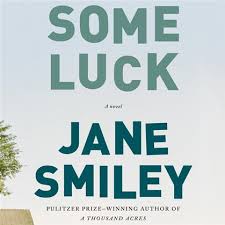
I heard an interview with Jane Smiley the other day on NPR. You can listen to it here (link). I am someone who has loved all things Smiley–Moo, Private Life, Ordinary Love and Good Will (0kay, so how can a writer fail with an incredible title like that last one?!)  Surprisingly, her Pulitzer Prize winner Thousand Acres isn’t one of my favorites. But knowing Smiley has a new novel out is enough to make me curious. Her latest title Some Luck will be part of a trilogy–a vast family epic spanning generations in Iowa and beyond.

The novel’s patriarch’s are Rosanna and Walter Langdon who raise their five children on an oat farm in Iowa. Rosanna is a town girl who is won over by the hard-working Walter, just returned from the first World War. They weather good times and lean together with the help of family and friends. Their firstborn, Frank, is Some Lucksomething of a Golden Boy, and in many ways their life revolves around seeing that Frank fulfills his potential. Second-born Joe lives in the shadow of his brother, not coming into his own until his twenties when he introduces new farming methods and has some success. Lillian is the gorgeous child; Henry the scholar; Claire a daddy’s girl. The novel takes them all through the second World War and into the fifties.

And if you can’t tell by the description of the children, this is a novel that leans heavily on tropes. It’s one thing to turn a classic such as King Lear into a modern cautionary tale–especially if it’s done artfully and without too much of a template. But it’s another to rely on stock characters so closely, that they seem like paper dolls: flat, stiff, and cut out of the same paper stock. (Smiley allows the characters to narrate their story as infants and toddlers which I found alternately clever and irritating.)

Much of Some Luck dragged for me–the plot plodded along as slowly as the thirty-some years the novel covered. It might be that the book will come into its own when read along with its not-yet-released brother and sister. Would I read the next two in the trilogy? Probably so. At least, I’d try.

Because it is Jane Smiley, after all.

NetGalley ARC
Houghton Mifflin
release date: Oct. 2

I read Zac & Mia because The Fault In Our Stars has been such a phenomenon with my kids at school–and the blurb sounded enough like Stars to think this might be another YA favorite. So while might not want kids to jump into a novel simply because it shared a plot similar to the best seller, at least they’re reading, right?

And truth be told? I liked Zac & Mia better than Stars.

The novel opens with Zac Meier recuperating in isolation after a bone marrow transplant to treat his leukemia. His life is on hold–no football, no school, no graduation. Zac and MiaCounting down the days until his release, Zac’s days are spent  playing Scrabble with his mum. Not exactly exciting stuff for an eighteen-year-old. And then a new patient moves into Room 2. But unlike the tedium that surrounds his hospital stay, the girl’s arrival (Zac caught her peeking in the window of his door)  brings all sorts of drama. There’s arguing, door slamming, and Lady Gaga blaring through the walls. His mum finds out she has osteosarcoma. Treatable. Manageable. She’s lucky, he thinks.

So they pass notes under the door and tap their hellos on the wall. And because this is 2013, they friend each other on Facebook. Compare chemo notes.

And then she’s gone.

Zac returns home–cancer-free! healthy!–and picks up (or tries to anyway) where he left off. He helps on the family’s olive farm and petting zoo. Returns to school. Sits with the football team, even if he can’t yet return to the field. And life returns to normal–until Mia shows up without warning. She’s clearly sick and not getting treatment. She’s angry, needs money, and she’s given up.

The question is, will Zac give up, too?

Writer A.J. Betts won Australia’s Ethel Turner Prize for Zac & Mia, her third novel. The characters are real (more so that Stars, I think) and the engaging plot moved quickly. I loved that I got a glimpse of Australia–all bush and joeys and alpacas. It’s nice, sometimes, to get out of the States.

We read in room B209, every Friday. All hour. The kids know I love the book and as soon as I get my hands on a paperback copy, it will join other favorites on my reading cart.

* the number of cancer deaths in Australia in one week

The Illusion of Separateness
Simon Van Booy
Harper Collins

We are here to awaken from the illusion of our separateness. ~ Thich Nhat Hanh

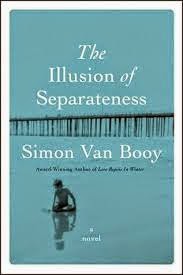
Martin. Mr. Hugo. Sebastien. John. Amelia. New York, France, England, Los Angeles. A Nazi soldier, a baker; an orphaned baby and a U.S. fighter pilot. Writer Simon Van Booy tells their stories in a series of (seemingly, at first) unconnected narratives, from pre-war Germany in 1939 to present day California. The tone is evocative and their memories shimmer in Van Booy’s hand. This is a book to be read simply for its beauty. The lovely language, for one. Like this: “Rain says everything we cannot say

to one another. It is an ancient sound that willed all life into being, but fell so long upon nothing. The silence after is always louder.” Or this: “Whether you know it or not, we leave parts of ourselves wherever we go. I wonder if I should wear perfume tonight for my date.”

You can take away from the title and the epigraph that the character’s stories lap along the edges of each other. It would be a shame to tell you their stories, though. The volume is slim and my guess is that you’ll be compelled to read it in one sitting as I was. And then, as my friend Denice warned me, turn right back to the beginning to start all over again.

We, one day, will be vanquished with a last puff and then nothing. Nothing but the fragrance of our lives in the world, as on a hand that once held flowers.