Last weekend I bought my first power tool. (Not counting a Black & Decker drill driver which, lets face it everyone uses.) To some this may raise much alarm. I am the stuff family legend is made of for slicing and dicing myself on any number of household items: graters, scissors, razor blades, mandolins, a lawnmower, even. So what business have I, you might ask, purchasing such a tool given my not-so-stellar safety record?
Welp. I’ve begun to discover that sometimes family legend is just another way of telling ourselves stories that keep us stuck, stories that limit us rather than allow us to expand. And I’m the queen at limiting myself. I don’t have a green thumb. I don’t garden. I don’t paint. I don’t do yard work.
And every. single. one. of those I don’ts are now I do’s and quite successful ones if I do say so myself. My house has more than a few plants scattered around after decades of telling myself I can’t. Herbs and tomatoes now line my freezer in neat little containers, and next year the raspberries I planted last fall will be producing as well. I’ve primed and painted most of the original stained floor and window trim on the first floor. And slowly, but surely, I am re-imagining my backyard–including a rock border for which I’ve scavenged and carried each and every rock.
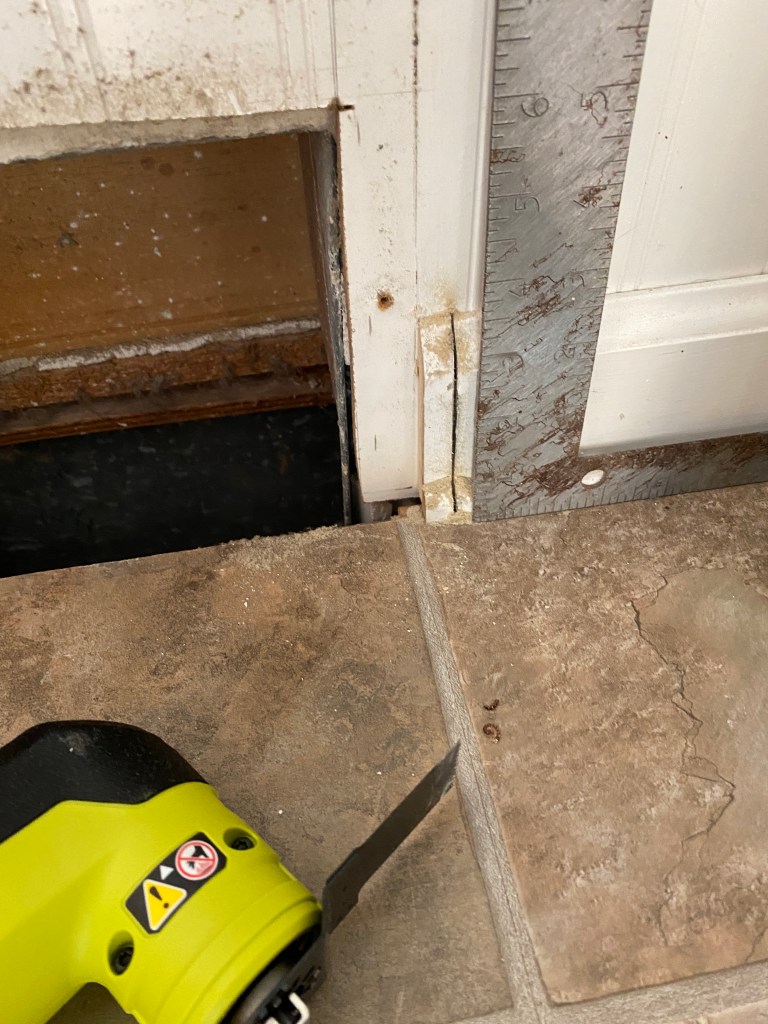
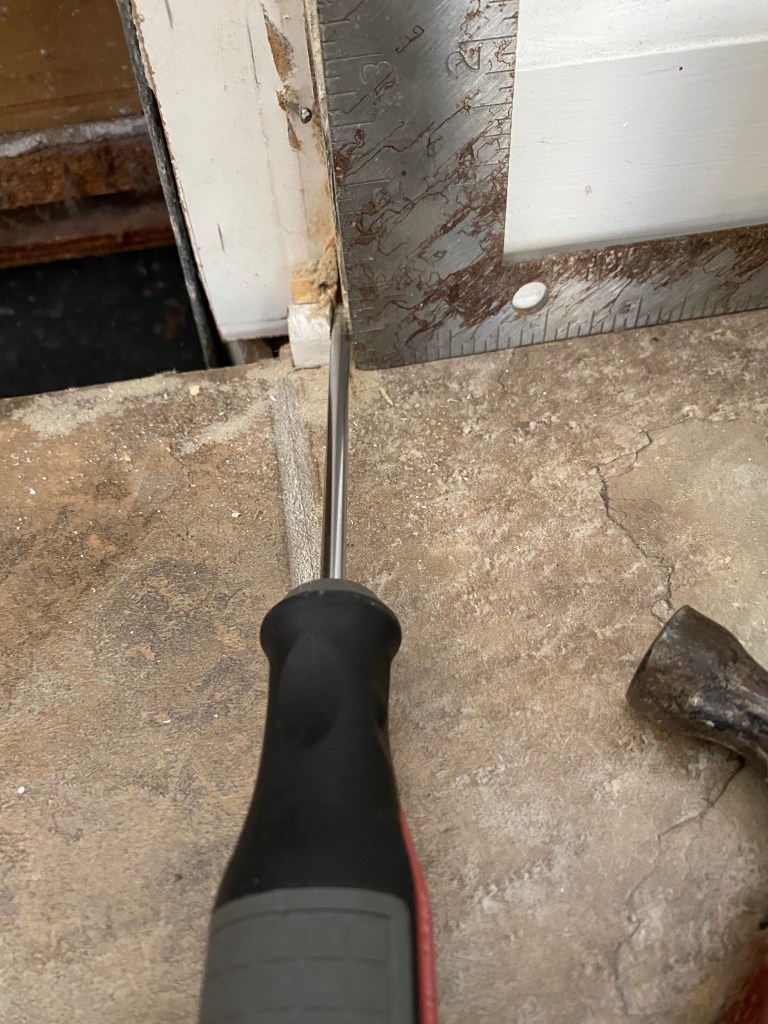
When I painted that floor trim, I had to switch out the fifty-year-old heat registers and cold air returns. And wouldn’t you know–the new cold air return grills are about 3/8″ too large to fit between the already installed molding. So last year I propped them up against the wall and hoped against hope they wouldn’t fall over. (They did.) I meant to find a handyman to trim the trim, but I am also a first-class procrastinator.
Until I’m not.
I figured if I can measure fabric and lay out a pattern and stitch any number of items–tote bags, aprons, dolls, clothes–how hard can it be to saw off 3/8″? (Yes, I know there’s that business of power tools, but what is a sewing machine if not a sort of power tool?!) Thanks to YouTube I learned I needed an oscillating tool. Like some sort of handyman magic it vibrates a small saw-tooth blade and voila! cuts through trim. Does my work look professional? Nope. In fact, I believe I might have installed the wrong type of vent cover. But I’m okay with that, because the pride I feel is more important to me than finding fault.
[My] house is a very, very, very fine house–with two cats in the yard–life used to be so hard.
Graham Nash
Here’s a trope for you: an elderly woman–alone, of course–refuses to leave her home. She resists any number of pleas that it’s “for the best” to move somewhere safe, where she can get the care she needs. The roof needs shingling and the steps are crumbling. Hazy windows haven’t been washed in years; the garage gutter hangs crooked. (Do I even need to mention that there might be a cat or two involved?) The old woman’s bank account is almost as spare as her cupboard, but she is adamant: I. won’t. go.
I suspect that might very well be me someday.
I watched my mother turn over the idea of senior living, taking only one step forward before she took two steps back and decided she couldn’t leave the condo she’d lived in for over twenty-five years. The home where Sunday dinner was celebrated with chicken paprikas and cherry pie and jello salad, of course. And holidays, each with their own centerpiece and tablecloth on the dining room table. Gift bags and tissue paper spilling over the living room floor, be it birthday or Christmas. Flash back to the busyness of my young nieces visiting for the weekend from Ohio, then fast forward to her great-grandchildren inheriting the toy basket. The home where we celebrated her marriage to my step-dad was the same place she said goodbye to him before the funeral home carried him away. She recovered there, twice, from breast cancer, until that same funeral home carried her away, too.
I’ve written about home on these pages before. Two-hundred and twenty six times, if my blog’s search feature is accurate. My love affair with houses makes sense for a girl who moved sixteen times before she was forty. But right now I’m on a streak: twenty-five years in one place. I’ve sacrificed dearly to stay in this patchwork of partly-remodeled-half-repaired-falling-apart house, but despite the flaws I feel safe within its walls. Grounded. So many good memories were seeded here. Graduation parties, high school dances, wedding celebrations, three dogs and four cats, a gender reveal, grand-babies toddling, Christmas parties, summer barbecues. But there are ghosts, as well. These walls have also seen betrayal and estrangement and dreams shattered.
You’d think all that sorrow would cast a pall on my attachment.
But no. It’s simply home. My home.
It should be no surprise that I’m a sucker for a good book which has a home at its heart, and two have touched me recently. Kate Morton’s latest novel Homecomingis a sprawling story covering fifty years, several families, and more secrets than I could count. Two family homes loom large. Jess Turner leaves London to tend to her dying grandmother Nora in Australia. Jess, estranged from her mother Polly, was raised by Nora, doted upon and loved unconditionally. But Nora’s dying words set Jess on a quest to uncover a dark family secret–and in true Morton fashion, the secrets reveal themselves like a Russian nesting doll, one inside another inside another. She learns of a murder, an affair, a missing child, and lost love. Like so many of us, Polly and Jess are drawn to the very same house where tragedy changed the course of their lives. Fellowship Pointby Alice Elliott Dark was another recent read that centered on home. (And secrets, too, come to think of it.) Children’s author Agnes Lee has spent nearly eighty summers on Fellowship Point in Maine. The land was owned jointly by her uncles, and each family’s home calls children, grandchildren, nieces, and nephews back year after year. Those uncles are gone now, and one of the cousins wants to develop the property, breaking up what has held them together for generations. The novel is a reflection on why we hold so tightly to our origin stories and asks us that we consider to whom land really belongs. And if that’s not enough of a recommendation, the blurb says the novel “reads like a class nineteenth-century novel …” and the nearly six-hundred pages attest to that.
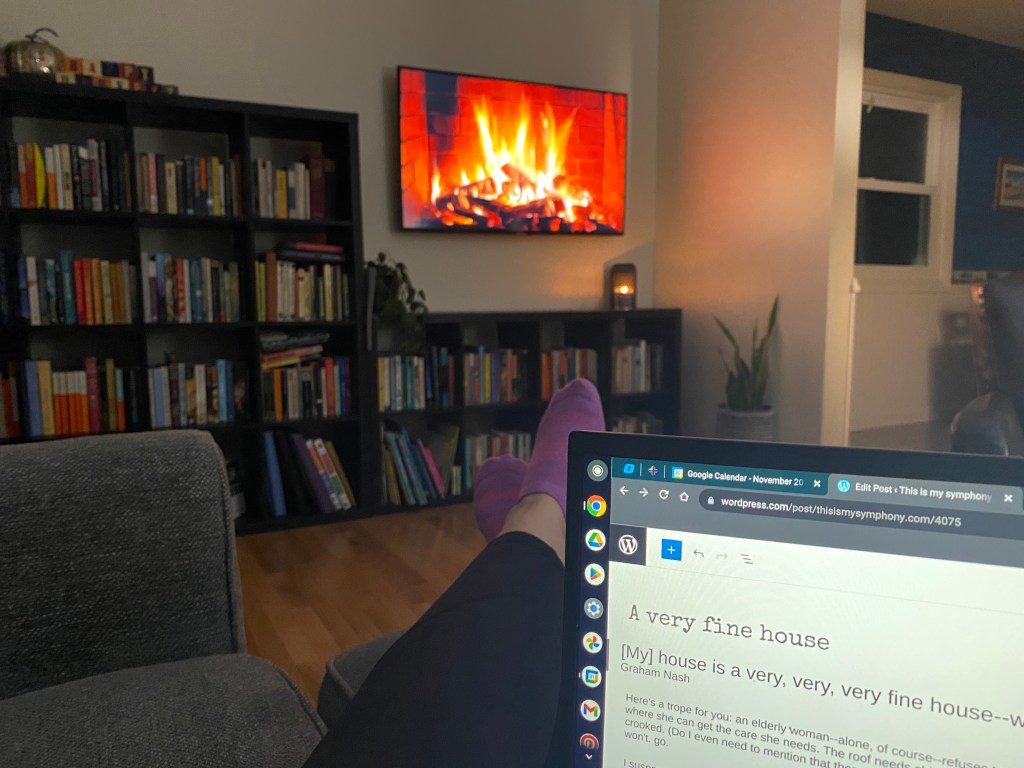
I know I’m not going anywhere soon. (And if I had my druthers I’d make that never.) But for now I’ll just add a cat or two, admire my shelf full of books, bask in the lamplight, and raise a glass of bourbon come evening. To my house. My very, very, very fine house.
The first time I heard the story of the Little Engine That Could was on Captain Kangaroo. (How’s that for dating myself?!) Captain read that picture book often on his show, and 4-year-old me loved the illustrations as much as the story. Earlier this month, my oldest son Peter and I took a road trip out west to visit my son Andy and his family in Montana–and over the trip I had many opportunities to channel my inner Little Engine.
It was a Grand Adventure, Friend.
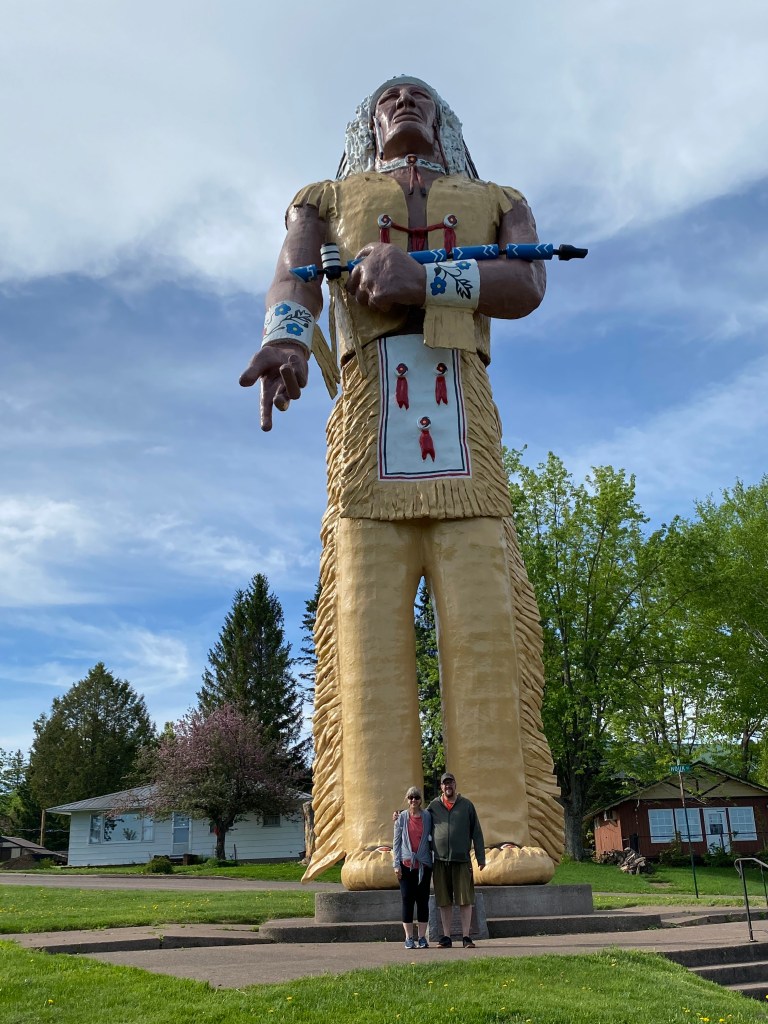
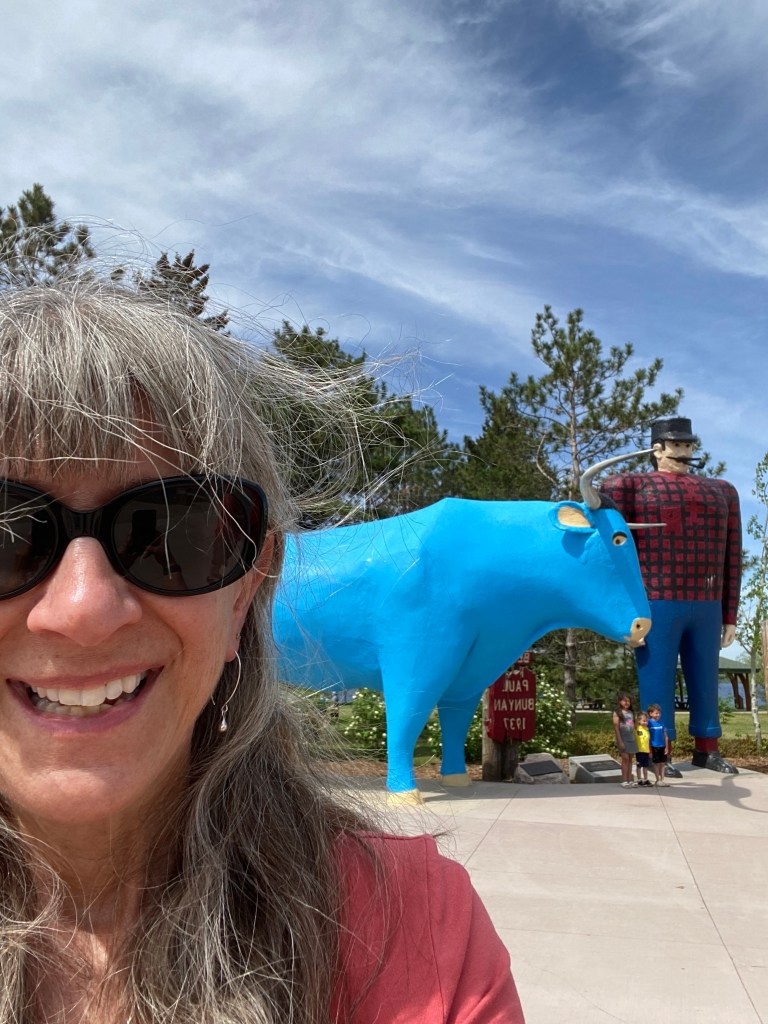
The trip out saw us going through the U.P. to Wisconsin, Minnesota, and North Dakota. There were miles and miles of empty roads and swarms of no-see-ums. We ate at the Beary Patch diner in the U.P. and were served by a made-for-TV grumpy diner waitress. There was the giant Hiawatha statue in Ironwood. We climbed Enger Tower in Duluth. Stopped for a visit with Paul Bunyan and Babe in Bemidji. And we ate breakfast at Perkins, an old standby in the Midwest. Along the road, we saw eagles and coyote and porcupines, oh my!
I was tired, dear Reader. The driving took its toll and muscles that I didn’t even know I had ached. My eyes itched (it was cottonwood season, after all) and I was bleary-eyed. It must be an age thing, considering I know who Captain Kangaroo is, but oof, I wasn’t expecting such exhaustion. I … think … I … can …
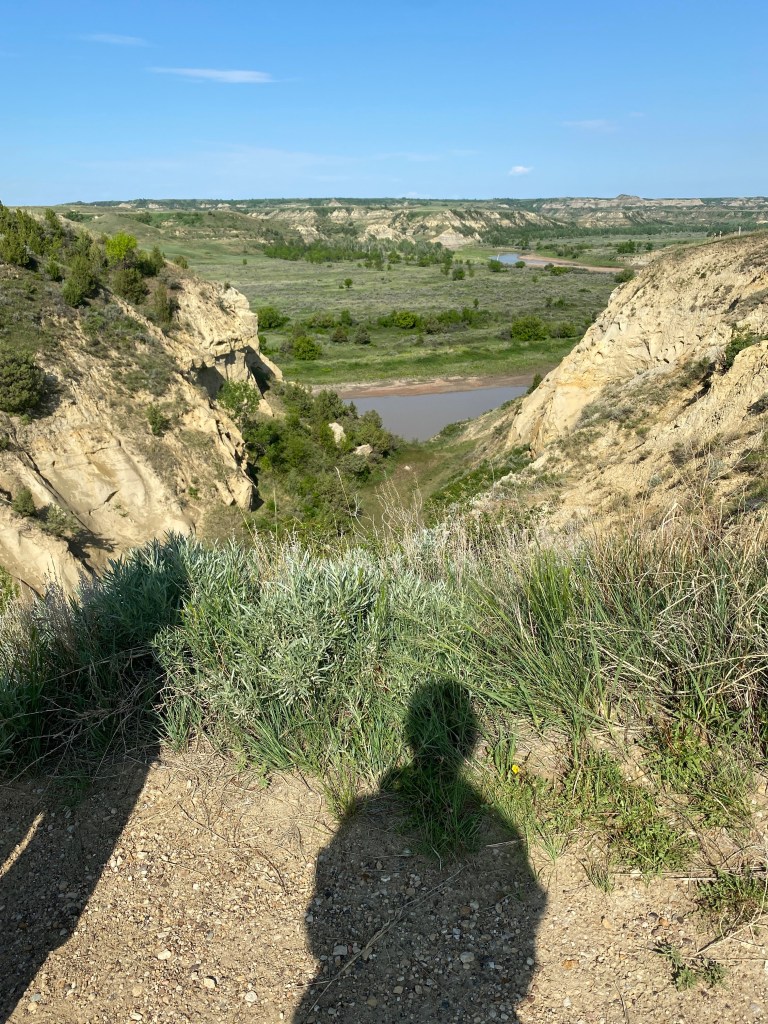
But then we spent a day in the wonder that is Teddy Roosevelt National Park and all that fatigue melted away. Years ago I read Mornings on Horsebackand on this visit to TRNP (I’d been there briefly twenty-three years ago) I felt as though I, too, was exploring the wild countryside with Teddy. Bison herds trotted up over the road and just a few hundred feet away wild horses stood watch. We loved the prairie dog’s antics and walked the short Wind Canyon trail. Every turn of each twisty road revealed another majestic view.
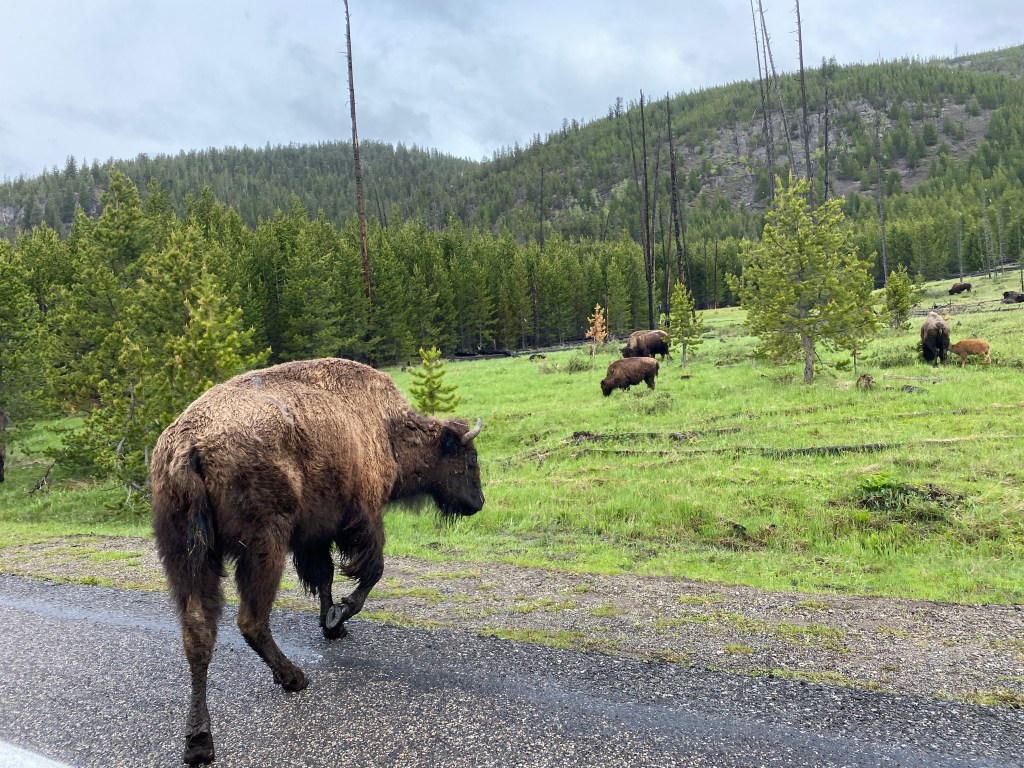
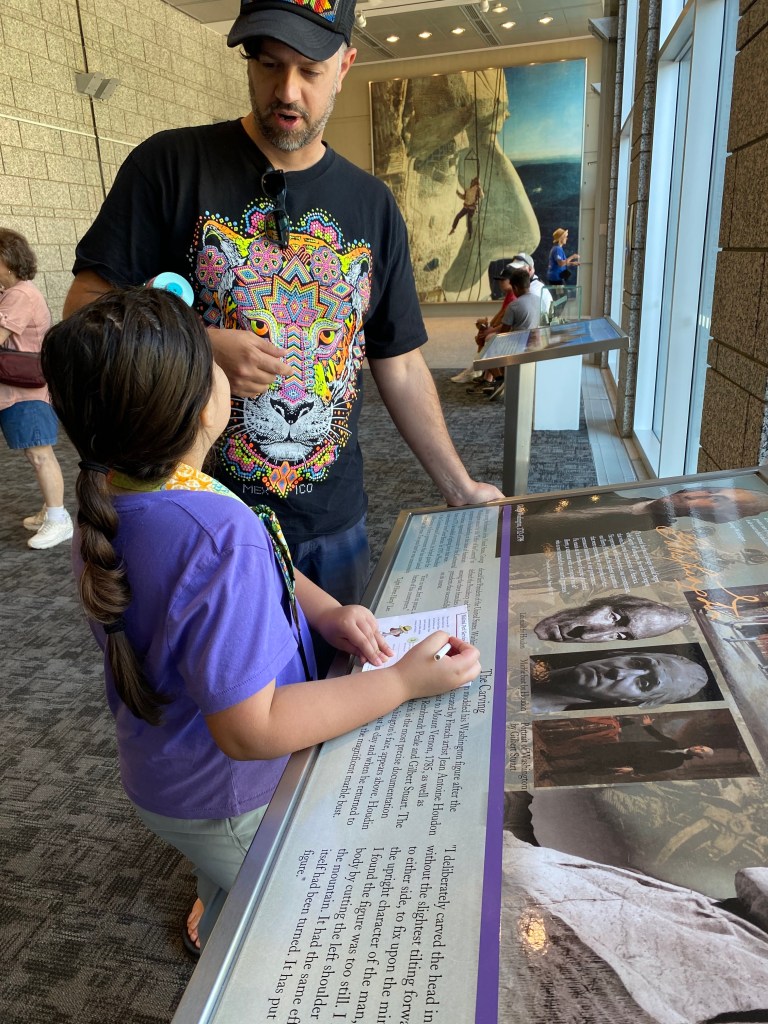
We stayed with my son Andy and his family in Livingston, Montana for a few days where I always feel embraced by Andy and his wife Erica who welcome me despite the upset to their daily lives. The five of us road tripped to Yellowstone together for a long day of mud-pots and geysers and pools and waterfalls–and bison, of course! It was a joy to share it with my granddaughter Luna. In fact, on our return trip, she and her dad caravaned east with us to visit Mt. Rushmore and Crazy Horse and Devil’s Tower before turning back for a daddy-daughter camping trip of their own. It was good to spend time with my adult kids and a relief to learn we could all let the little irritations of travel slide because our time together was precious.
After Andy and Luna left, Peter and I faced the long slog across South Dakota towards home, still three days away. In Rapid City, my car, a ten-year-old Subaru Forester, began making a clipping noise intermittently. The car drove fine–no warning lights, odd smell, or smoke. I’d had it inspected and serviced several weeks before we left, so I wasn’t worried. But when we stopped at Wall Drug, I called a Subaru dealer in Sioux Falls and begged for an appointment the next morning just to see if it was travel worthy.
I didn’t make it.
Or rather, the car didn’t make it. Only half a mile from our exit to the hotel, the oil light flashed on, the engine cut out, and I pulled over to the shoulder on busy I-90. Dead. My son checked the oil–nuthin’. Fast forward to a kind state trooper, an accommodating tow company, and a night spent tossing and turning before a cab ride to the dealer where they gave me the news: RIP, little Suby. I guess my little Forester thought she could … but she couldn’t. There were some tears and to say I was overwhelmed would be an understatement. But what I’ll remember most were the miracles.
Like the fact that we crossed three hundred miles of range land with nary a town in sight–and broke down within sight of our Sioux Falls exit. (Can you say “angels”?) Like the fact that the trooper advised we cancel our AAA tow and use a local tow company because AAA was likely a few hours wait. (True–the local guy got to us within an hour.) Like the fact that every. single. person who heard about our situation, from the service department to the tow dispatch to the hotel front desk was sympathetic, kind, and tried their very best to reassure me. And that dealership? They offered options, didn’t pressure me, and just happened to have the make and model of the car I had pegged as my next car when the time came.
I guess the time came sooner than I expected because I drove home in that new-to-me car.
A Facebook friend commented on a post about my travel disaster, something to the effect that, I had “passed a very important trust exercise.” And of course my first snarky thought was, “I’ve had enough trust exercises over the past ten years, thankyouverymuch. I’m done.”
But really, I’m not. Because I was reminded last week–in a big way–that I get to choose. I get to choose if I rage or scream or laugh or cry when life turns upside down. I get to choose to believe the Universe is out to get me or angels are hovering. I get to choose whether to give up or go on.
And I think I can.
World’s largest Hiawatha statue: Ironwood, MIEnger Tower: DeluthPaul and Babe (the ox, not me!): BemidjiWind Canyon: Teddy Roosevelt NPWind Canyon: Teddy Roosevelt NPCrossed off my bucket listPrismatic Springs: YellowstoneMystic Falls trail: YellowstoneJunior ranger: Mt. RushmoreGoodbye, dear little Suby-doo …
Every spring Midwesterners swear that summer will never arrive. Then one night after weeks of cloudy, windy damp-cold we go to bed, and wake up the next morning to a balmy 70 degrees, a bright blue sky, and trees leafed out.
It’s glorious.
Last week I took out the trailer for the first time; Friend Mary set up her tent behind me. And, oh my goodness, it was a beautiful few days in the woods. We hiked. We sat in the sun and soaked up the goodness we had waited for since maybe mid-October. It was even warm enough to soak our toes in Lake Hamlin. Except for uncooperative campfire wood and Mary’s cold, the trip was picture perfect. I had plenty of sit-and-stare time to feed my soul.
And twenty-four hours after I got home, the kids came over for Mother’s Day Sunday dinner. The company was delightful, but I just can’t help but feel that my cooking days are waning. I don’t even know how that happened–I used to be a good cook!–except it might have something to do with the fact that I’ve been cooking and cleaning up after for over fifty years. God bless my working mom for teaching me early, but–oof!–I just might have run out of steam. (When I was twelve, I would start dinner prep after school; Mom finished things up when she got home at 5.) It is decidedly un-grandmotherly of me, though, and I can’t reconcile my feelings with my apron-wearing-steamy kitchen-china teacups fantasy.
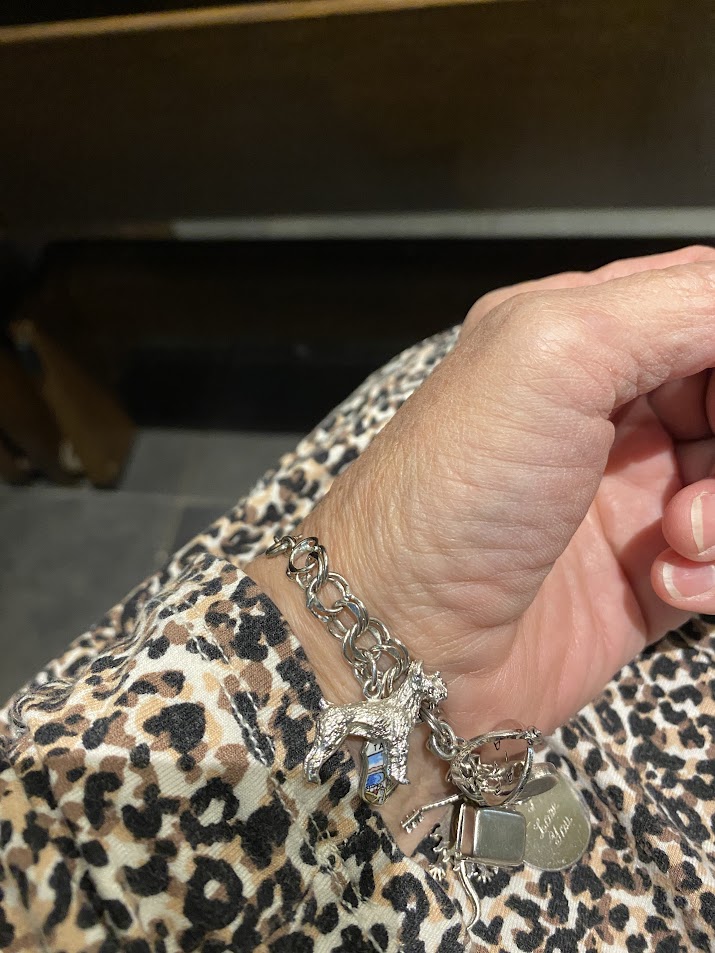
I missed my mom this year, of course, our second Mother’s Day without her. I’m walking much more steadily through my grief than I was last year, that’s for certain. I planted a pretty geranium on her grave and wore her beloved charm bracelet to church. She wouldn’t have had me any other place. (If you know my mom, you know!)
I finished May at the Lowell Historical Museum with first and second-graders: it’s field trip time in Michigan! Lowell is a community rich in history, and the schools and museum have an incredible partnership. If you had told me that seven and eight-year-olds would be excited about the fur trade and lumbering and milk men and shell buttons I wouldn’t have believed you. But it’s true. Not a single one of the kids in my groups weren’t incredibly curious and bubbling with questions. (And, truth be told, the occasional “Can I tell you something about my brother?”)
My perennial beds look amazing, and Little Mitten Landscape’s clean-up last year was worth every penny. Lesly cleared and ripped out and mulched–and this year I had a blank slate to work with. I’m really intent on attracting pollinators, and have been working hard transplanting and dividing and mulching. My herbs overwintered nicely, so with the warm weather, I’ve already been able to freeze my first container of herb mix. And a neighbor had some rhubarb divides that I snapped up. That won’t be ready for a couple years, but yummy goodness is on its way. Add some tomatoes in the raised bed and a beautiful row of raspberries along the back of the garage and I feel like I’ve got a little homestead. Crazy, I know, but until last year I told myself the story that I couldn’t grow things.
Last week I devoured The Girl With the Louding Voice by Abi Dare. It. was. amazing. One of those books that is devastatingly beautiful. And even despite the violence and adject poverty, uplifting. Adunni, a young Nigerian woman, is married off at fourteen because her father needs the bride price money. Shattered because she had always dreamed of returning to school to become a teacher, Adunni flees her husband’s house after tragedy strikes. Unwittingly she is tricked into becoming a housemaid in Lagos for a wealthy businesswoman who beats and berates her. I know, I know. How can I say the novel is beautiful and uplifting? Mainly, it’s Adunni. She is strong, yet tender; ambitious and open-hearted. She wants that “louding voice” so badly, the reader has no doubt she will prevail.
I spoke today with a lovely friend who–like Adunni–has had her own share of tragedy. And you know what? She, like so many of us, is finding hope in the midst of struggle. Because, by the grace of God, that’s what strong women do. We prevail.
Toes in the water Lost Lake trailMother’s DayTaking a little piece of Mom with me
Which is a pretty audacious thing to say considering the past several years. Maybe it’s the darn Midwest optimist in me. But I doubt it. Try instead a whole lot of mindfulness, heaps of prayer, and a shit ton of healing.
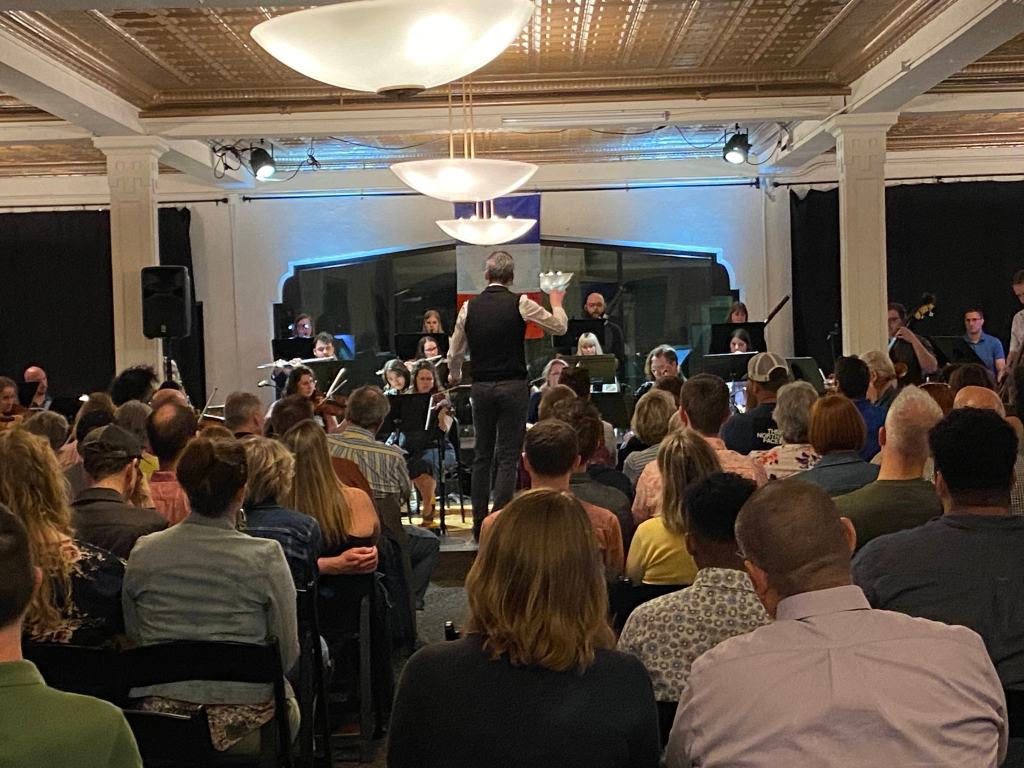
I know first hand how years of conflict and isolation can take it out of a gal. My world contracted, but it wasn’t until I willed myself to peek over the edge to realize just how small it had become. Classes at the YMCA have given me an energy I haven’t felt in ages–and, truth be told, some pretty sore muscles. Spring is bustin’ out all over, and I can’t seem to get enough of the peeper chorus and birdsong. The grand Littles are growing into fine people. Friend Mary and I found a couple gems in a Vintage Parlor Orchestra concert at a local brewery and an art and architecture trip to Detroit. A Meijer Garden lecture on Midwest gardening for pollinators sent me into a planning frenzy for my yard. (My task today was finding rocks in the field behind my house and throwing them over the fence to start a rock border. Thank you, chest presses!)
Of course there are some bumps. I’ve set aside the travel plans I once had, and that was a doozy of a loss to reckon with. But I’ve found so many treasures lately, how can I possibly complain? Sure, it can be uncomfortable to hear friends talk of far flung adventures, but I come back to the peace I’ve found. The stability. I wouldn’t trade that for a trip around the moon.
This week I settled into Louise Penny’s A Great Reckoning, and it might be my favorite Gamache mystery yet. (Except I used to say that every year about my Christmas trees, too: “I think this is the best Christmas tree ever!”) Armand Gamache is a rock of a man: principled and dedicated to truth, yet willing to acknowledge his frailties. Despite his keen mind, he never lords it over anyone. And I swear I’d move tomorrow if I could find Three Pines on the map. But oh my goodness, I want to sip bourbon by the fire with a licorice pipe (did you know you can order them online?!) and breakfast on croissants and cafe au lait at the cafe and sit in the church under the rose compass window and visit Myrna’s bookstore. It’s just so. darn. comfy.
I love that at the end of a Three Pines novel, loose ends are tied up so neatly. Life isn’t like that, is it? People die and leave us with unanswered questions. People leave, and we struggle to make sense of it all.
“Things are strongest where they’re broken,” Gamache says in a commencement address at the end of Reckoning. He has seen friends and enemies–real and imagined–brought to their breaking point. Some grow stronger; others don’t make it out alive. I’ve thought a lot lately about being broken, of a heart hurt so deeply it seems impossible to put it back together. Leonard Cohen’s Anthem plays in my mind: “Forget your perfect offering/there is a crack in everything/that’s how the light gets in.”
And, sure, the light does get in. If only we let it.
But I’ve also come to know that being broken is how the light gets out–that when our hearts crack open we become the person God always meant us to be. If only we are willing.
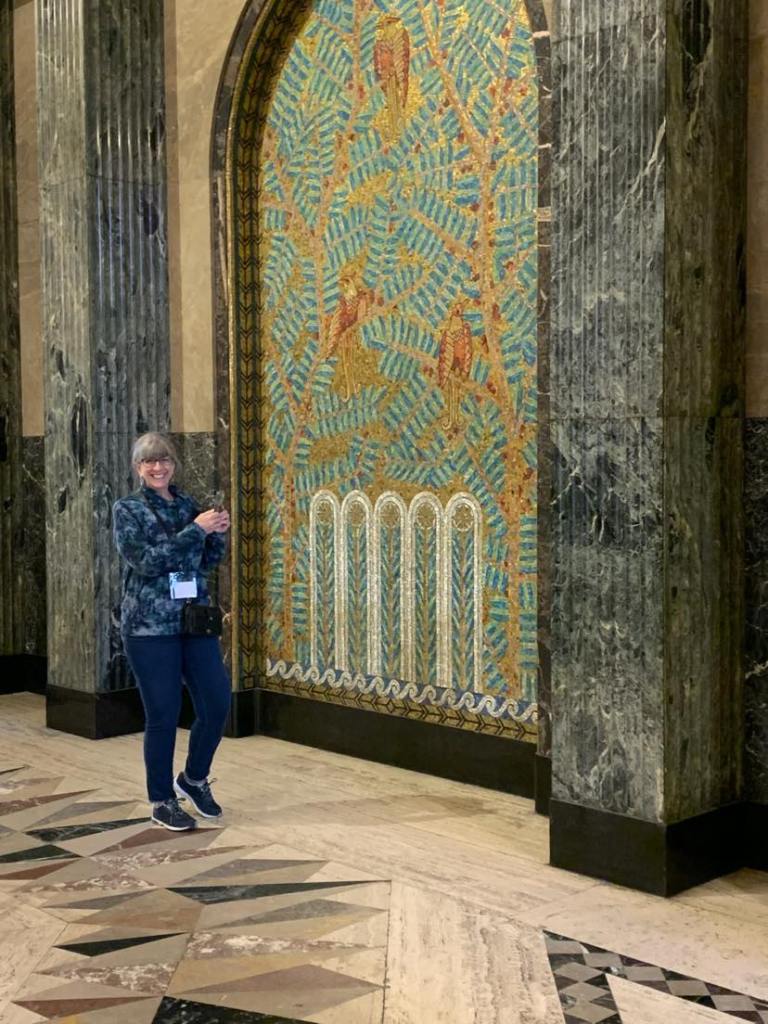
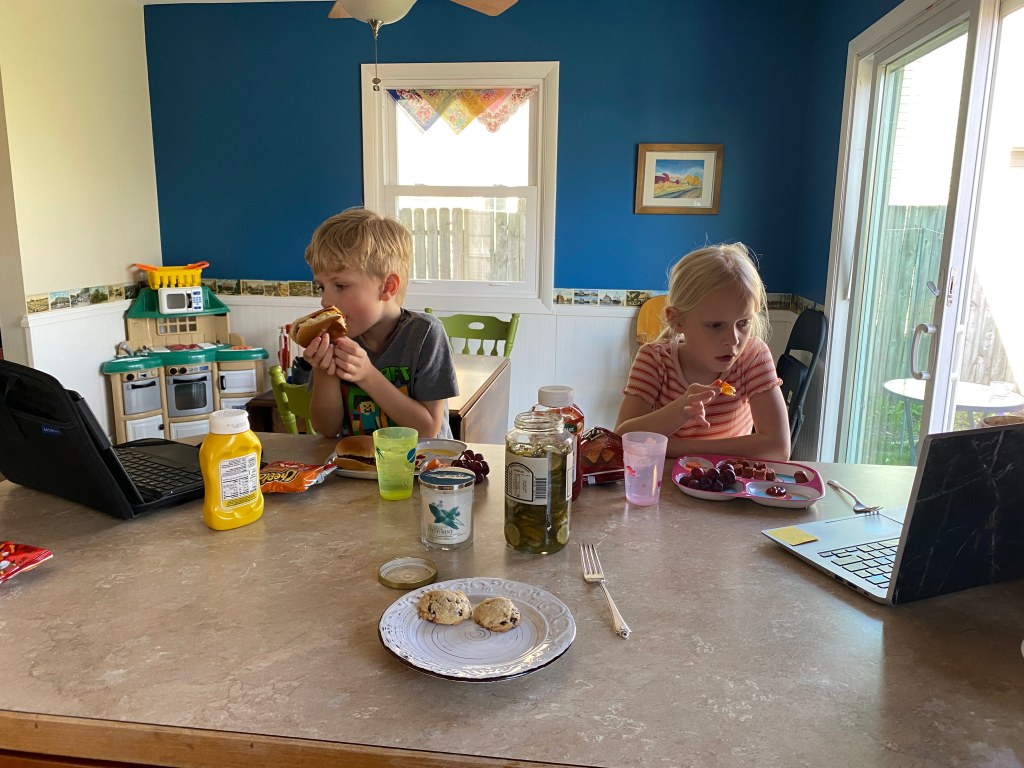
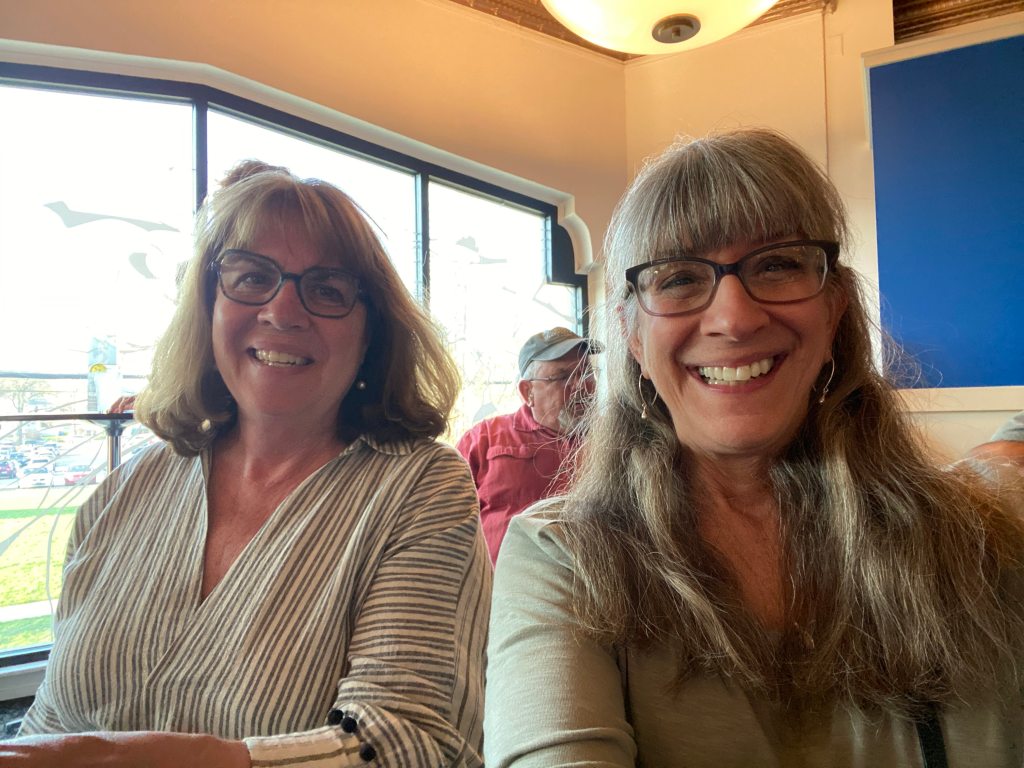
Fisher Building mosaic: Detroit, MichiganMillennium Park: my happy placeDinner before soccer … with a side of ChromebookVintage Parlor OrchestraAt Creston Brewery
It’s been a dreary winter, but that’s finally behind us: the crocus are up–purple, white, and yellow–and my mini daffodils, budding. The red wing blackbirds have been back at the feeder for a couple weeks. Robins are singing. And the past month has seen more sunshine than the whole of January.
My world, too, is brightening. I dreaded the approaching anniversary of my mom’s death, but when the day came, I felt a weight lift. I’m no longer caught off-guard by tears, nor do I dwell on the last months of her life. (I understand now the logic of the Victorians yearlong mourning period.) Nor do I linger overmuch on the end of my marriage. It’s as if my spirit gave up a deep sigh after this last year’s losses.
It’s no exaggeration to say that there have been more delights than I can count since the year began. Personal training. A new class at the Y. Coffee with a new friend, lunch with another. Tea with a neighbor. A season ticket to Broadway Grand Rapids next year. There’s a two-week trip out West in the works and camping galore this summer. I’ve even got a writing group or two in my future. I’ve reclaimed so much of what I lost in the past decade’s chaos, and it’s rare that a day goes by that I don’t feel as though my life is rich and fulfilling.
And I added some amazing colors in my kitchen because it only seems right that my outer world reflects the inner. The painters were a little dubious at my choices–“We usually paint neutrals”–but they were good sports, and I told them, “I live in a girl house now and if lipstick (their name for the cerise shade) makes me happy, lipstick it will be.” Add some newly stitched cloth napkins in bright patterns and a wool-looped hot-pad and there’s no. way. I’m giving darkness a place at my table. Not any more.
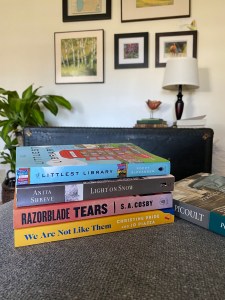
It’s been a good month for books, that’s for sure. Book club read We Are Not Like Them by Christine Pride and Jo Piazza, and it’s a perfect choice for discussion: friendship, marriage, racial bias, and police brutality all wrapped up in one title. Hard questions. A friend mentioned her book club was reading Razorblade Tears by S.A. Cosby and it proved a good companion read, of sorts, to We Are Not Like Them. A gay couple is murdered and their ex-con dads set out to avenge the death. (I do admit I skipped over much of the shooting and punching and knifing, though.) I picked up an older Anita Shreve novel that I had somehow missed, Light On Snowand it was a tender coming of age story about grief and growing-up without a mother. Friend Denice loaned me The Littlest Libraryby Poppy Alexander, a chick lit book I could agree to: English countryside, library-in-a-phone-box, and love found at last. I’ve got one more novel left on my current TBR pile, and then I’ll need to do some restocking.
Life is good, am I right?
My happy kitchen smiling at meWool loop hot pad in the making Requiem. Say no more. A girl can never have enough daffodils …
(noun): a high degree of gratification or pleasure; extreme satisfaction
Merriam Webster
This year I’ve got my eye on delight. It seems like a perfect fit for where I am now. Happiness carries a little too much emotional weight for me, and joy is ever-present. It’s the extra-in-the-ordinary that gives me pleasure. So delight it will be for 2023.
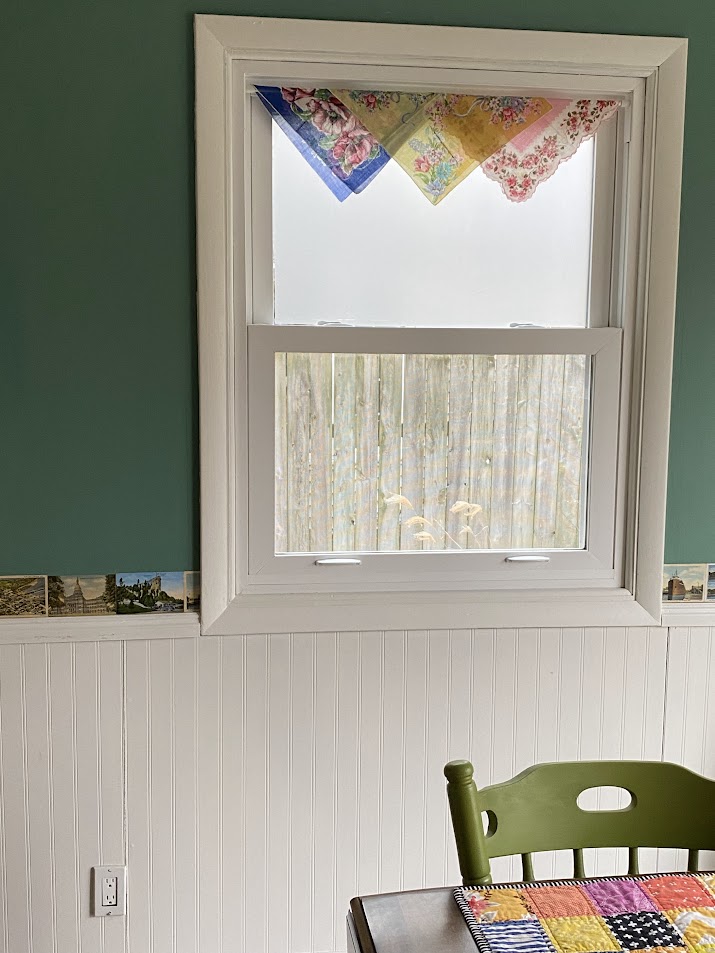
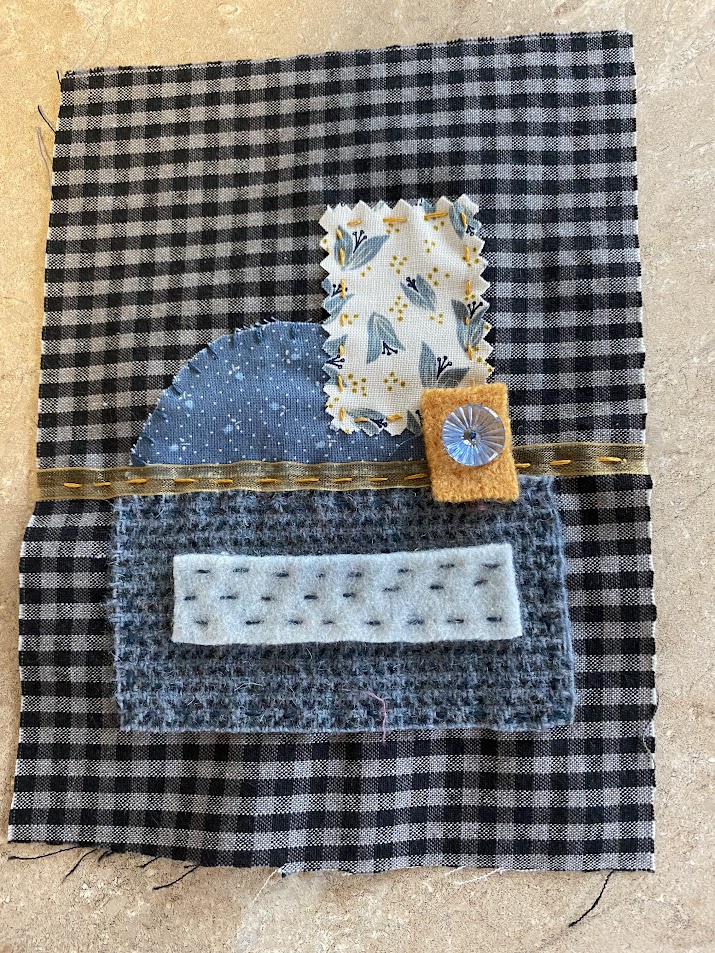
This month I found a quick way to use vintage hankies for a window valance and it makes me smile every time I walk into my kitchen. That’s delight. The extra-in-the-ordinary. And I repurposed the old high chair I brought over from Mom’s after she died, having no clue what I’d use it for. (Pinterest for the win!) A couple weeks ago my son and I resumed our Sunday walks–in the sun, mind you! And last Saturday we made our annual trek with the Littles to Frederik Meijer Gardens Animal Adventure event where I pet a silky soft chinchilla. (And a snake, but that’s another story.) Last week I started Ann Wood’s 100 Day Stitch Challenge and although I’m already behind, I have page one almost finished. And both of my eight-year-old grandchildren are writing books. Does it get much better than that?
I’m also starting to reclaim some of what I lost in the past several years. I figure I can continue to live the narrow life I became accustomed to–or I can recover a life that looks outward. So for a birthday gift to myself I bought a ticket to Mozart’s Requiem in March. I also got tickets for Broadway Grand Rapids’ My Fair Lady and Frozen. (Frozen will be my granddaughter’s birthday gift and a My Fair Lady is a friend date.) Going out and about used to be such a big part of my life when I was first married–and I don’t think I fully realized how much I missed it. My day-to-day finances are strong and sound and I can surely manage an event every now and then.
It’s no secret that one of my greatest delights is the stack of books I have waiting for me. I’ve had the Thursday Murder Club books by Richard Osman pop up in my Amazon feed, but the blurb sounded a little trite: a group of old folks meet weekly in their retirement village to discuss unsolved crimes. Too treacly, I thought. (The books are set in the English countryside, so treacly is perfect here, Reader!) But when Bookmarks magazine gave the third novel in the series a strong review, it was time to rethink my snub. And am I ever glad I did. Despite reading good things about The Bullet That Missed (#3), I began at the beginning with The Thursday Murder Clubwhere four friends–Joyce, Elizabeth, Ibrahim, and Ron–pore over cold case files on Thursday afternoons. Oh, what one does for fun when you’re seventy-five and bored. Their retirement home, Coopers Chase, has been billed as “Britain’s first Luxury Retirement Village” and we’re not talking smelly boiled cabbage and gray linoleum floors here, folks. Coopers Chase was built on the grounds of an old convent in the Kentish Weald and it’s a wonderland of rolling hills, beautiful landscaping, orchards, a pool complex, bowling green, and oh-so-comfortable apartments. These residents are sharp as a tack and active–so it’s no surprise that they find themselves in the middle not one, but two (or is it three?!) real life murder cases. Osman’s characters are witty and engaging, but he doesn’t shy away from showing the losses and poignancy of aging.
Another series to add to my TBR pile and another delicious serving of delight for me.
Mind you, she wasn’t even technically mine. She was my daughter’s, adopted eighteen years ago after Leann’s first year of college. The plan was for Ramona and her litter mate Beezus to join said daughter when she had a place of her own. But you know how those things go.
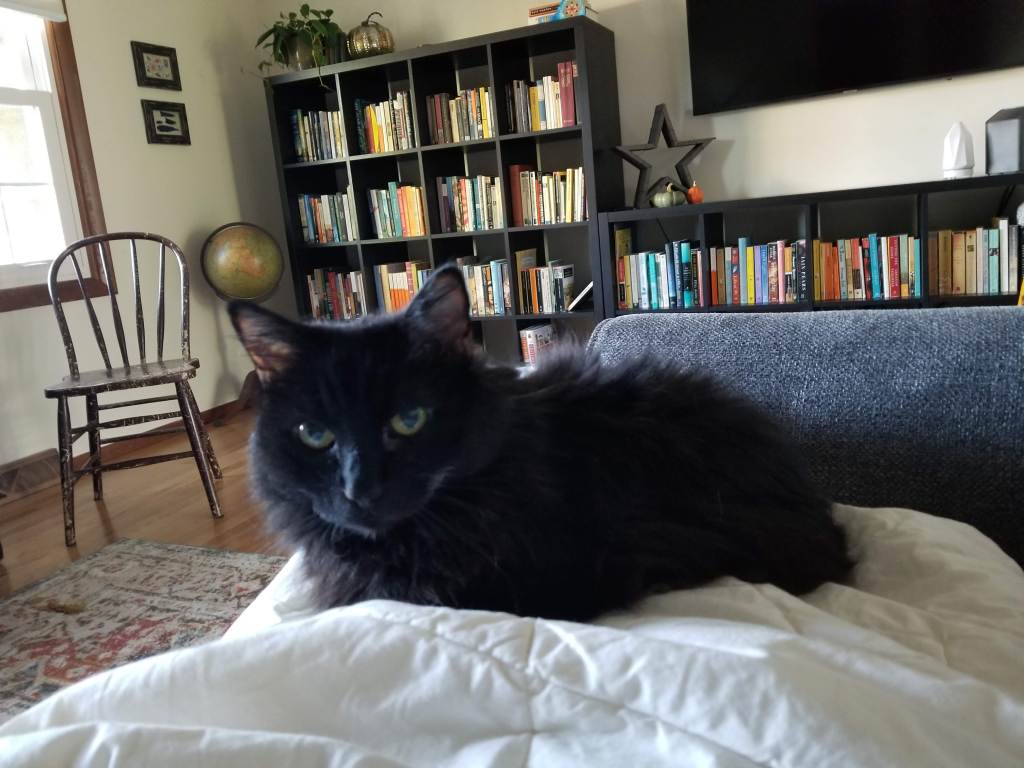
We chose her because she was a tiny little thing. Too tiny, it turns out–maybe only five weeks when we brought her home, the vet said. Sad, really, because without the mothering she needed, Moni (as we called her) never quite got the hang of happy kitty life. She was bullied (unbeknownst to me for some time) by our other two cats and often hid or perched herself atop the refrigerator. House sitters could go for days without seeing her when we traveled. When I discovered the cats were blocking her access to food, her food bowl and water joined her up on the ‘frig where she seemed quite content to monitor life from a distance. Moni would rarely let us pet her; even the slightest approach on our part and she’d scurry away. Cuddles were out of the question. She never made a peep and I was convinced she couldn’t purr. And her long black coat was a mess of snarls and mats since the little thing missed out on those lessons her momma should have taught her before she left the litter.
But after the other cats crossed the Rainbow Bridge and especially once I was alone myself, she began to come out of her shell. She’d curl up on the loveseat. Sleep under the bed or behind a chair by the heat vent. She would head butt me for pets. She’d call me every morning for breakfast. (Usually at 5 AM, no less.) Sometimes she even tolerated a flick of the brush or two. And at the very end–heart-sick, weak, and suffering–she tucked her head in the crook of my elbow and snuggled in for one last time. It might not be too much of a stretch to say we helped each other heal.
I’m happy and relieved to have weathered my first holiday season alone. Or, truly alone, I should say. Last year we were busy caring for Mom and making her last Christmas as lovely as possible under the circumstances. I was surrounded by extended family and hospice workers, and I was busy as heck.
In the past twelve months I’ve become even more acutely aware that I need to take hold of happiness wherever I can, independent of others. (Thanks, Mary from Alanon!)
Believe you me, I grabbed that brass ring this holiday whenever and wherever I could. There was a quick trip to Frankenmuth and new ornaments. A gnome puzzle and light show at Fredrik Meijer Gardens with the Littles. Holiday gatherings with friends. Snow shoveling. Keeping the bird feeder filled for my feathered friends. Christmas ham with corn pudding. Cookies, even, although only one batch. Christmas Eve mass in the middle of a blizzard. A New Year’s Eve reservation for one. All moments of happiness and blessing.
Which is not to say that in light of my losses there wasn’t loneliness and tears. Only a little, though. I’m learning–bit by bit–to embrace the life I’ve made and let go of expectations. Because it’s those ‘shoulds’ that mar my peace.
To close the year, I finished a most amazing book: Jean Hanff Korelitz’s The Latecomer. I haven’t read a single bad review, and there’s a reason for that, dear Reader. The Latecomer was thought-provoking, witty, and crushingly honest. The novel centered on a wealthy and privileged New York family, the Oppenheimers: wife, Joanna, codependent as fu** and her emotionally empty husband Salo, along with their in-vitro triplets who have no use for each other.
It took no effort to layer my own experience onto Joanna’s and see that it’s her storybook expectations of family and Salo’s secrets that get in the way of any possibility of happiness. (How’s that for art mirroring life?!) There’s this bit on conflict, and although not directly about family life, it’s apt:
Here is the sad truth about messy things: they did not resolve themselves. They got resolved … by grunt and confrontation and maybe a little screaming, followed by … deliberate and redemptive hugging. Mostly, though … messy things just jolted on until they shuddered to a halt in exhaustion.
p. 191 The Latecomer
And then there were four Oppenheimer siblings and their trajectory changed. Whether that latecomer is little more than a deus ex machina is up for debate, but I found her a clever plot-devise for breaking open the family so that it can heal. Or at least resolve their mess with “a little screaming … and redemptive hugging.”
This one’s a keeper.
How an 8-year-old watches an outdoor light show in frigid tempsThis girl is a puzzle miracle workerHappy Holy-daysBaby Jesus doesn’t arrive until midnight … My view from here
I can’t say I know much about midwifery, female escorts, or homeopathic practitioners, but author Chris Bohjalian’s novels–Midwives, The Guest Room, and The Law of Similars, for instance–let me step into shoes I’ve never worn. Last month I read his Hour of the Witch, a story centered on life in one of the first settlements in the New World.
The main character, Mary Deerfield, is a young woman living in Boston at the turn of the 17th century. Her husband is abusive. And when he finally causes her severe injury, she makes the courageous decision to file for divorce. As might be expected in a novel about an independent minded Pilgrim woman, Mary is accused of witchcraft. There’s the matter of the three-tine forks she uses, said to be the devil’s pitchfork–in reality, her father, an importer, has gifted her these new-fangled utensils from England. There’s the fact that she is ‘barren’ and doctors with herbs. And as anyone who remembers their history lessons about Salem, once the seed of doubt has been planted, anything out-of-the-ordinary in her life makes her suspect. But I was disappointed that the plot and characters bordered on boilerplate. I’d heard this story before. Tell me something I don’t know.
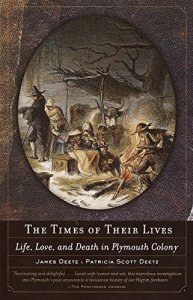
I did appreciate the quick refresher on Pilgrim life because I recently traveled to Plymouth, Massachusetts to tour All Things Pilgrim. And as luck would have it, Bohjalian included a bibliography that led me to a phenomenal book about the first settlers titled The Times of Their Lives. Even more serendipitous was the fact that the book’s author, James Deetz, an archaeology professor, was one of the first directors of the Plimoth Plantation Museum (now Plimoth Patuxet), one of the sites I visited.
And Deetz (unlike Bohjalian) did make me see these “Pilgrims’–they called themselves the Saints–in a new light.
Deetz based his book on archaeological digs in and around Plymouth. His careful research debunked many of the myths handed down in American legend. The Times of Their Lives reveals a more accurate picture of life in those early settlements; Deetz writes about all aspects of the Pilgrims’ lives: religion, crime, marriage, farming. Deetz told the Los Angeles Timesthat we could “better understood [their lives] if we think of the Pilgrims as bawdy Elizabethans, which they were. They were hearty drinkers, they liked to dance, and they swore. Court records from Plymouth Colony show drunken behavior in public, fighting, swearing.” Not exactly the impression I was given in my elementary school Weekly Readers.
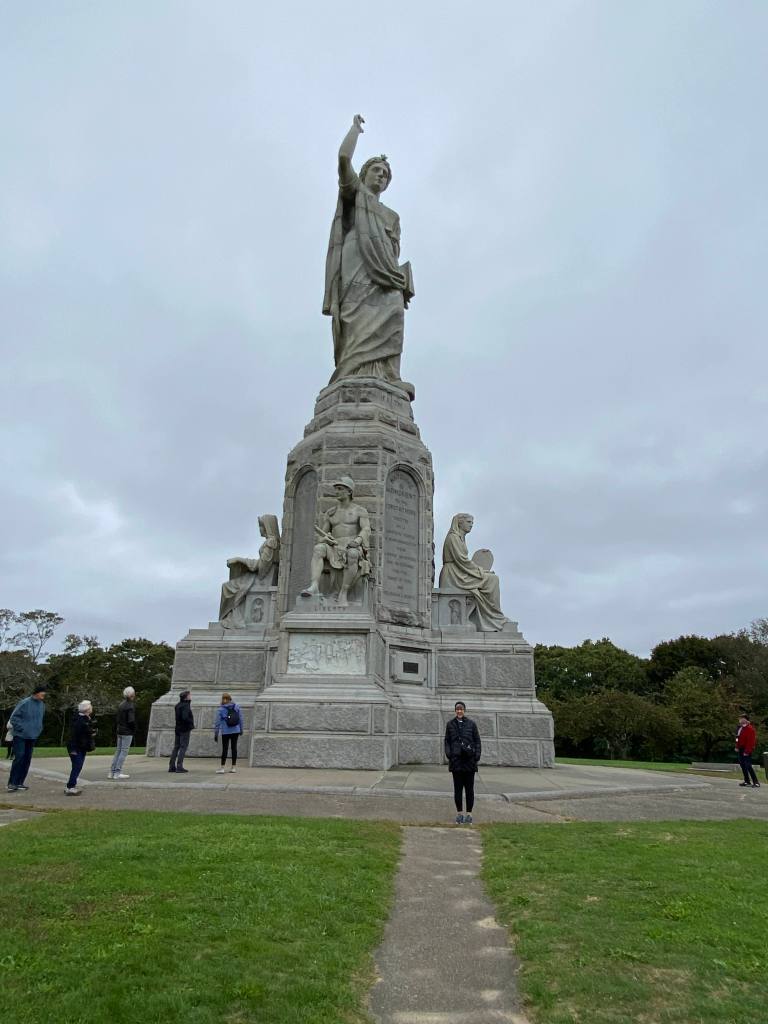
My trip to Plymouth was very much like reading The Hour of the Witch. The monuments and landmarks presented the conventional view–and anyone who grew up with those Weekly Reader images should have been satisfied. But the reality of this nation’s settlement is more than granite and rocks.
Plimoth Patuxet Museum was an amazing site, the entire village constructed by interpretive staff and volunteers using “period techniques and tools.” The interpreters took on their persona fully, speaking in the dialect of the early 1600s. Visitors can converse with the interpreters and they never break role. On the rainy day I visited, I spoke with two young men sheltering for the day in Master Bradford’s house; a young couple, newly arrived; and a single woman anxious to find a husband. In the late 1970s, a move was made to include the Patuxet Native people in the narrative and today there is an adjacent Native American village.
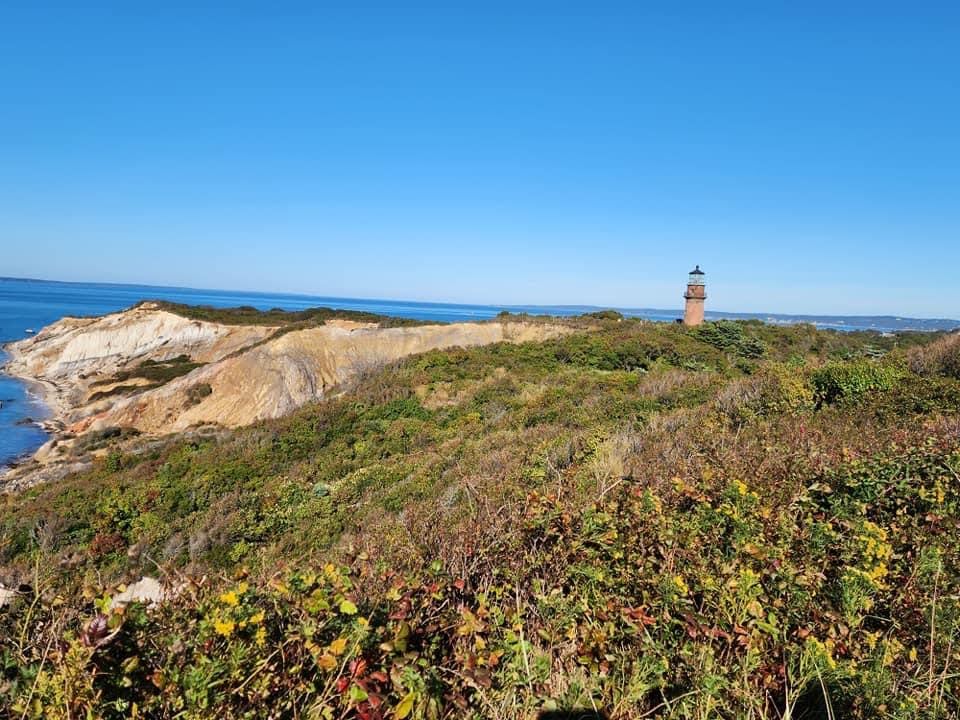
I am glad to have visited Plymouth (and Cape Cod and Martha’s Vineyard) but I’m even more grateful to have read Deetz’s work to serve as a backdrop–one that challenged our cartoon version of events.
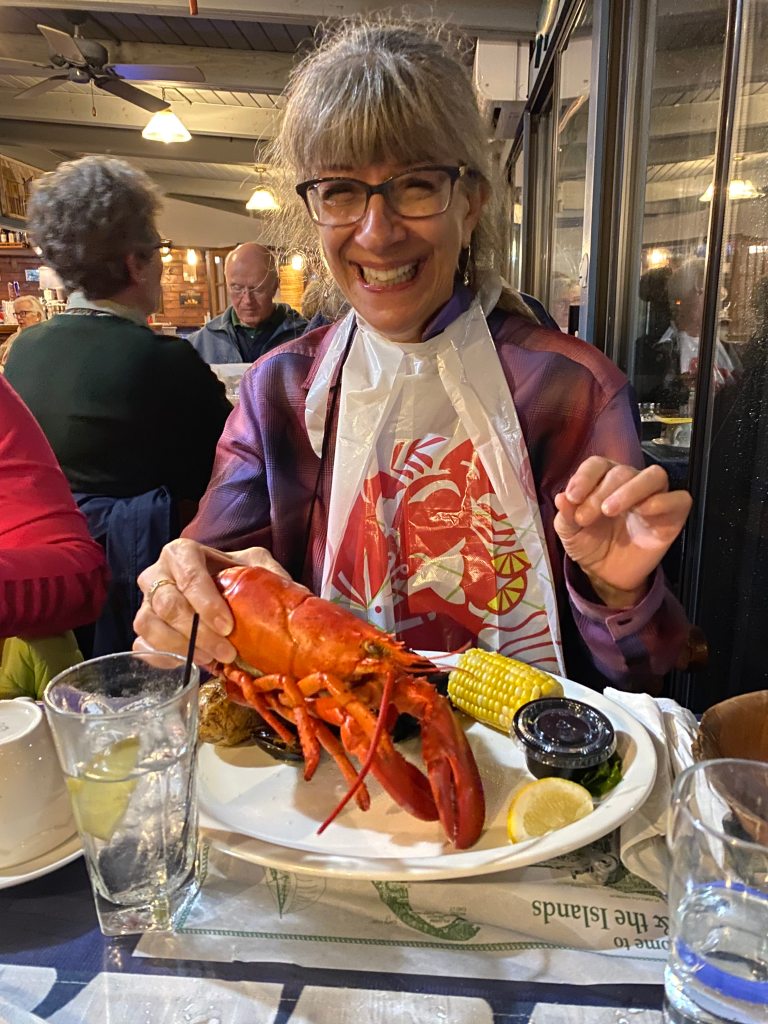
Martha’s VineyardSeafood for daysMayflower IIPlimoth PlantationForefathers Monument Plimoth Plantation interpretersPatuxet long house





























 This is my symphony